
Politics
U.S. Conducts Lethal Strike on Drug Vessel in Eastern Pacific

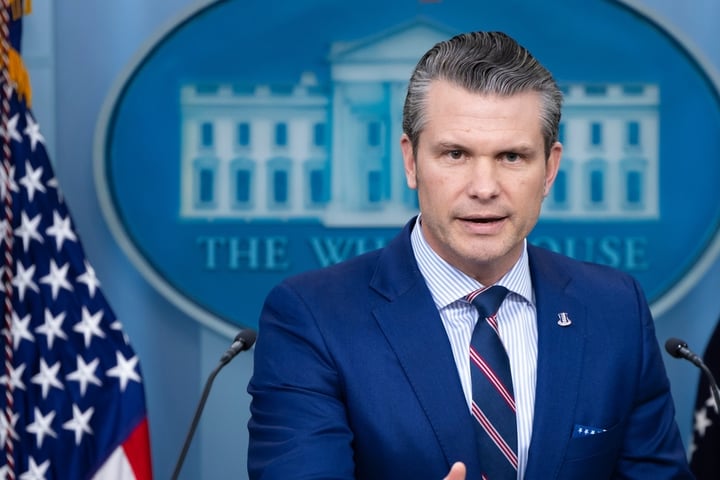
U.S. Southern Command has confirmed a lethal maritime strike against a vessel suspected of drug trafficking in the eastern Pacific Ocean. This operation represents the first publicly acknowledged attack since the capture of Venezuelan leader Nicolás Maduro earlier this month. On January 23, 2024, military officials stated that the Joint Task Force Southern Spear conducted the strike under the direction of Secretary of War Pete Hegseth.
The military identified the targeted vessel as being operated by groups designated as terrorist organizations. According to officials, intelligence confirmed that the boat was traversing known narcotics routes in the eastern Pacific and actively engaged in drug trafficking operations. The strike resulted in the deaths of two individuals, while one person survived and received emergency rescue assistance.
Details of the Operation
The military operation took place after surveillance tracked the vessel’s movements through a heavily trafficked smuggling corridor. U.S. commanders approved the strike after confirming that the boat was involved in organized narcotics activity. Following the engagement, U.S. Southern Command notified the U.S. Coast Guard to initiate emergency rescue procedures. The lone survivor was subsequently recovered after the strike.
Video footage released by U.S. Southern Command shows the vessel moving across open water before igniting in flames, although no additional imagery or operational specifics were provided by the military. This strike is part of an expanded maritime campaign targeting drug routes across the Caribbean and eastern Pacific, as reported by Politico.
Recent Trends in Maritime Strikes
Since early September, U.S. forces have conducted a total of 36 maritime strikes against suspected smuggling vessels, resulting in at least 117 fatalities across regional waters. The previous strikes prior to this incident occurred in late December, where five vessels were hit over two days, leading to eight confirmed deaths.
Most of the confirmed strikes have taken place in the Caribbean Sea, attributed to high trafficking volumes and established routes. The recent capture of Maduro and his wife on January 3, 2024, during an operation in Caracas, was a significant event in this ongoing campaign. Authorities subsequently transported both individuals to New York to face federal drug trafficking charges.
Before his arrest, Maduro claimed that U.S. anti-drug missions were a cover for regime change efforts, a statement that U.S. officials have consistently denied.
Former President Donald Trump commented on the strikes, stating they have significantly reduced maritime drug flows. “We’ve stopped — virtually stopped almost 100% of all drugs coming in by water,” he said at the World Economic Forum in Davos. Defense contractors such as Lockheed Martin Corp. and Northrop Grumman Corp. remain closely linked to U.S. military operations, underscoring the ongoing emphasis on combating drug trafficking in the region.

Urgent Tax Savings Alert: Maximize Deductions Before April 15

Trump’s Administration Faces Uncertainty Over Government Shutdowns

Cosmic Defects: The Mystery of the Universe’s Missing Anomalies

Rapid City Parks Department Opens Registration for Bocce Leagues

Samsung Galaxy Watch 9 to Feature Larger 435mAh Battery Soon

Two Dead After Student Boats Capsize Off Okinawa Coast

Healthy Choice Wellness Reports Earnings with Mixed Results

Prince Harry Positions Himself as Royal Family’s Image Reviver

All Points North Lodge Achieves FSPHP-ETA Accreditation

Send Holiday Parcels for £1.99 with New Comparison Service

University of Hawaiʻi Leads $25M AI Project to Monitor Natural Disasters

Maui County Reopens Upgraded Lānaʻi Fifth Street Courts Today!

Interstellar Object 3I/ATLAS Emits Unique Metal Alloy, Says Scientist

Kelly McCreary Discusses Future of Maggie and Winston in Grey’s Anatomy

Daily Codeword Puzzle Launches on October 21, 2025

Congresswoman Under Fire for Misleading Epstein Donation Claims

Trump Vows to Resolve Afghanistan-Pakistan Crisis “Very Quickly”

Researchers Achieve Fastest Genome Sequencing in Under Four Hours
-
 Lifestyle4 months ago
Send Holiday Parcels for £1.99 with New Comparison Service
-
Science5 months ago
University of Hawaiʻi Leads $25M AI Project to Monitor Natural Disasters
-
 Top Stories4 months ago
Maui County Reopens Upgraded Lānaʻi Fifth Street Courts Today!
-
 Science6 months ago
Interstellar Object 3I/ATLAS Emits Unique Metal Alloy, Says Scientist
-
 Entertainment6 months ago
Kelly McCreary Discusses Future of Maggie and Winston in Grey’s Anatomy
-
 Entertainment6 months ago
Daily Codeword Puzzle Launches on October 21, 2025
-
 Lifestyle5 months ago
Congresswoman Under Fire for Misleading Epstein Donation Claims
-
 Top Stories6 months ago
Trump Vows to Resolve Afghanistan-Pakistan Crisis “Very Quickly”
-
 Science6 months ago
Researchers Achieve Fastest Genome Sequencing in Under Four Hours
-

 Business6 months ago
Iconic Sand Dollar Social Club Listed for $3 Million in Folly Beach
-

 Science5 months ago
Charles Darwin’s Address Book Reveals Hidden Aspects of His Life
-

 Politics6 months ago
Afghan Refugee Detained by ICE After Asylum Hearing in New York