
Science
Astronomers Discover Massive Rotating Cosmic Structure

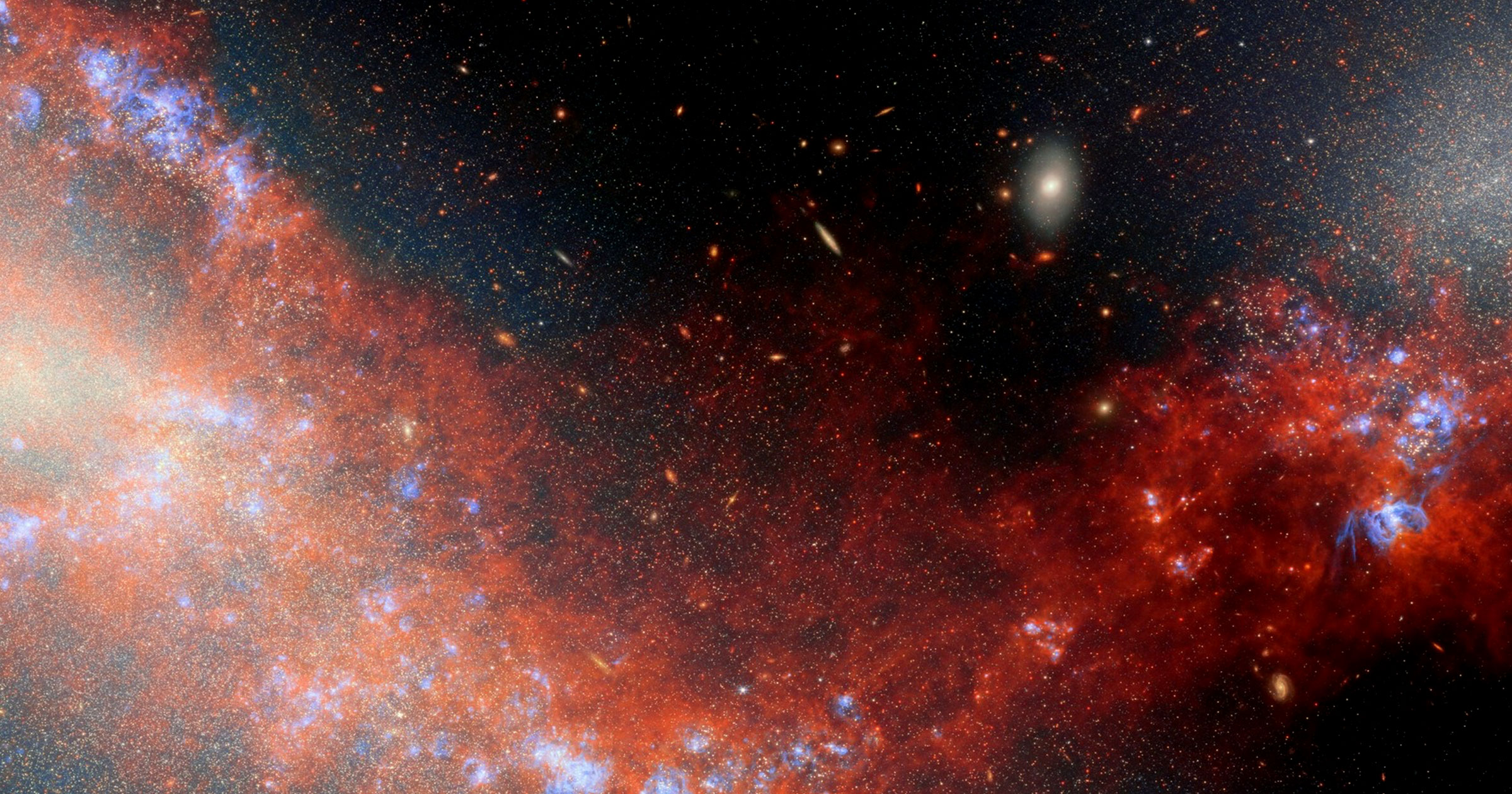
Astronomers have identified a colossal rotating structure in space, made up of enormous filaments of galaxies intertwined with dark matter, which is believed to constitute approximately 85 percent of the universe’s total mass. This discovery, involving a formation stretching across tens of millions of light-years, offers significant insights into the formation of galaxies and stars.
A research team led by the University of Oxford utilized data from South Africa’s MeerKAT radio telescope to detect what they describe as the largest rotating cosmic structure to date. The findings, published in the Monthly Notices of the Royal Astronomical Society in March 2024, detail a string of 14 galaxies that spans approximately 5.5 million light-years in length and 117,000 light-years in width. This remarkable structure exists within a larger filament containing an additional 280 galaxies, extending up to 50 million light-years.
Many of these galaxies are observed to be rotating in alignment with the overall spin of the filament itself. According to Lyla Jung, a postdoctoral researcher at the University of Oxford and colead author of the study, “This is the largest individual spinning structure so far detected.” She noted that while they believe other larger structures may exist, current data and telescopes have not yet enabled their detection.
The significance of this discovery lies not only in the size of the structure but also in the implications for our understanding of galaxy dynamics. Jung explained, “What makes this structure exceptional is not just its size, but the combination of spin alignment and rotational motion.” She compared the phenomenon to a theme park ride: “Each galaxy is like a spinning teacup, but the whole platform—the cosmic filament—is rotating too.” This dual motion provides rare insights into how galaxies acquire their spin from the larger cosmic structures they inhabit.
The research team suggests that this filament is relatively young, as indicated by its “dynamically cold” state. The galaxies within, rich in hydrogen gas, may still be in the process of accumulating materials necessary for star formation, offering a fascinating glimpse into the early stages of galaxy evolution. “This filament is a fossil record of cosmic flows,” stated Madalina Tudorache, colead author and postdoctoral research assistant at the University of Cambridge.
The study also details how gas is circulating within the filament, which may inform future observational endeavors. Efforts like the European Space Agency’s upcoming Euclid mission and the Vera C. Rubin Observatory in Chile are expected to build on these findings, enhancing our understanding of the universe. Tudorache remarked, “This is a very exciting time to work in this field, as our capacity for discovering such structures is increasing with the advent of better radio and optical surveys.”
The detection of this massive rotating structure not only advances our knowledge of cosmic formations but also sets the stage for future research in the ongoing quest to unravel the mysteries of the universe.

Norwegian Explorer Amundsen Reaches South Pole First, Dec. 14, 1911

Urgent Discovery: New Pumpkin Toadlet Species Found in Brazil

Analyzing Historical Paintings as Data for Political Insights

BYU Dominates UC Riverside with 100-53 Victory at Home

Trump Vows Strong Retaliation After Attack Claims American Lives

Brokerages Set Price Target for Advantage Energy at C$14.00

Josh O’Connor Addresses Live-Action ‘Ratatouille’ Rumors on SNL

Maintain Your Muzzleloader: Essential Cleaning Tips for Hunters

Spurs Shock Thunder 111-109; Wembanyama Sparks NBA Cup Final Surge

University of Hawaiʻi Leads $25M AI Project to Monitor Natural Disasters

Interstellar Object 3I/ATLAS Emits Unique Metal Alloy, Says Scientist

Researchers Achieve Fastest Genome Sequencing in Under Four Hours

Iconic Sand Dollar Social Club Listed for $3 Million in Folly Beach

Afghan Refugee Detained by ICE After Asylum Hearing in New York

McEwen Inc. Secures Tartan Lake Gold Mine Through Acquisition

Peptilogics Secures $78 Million to Combat Prosthetic Joint Infections

Jump for Good: San Clemente Pier Fundraiser Allows Legal Leaps

Mars Observed: Detailed Imaging Reveals Dust Avalanche Dynamics
-
Science1 month ago
University of Hawaiʻi Leads $25M AI Project to Monitor Natural Disasters
-
 Science2 months ago
Interstellar Object 3I/ATLAS Emits Unique Metal Alloy, Says Scientist
-
 Science2 months ago
Researchers Achieve Fastest Genome Sequencing in Under Four Hours
-
 Business2 months ago
Iconic Sand Dollar Social Club Listed for $3 Million in Folly Beach
-
 Politics2 months ago
Afghan Refugee Detained by ICE After Asylum Hearing in New York
-
 Business2 months ago
McEwen Inc. Secures Tartan Lake Gold Mine Through Acquisition
-
 Health2 months ago
Peptilogics Secures $78 Million to Combat Prosthetic Joint Infections
-
 Lifestyle2 months ago
Jump for Good: San Clemente Pier Fundraiser Allows Legal Leaps
-
 Science2 months ago
Mars Observed: Detailed Imaging Reveals Dust Avalanche Dynamics
-

 Health2 months ago
Researcher Uncovers Zika Virus Pathway to Placenta Using Nanotubes
-

 Entertainment2 months ago
Jennifer Lopez Addresses A-Rod Split in Candid Interview
-

 World2 months ago
US Passport Ranks Drop Out of Top 10 for First Time Ever