
Science
Bobcat Population Surges in Southern New England, Sparking Interest

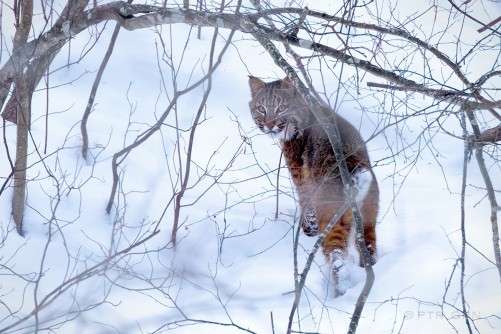
Bobcats, once eradicated from Rhode Island and surrounding areas, are making a notable comeback in southern New England. The resurgence of these elusive felines has been confirmed through the Rhode Island Bobcat Project, which is managed by researchers from the University of Rhode Island in collaboration with local organizations, including the Rhode Island Department of Environmental Management and the Wildlife Clinic of Rhode Island.
As of this winter, researchers have recorded over 1,000 sightings, indicating a healthy population and increasing public fascination with the species. The data gathered will support ongoing research into bobcat movements, habitat use, and population dynamics, as explained by Kathleen Carroll, Assistant Professor of Quantitative Ecology at URI, and Ph.D. student Christopher Hickling.
Understanding Bobcat Behavior and Habitat
The growing presence of bobcats in the region is viewed positively by researchers. Carroll noted that bobcats in southern New England show a remarkable tolerance for human presence, a behavior that contrasts with their counterparts in less populated areas. “Bobcats in this area appear very tolerant of people compared to bobcats in other regions,” Carroll stated, adding, “This makes sense since southern New England is so densely populated.”
The research team employs public reports, camera traps, and GPS radiocollars to monitor the animals. This multifaceted approach not only identifies where bobcats hunt and rest but also informs land management practices that aim to harmonize human activity with wildlife conservation.
Engaging the Community and Protecting Biodiversity
The project has sparked significant community interest. “We are happy people are excited about seeing bobcats and interested in their importance for biodiversity,” Carroll said, highlighting the importance of public engagement in conservation efforts. The researchers encourage residents to report sightings, which contribute valuable data for population management.
Looking ahead to spring, Carroll advises residents to be aware of bobcat behavior. Female bobcats typically give birth to litters of two to four kittens, establishing dens in secluded areas to ensure the safety of their young. Homeowners who suspect they may have a den on their property are encouraged to reach out to the research team for guidance.
The naming convention for bobcats in the project adds a personal touch. Each bobcat is assigned a formal identifier, such as B03M or B11F, but researchers also name them after native birds like Osprey and Falcon. This approach fosters public interest and allows for an organized cataloging of the animals.
The unique characteristics of bobcats contribute to their appeal. Carroll noted that the species’ resemblance to domestic cats, combined with their charismatic behavior, makes them relatable to the public. “People are drawn to bobcats because they are highly charismatic and resemble house cats,” she explained. This relatability enhances their role as symbols of wildlife conservation, as they are among the few species that urban residents may encounter in the wild.
For further information on the Rhode Island Bobcat Project, individuals can visit the project’s website or reach out directly to the researchers at [email protected] or [email protected]. The continued study and monitoring of bobcats in southern New England not only promotes understanding of the species but also underscores the importance of wildlife conservation in increasingly urban landscapes.

Urgent Tax Savings Alert: Maximize Deductions Before April 15

Trump’s Administration Faces Uncertainty Over Government Shutdowns

Cosmic Defects: The Mystery of the Universe’s Missing Anomalies

Rapid City Parks Department Opens Registration for Bocce Leagues

Samsung Galaxy Watch 9 to Feature Larger 435mAh Battery Soon

Two Dead After Student Boats Capsize Off Okinawa Coast

Healthy Choice Wellness Reports Earnings with Mixed Results

Prince Harry Positions Himself as Royal Family’s Image Reviver

All Points North Lodge Achieves FSPHP-ETA Accreditation

Send Holiday Parcels for £1.99 with New Comparison Service

University of Hawaiʻi Leads $25M AI Project to Monitor Natural Disasters

Maui County Reopens Upgraded Lānaʻi Fifth Street Courts Today!

Daily Codeword Puzzle Launches on October 21, 2025

Congresswoman Under Fire for Misleading Epstein Donation Claims

Interstellar Object 3I/ATLAS Emits Unique Metal Alloy, Says Scientist

Trump Vows to Resolve Afghanistan-Pakistan Crisis “Very Quickly”

Charles Darwin’s Address Book Reveals Hidden Aspects of His Life

Rediscovering Chrysler: 5 Overlooked Models from the 1980s
-
 Lifestyle8 months ago
Send Holiday Parcels for £1.99 with New Comparison Service
-
Science9 months ago
University of Hawaiʻi Leads $25M AI Project to Monitor Natural Disasters
-
 Top Stories8 months ago
Maui County Reopens Upgraded Lānaʻi Fifth Street Courts Today!
-
 Entertainment10 months ago
Daily Codeword Puzzle Launches on October 21, 2025
-
 Lifestyle9 months ago
Congresswoman Under Fire for Misleading Epstein Donation Claims
-
 Science10 months ago
Interstellar Object 3I/ATLAS Emits Unique Metal Alloy, Says Scientist
-
 Top Stories9 months ago
Trump Vows to Resolve Afghanistan-Pakistan Crisis “Very Quickly”
-
 Science8 months ago
Charles Darwin’s Address Book Reveals Hidden Aspects of His Life
-
 Lifestyle8 months ago
Rediscovering Chrysler: 5 Overlooked Models from the 1980s
-

 Science7 months ago
Understanding Generation Z: Strategies for Engaging the Workforce
-

 Entertainment10 months ago
Kelly McCreary Discusses Future of Maggie and Winston in Grey’s Anatomy
-

 Entertainment7 months ago
Landmark Shift as Iconic Anime Series Concludes After 26 Years