
Science
Cosmic Defects: The Mystery of the Universe’s Missing Anomalies

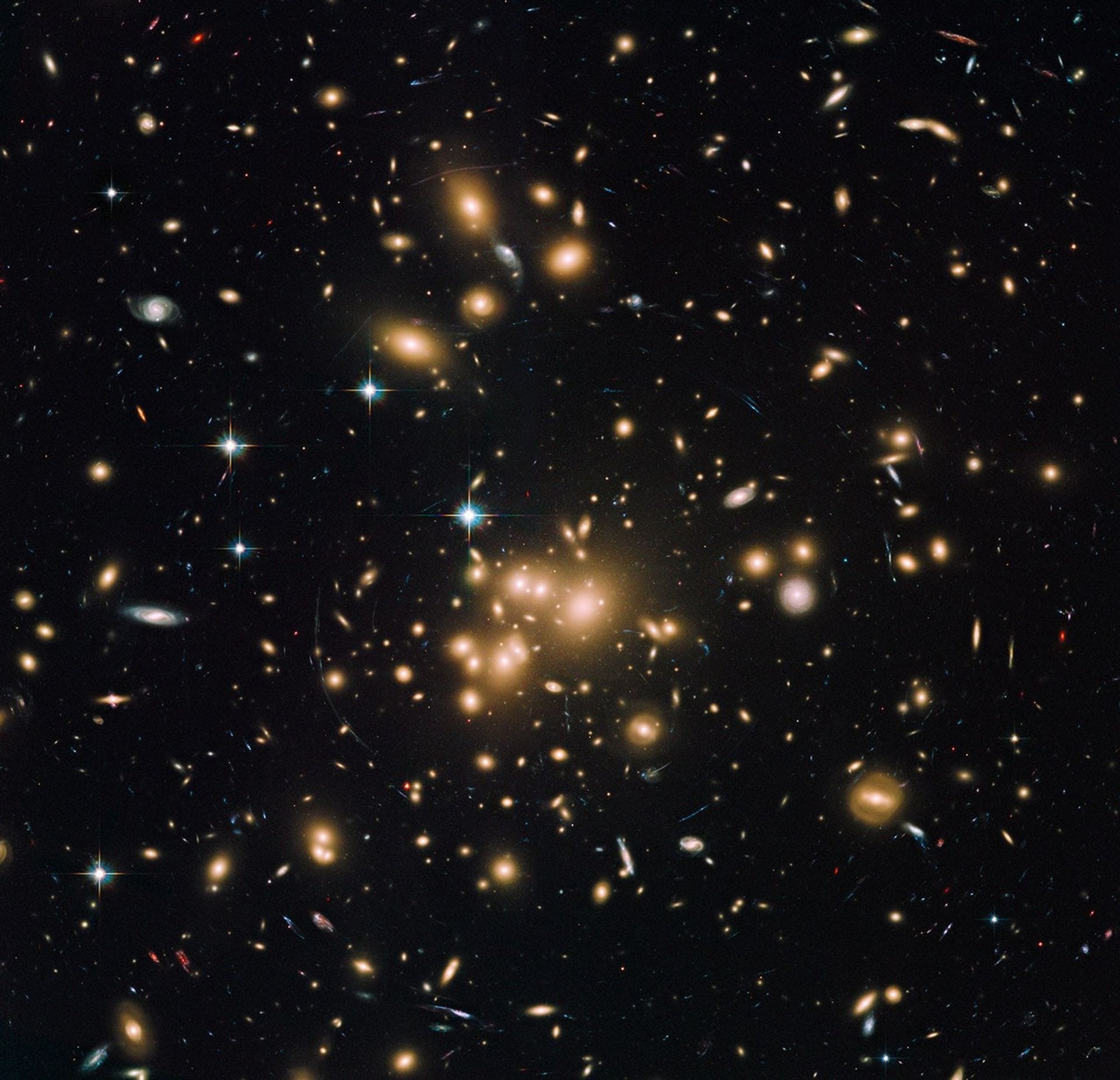
Recent research has raised compelling questions about the universe’s early state, particularly concerning the existence of potential topological defects. These anomalies, theorized to emerge shortly after the Big Bang, seem to be conspicuously absent from our observations. According to current mathematical models, the early universe was chaotic, filled with knots and defects that should have formed as it cooled. Yet, scientists are puzzled by the lack of evidence for these cosmic structures.
Theoretical frameworks suggest that these defects, including cosmic strings and magnetic monopoles, should have left an indelible mark on the fabric of space-time. Cosmic strings, for instance, are theorized to be one-dimensional fractures in the vacuum, thinner than a proton but heavy enough to influence gravitational fields significantly. If they exist, they would create a complex network throughout the universe, akin to a high-tension spiderweb. Yet, observations from advanced detectors like LIGO and NanoGRAV have not detected any signs of these strings, leading researchers to question whether they ever existed.
In a striking analogy, the absence of evidence for these cosmic strings resembles a crime scene where all indicators point to a clear motive and weapon, yet the critical piece—evidence of the crime itself—remains missing. Theoretical physicists have speculated that if cosmic strings were present, their rapid movement should produce gravitational waves, a phenomenon we are capable of detecting. Yet, we hear only silence.
The search for magnetic monopoles has also yielded disappointing results. In 1982, physicist Blas Cabrera reported a unique signal that seemed to indicate the presence of a monopole, but subsequent attempts to locate additional monopoles have been fruitless. The absence of further evidence raises questions about the validity of current theories, especially since the predicted number of monopoles would have had significant implications for the universe’s expansion, possibly leading to a collapse before the first stars ignited.
One possible explanation for the disappearance of these defects is the theory of inflation. This concept proposes that the universe underwent rapid expansion shortly after the Big Bang, potentially diluting any existing defects to the point of invisibility. If inflation spread the defects across vast distances, only a remnant might be detectable, such as a solitary monopole within our observable universe. While this theory offers a convenient solution, it still leaves scientists searching for tangible evidence of these phenomena.
Despite these challenges, researchers are now contemplating an alternative perspective. Rather than focusing solely on cosmic strings and monopoles, it is possible that some defects may have transformed during the universe’s evolution. If certain anomalies could change their nature, they might become undetectable in their original forms but could still influence the universe in other ways.
This leads to the consideration of “vortons,” hypothetical entities that could represent remnants of the original defects. If these vortons exist as tiny, heavy, and invisible knots that do not interact with light, they could account for some of the dark matter that permeates our universe. This shift in focus from looking for direct evidence of defects to understanding their potential transformations may offer new avenues for exploration.
As scientists continue to investigate these fundamental questions, the quest to uncover the true nature of the universe remains an intriguing endeavor. Understanding the fate of topological defects could unlock significant insights into the cosmos and our place within it. The search is far from over, and the story of the universe’s missing anomalies is only beginning to unfold.

Urgent Tax Savings Alert: Maximize Deductions Before April 15

Trump’s Administration Faces Uncertainty Over Government Shutdowns

Cosmic Defects: The Mystery of the Universe’s Missing Anomalies

Rapid City Parks Department Opens Registration for Bocce Leagues

Samsung Galaxy Watch 9 to Feature Larger 435mAh Battery Soon

Two Dead After Student Boats Capsize Off Okinawa Coast

Healthy Choice Wellness Reports Earnings with Mixed Results

Prince Harry Positions Himself as Royal Family’s Image Reviver

All Points North Lodge Achieves FSPHP-ETA Accreditation

Send Holiday Parcels for £1.99 with New Comparison Service

University of Hawaiʻi Leads $25M AI Project to Monitor Natural Disasters

Maui County Reopens Upgraded Lānaʻi Fifth Street Courts Today!

Interstellar Object 3I/ATLAS Emits Unique Metal Alloy, Says Scientist

Kelly McCreary Discusses Future of Maggie and Winston in Grey’s Anatomy

Daily Codeword Puzzle Launches on October 21, 2025

Congresswoman Under Fire for Misleading Epstein Donation Claims

Trump Vows to Resolve Afghanistan-Pakistan Crisis “Very Quickly”

Researchers Achieve Fastest Genome Sequencing in Under Four Hours
-
 Lifestyle4 months ago
Send Holiday Parcels for £1.99 with New Comparison Service
-
Science5 months ago
University of Hawaiʻi Leads $25M AI Project to Monitor Natural Disasters
-
 Top Stories3 months ago
Maui County Reopens Upgraded Lānaʻi Fifth Street Courts Today!
-
 Science5 months ago
Interstellar Object 3I/ATLAS Emits Unique Metal Alloy, Says Scientist
-
 Entertainment6 months ago
Kelly McCreary Discusses Future of Maggie and Winston in Grey’s Anatomy
-
 Entertainment5 months ago
Daily Codeword Puzzle Launches on October 21, 2025
-
 Lifestyle4 months ago
Congresswoman Under Fire for Misleading Epstein Donation Claims
-
 Top Stories5 months ago
Trump Vows to Resolve Afghanistan-Pakistan Crisis “Very Quickly”
-
 Science6 months ago
Researchers Achieve Fastest Genome Sequencing in Under Four Hours
-

 Business6 months ago
Iconic Sand Dollar Social Club Listed for $3 Million in Folly Beach
-

 Politics6 months ago
Afghan Refugee Detained by ICE After Asylum Hearing in New York
-

 Science4 months ago
Charles Darwin’s Address Book Reveals Hidden Aspects of His Life