
Science
Machine Learning Model Predicts Preeclampsia Risk by Week 34


A recent advancement in predictive healthcare technology has emerged from researchers at Weill Cornell Medicine. A new machine-learning model can forecast the risk of preeclampsia as early as week 34 of pregnancy. This condition, characterized by high blood pressure and potentially serious complications, affects approximately 2% to 8% of pregnancies globally. Early detection is crucial for managing risks to both the parent and child.
The study, published on March 6, 2024, in JAMA Network Open, outlines how the model utilizes electronic health record data to provide continuous updates on a patient’s preeclampsia risk. Given that preeclampsia can develop rapidly in the latter stages of pregnancy, this tool aims to give clinicians a timely alert, allowing for proactive interventions.
Understanding Preeclampsia and Its Implications
Preeclampsia typically manifests after the 20th week of gestation and can lead to severe health consequences, including organ damage and complications during childbirth. The timely identification of at-risk individuals can significantly improve outcomes, making the development of predictive models increasingly important.
Researchers at Weill Cornell Medicine have developed this machine-learning algorithm to analyze patterns in health data, identifying risk factors associated with preeclampsia. By drawing on comprehensive datasets, the model refines its predictions as more information becomes available, thus enhancing its accuracy as the pregnancy progresses.
The implications of this research extend beyond individual patient care. If widely adopted, this technology could transform how healthcare systems monitor pregnant populations, potentially reducing the incidence of severe preeclampsia cases and improving maternal-fetal health outcomes.
A New Era in Predictive Healthcare
The integration of machine learning in healthcare is rapidly evolving, with its applications spanning various medical conditions. This latest model represents a significant step forward in the use of artificial intelligence to enhance patient care. By leveraging existing electronic health records, the technology not only improves efficiency but also empowers healthcare professionals with data-driven insights.
As healthcare providers increasingly rely on such innovations, the focus remains on ensuring that these tools are accessible and effective in diverse clinical settings. This model’s success could pave the way for similar approaches in other areas of maternal and child health, potentially leading to broader advancements in predictive medicine.
In conclusion, the development of this machine-learning model by Weill Cornell Medicine marks a promising milestone in addressing the risks associated with preeclampsia. With its potential to provide early warnings and improve clinical decision-making, healthcare professionals may soon have a powerful ally in safeguarding the health of both parents and infants.

Urgent Tax Savings Alert: Maximize Deductions Before April 15

Trump’s Administration Faces Uncertainty Over Government Shutdowns

Cosmic Defects: The Mystery of the Universe’s Missing Anomalies

Rapid City Parks Department Opens Registration for Bocce Leagues

Samsung Galaxy Watch 9 to Feature Larger 435mAh Battery Soon

Two Dead After Student Boats Capsize Off Okinawa Coast

Healthy Choice Wellness Reports Earnings with Mixed Results

Prince Harry Positions Himself as Royal Family’s Image Reviver

All Points North Lodge Achieves FSPHP-ETA Accreditation

Send Holiday Parcels for £1.99 with New Comparison Service

University of Hawaiʻi Leads $25M AI Project to Monitor Natural Disasters

Maui County Reopens Upgraded Lānaʻi Fifth Street Courts Today!

Daily Codeword Puzzle Launches on October 21, 2025

Congresswoman Under Fire for Misleading Epstein Donation Claims

Interstellar Object 3I/ATLAS Emits Unique Metal Alloy, Says Scientist

Trump Vows to Resolve Afghanistan-Pakistan Crisis “Very Quickly”

Charles Darwin’s Address Book Reveals Hidden Aspects of His Life

Rediscovering Chrysler: 5 Overlooked Models from the 1980s
-
 Lifestyle8 months ago
Send Holiday Parcels for £1.99 with New Comparison Service
-
Science9 months ago
University of Hawaiʻi Leads $25M AI Project to Monitor Natural Disasters
-
 Top Stories8 months ago
Maui County Reopens Upgraded Lānaʻi Fifth Street Courts Today!
-
 Entertainment10 months ago
Daily Codeword Puzzle Launches on October 21, 2025
-
 Lifestyle9 months ago
Congresswoman Under Fire for Misleading Epstein Donation Claims
-
 Science10 months ago
Interstellar Object 3I/ATLAS Emits Unique Metal Alloy, Says Scientist
-
 Top Stories9 months ago
Trump Vows to Resolve Afghanistan-Pakistan Crisis “Very Quickly”
-
 Science8 months ago
Charles Darwin’s Address Book Reveals Hidden Aspects of His Life
-
 Lifestyle8 months ago
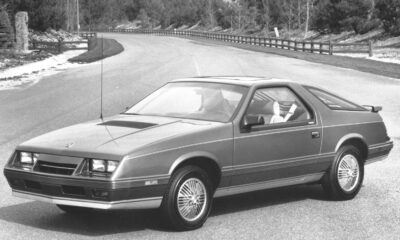
Rediscovering Chrysler: 5 Overlooked Models from the 1980s
-
 Science7 months ago
Understanding Generation Z: Strategies for Engaging the Workforce
-

 Entertainment10 months ago
Kelly McCreary Discusses Future of Maggie and Winston in Grey’s Anatomy
-

 Top Stories8 months ago
aespa Faces Backlash Over G-Dragon Interaction at 2025 MAMAs