
Science
Metal Detectorist Uncovers Viking Age Grave in Norway

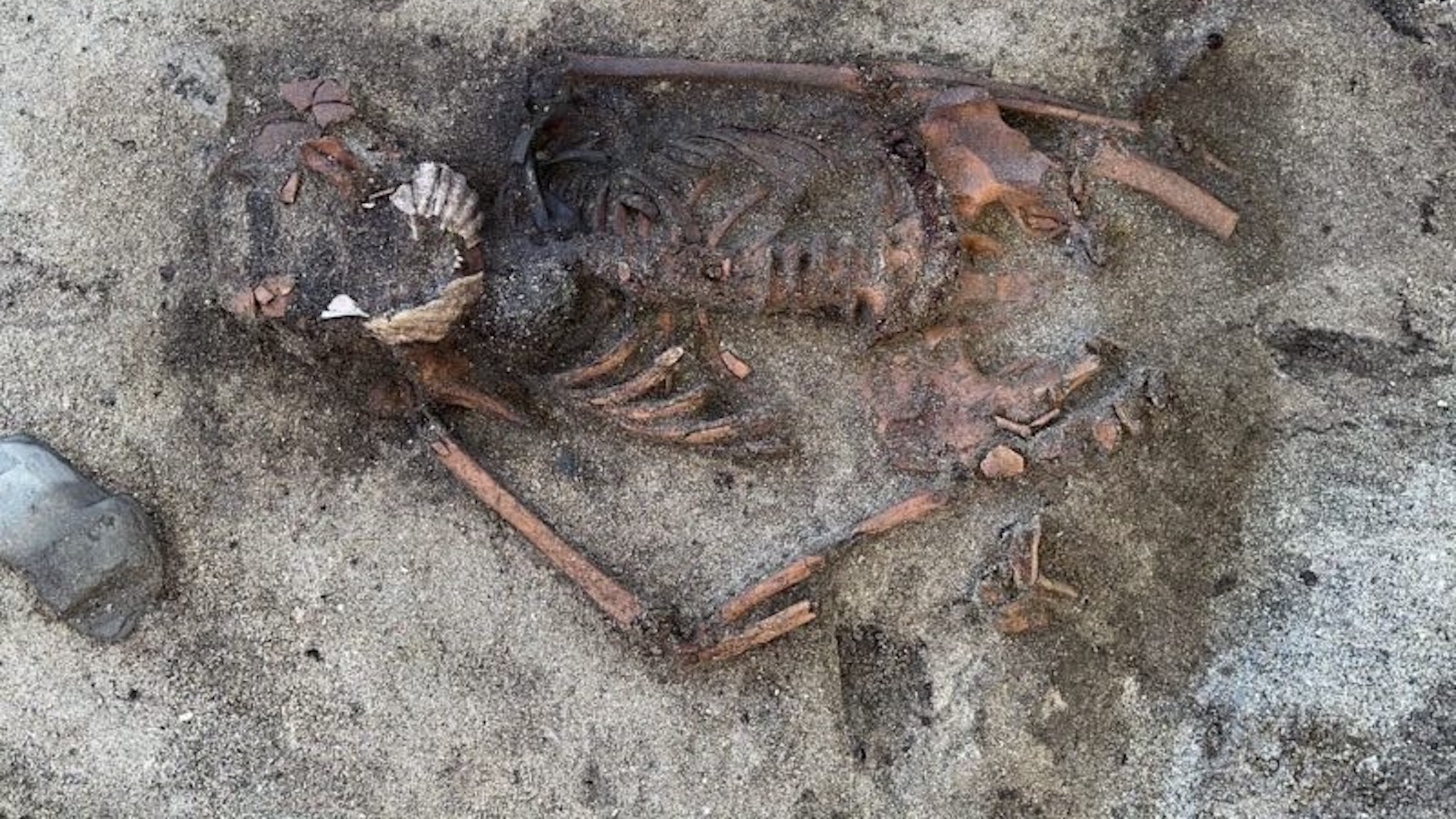
A significant archaeological discovery has emerged in Trøndelag County, Norway, where a metal detectorist uncovered a Viking Age grave. This remarkable find, made by Roy Søreng, includes the remains of a woman adorned with costume and jewelry dating back to the 800s. The discovery has drawn the attention of archaeologists, who have commenced excavation to protect the site and its historical treasures.
Following Søreng’s initial discovery of an oval brooch, the team from the NTNU Museum began their excavation efforts in secrecy. Raymond Sauvage, head engineer at the museum’s Department of Archaeology and Cultural History, confirmed the burial’s significance. “This grave contains what we believe to be a woman, buried with a typical Viking Age costume and jewelry set,” he stated, highlighting that the individual was likely a free and perhaps married woman, possibly the mistress of a farm.
The grave revealed skeletal remains alongside two oval brooches, one of which was the brooch discovered by Søreng. Additionally, a ring buckle used for fastening a petticoat was found. Notably, two scallop shells partially covered the deceased’s mouth. While these shells are commonly associated with the Christian cult of St. James during the Middle Ages, they are exceedingly rare in pre-Christian graves, prompting questions about their symbolic meaning.
“This practice has not been documented in pre-Christian graves in Norway. We do not yet understand its significance,” Sauvage explained. The excavation team also discovered bird bones, likely from the wings of a bird, which may have held symbolic importance during the burial ceremony. According to reports from Norwegian SciTech News, the shells and bones were likely intended to convey a message to those witnessing the burial.
This excavation follows another significant find in the same area earlier this year, where a pristine skeleton was discovered. Hanne Bryn, field supervisor at the NTNU Museum, indicated that the newly found individual is likely one to three generations younger than the previous discovery. “During our inspection, it became clear that we were dealing with a new grave that was at risk of being damaged with upcoming ploughing,” she explained. The landowner, Arve Innstrand, permitted the excavation to proceed, allowing researchers to gather valuable information.
The next phase involves detailed analysis of the skeleton, preservation of the artifacts, and sampling for both dating and DNA analysis. “Our goal is to learn more about the individual and explore potential kinship with the previous find,” Sauvage noted. Researchers plan to investigate various aspects, including body height, gender-specific traits, and any signs of disease.
The ongoing efforts at this site underscore the importance of archaeological research in uncovering the past and understanding the lives of those who lived during the Viking Age. As more findings come to light, they may reshape our understanding of this fascinating period in history.

Norwegian Explorer Amundsen Reaches South Pole First, Dec. 14, 1911

Urgent Discovery: New Pumpkin Toadlet Species Found in Brazil

Analyzing Historical Paintings as Data for Political Insights

BYU Dominates UC Riverside with 100-53 Victory at Home

Trump Vows Strong Retaliation After Attack Claims American Lives

Brokerages Set Price Target for Advantage Energy at C$14.00

Josh O’Connor Addresses Live-Action ‘Ratatouille’ Rumors on SNL

Maintain Your Muzzleloader: Essential Cleaning Tips for Hunters

Spurs Shock Thunder 111-109; Wembanyama Sparks NBA Cup Final Surge

University of Hawaiʻi Leads $25M AI Project to Monitor Natural Disasters

Interstellar Object 3I/ATLAS Emits Unique Metal Alloy, Says Scientist

Researchers Achieve Fastest Genome Sequencing in Under Four Hours

Iconic Sand Dollar Social Club Listed for $3 Million in Folly Beach

Afghan Refugee Detained by ICE After Asylum Hearing in New York

McEwen Inc. Secures Tartan Lake Gold Mine Through Acquisition

Peptilogics Secures $78 Million to Combat Prosthetic Joint Infections

Jump for Good: San Clemente Pier Fundraiser Allows Legal Leaps

Mars Observed: Detailed Imaging Reveals Dust Avalanche Dynamics
-
Science1 month ago
University of Hawaiʻi Leads $25M AI Project to Monitor Natural Disasters
-
 Science2 months ago
Interstellar Object 3I/ATLAS Emits Unique Metal Alloy, Says Scientist
-
 Science2 months ago
Researchers Achieve Fastest Genome Sequencing in Under Four Hours
-
 Business2 months ago
Iconic Sand Dollar Social Club Listed for $3 Million in Folly Beach
-
 Politics2 months ago
Afghan Refugee Detained by ICE After Asylum Hearing in New York
-
 Business2 months ago
McEwen Inc. Secures Tartan Lake Gold Mine Through Acquisition
-
 Health2 months ago
Peptilogics Secures $78 Million to Combat Prosthetic Joint Infections
-
 Lifestyle2 months ago
Jump for Good: San Clemente Pier Fundraiser Allows Legal Leaps
-
 Science2 months ago
Mars Observed: Detailed Imaging Reveals Dust Avalanche Dynamics
-

 Health2 months ago
Researcher Uncovers Zika Virus Pathway to Placenta Using Nanotubes
-

 Entertainment2 months ago
Jennifer Lopez Addresses A-Rod Split in Candid Interview
-

 World2 months ago
US Passport Ranks Drop Out of Top 10 for First Time Ever