
Science
MIT Unveils Ancient Copper Smelting Techniques Using CT Scans

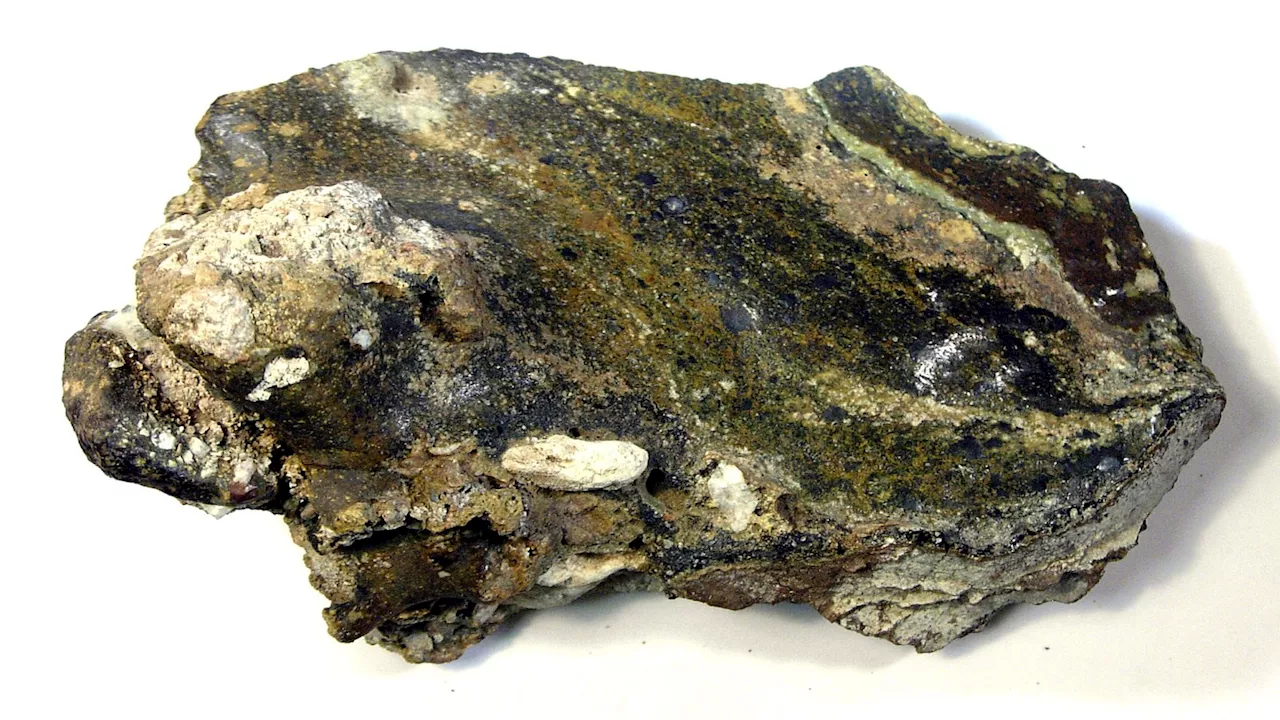
Researchers at the Massachusetts Institute of Technology (MIT) have made significant strides in understanding ancient metallurgy by using advanced CT scanning technology to analyze 5,000-year-old slag from an ancient copper smelting site in Tepe Hissar, Iran. This innovative approach promises to shed light on the earliest metalworking processes, revealing how ancient civilizations extracted and processed metals.
Metallurgy marked a pivotal moment in human history, transforming societies as they began to harness the power of metals. However, until now, little evidence has existed about the specific processes employed by these early metallurgists. The study conducted by MIT researchers aims to bridge this knowledge gap, enhancing our understanding of ancient technological capabilities. “The goal is to understand, from start to finish, how they accomplished making these shiny metal products,” stated the research team.
The slag analyzed in this study has been dated between 3100 and 2900 BCE, a timeframe that aligns with the emergence of metallurgy in the region. Tepe Hissar is recognized as one of the earliest sites to provide evidence of copper processing, making it a focal point for researchers interested in ancient metallurgy.
Innovative Methodology Enhances Research
This groundbreaking study represents the first application of CT scanning to ancient slag. MIT researchers utilized both an industrial CT scanner and a standard CT scanner available on campus for their experiments. Traditional methods of analyzing slag have often faced challenges due to its chemically complex nature. As MIT explained, slag is produced during the metal extraction process when ores are heated, transforming into a molten liquid that solidifies as it cools.
The research team stated, “Slag waste is chemically complex to interpret because in our modern metallurgical practices it contains everything not desired in the final product.” The presence of elements like arsenic in the slag has led to debates among archaeometallurgists regarding its role in ancient metal production. The CT scans provided a comprehensive view of the slag’s internal structure, allowing researchers to identify pores and traces of other materials that conventional methods might overlook.
In addition to CT scanning, the team employed other analytical techniques such as X-ray fluorescence, X-ray diffraction, and both optical and scanning electron microscopy. The combination of these methods not only enriched the data collected but also sparked discussions among researchers regarding the implications of their findings.
Implications for Future Research
The insights gained from this study may have far-reaching implications for the field of archaeology and the understanding of ancient technologies. The CT scans have prompted new questions about how ancient metals were processed, particularly concerning the role of arsenic and other elements in the production process.
MIT researchers concluded that CT scanning could become a crucial tool in archaeology, helping to unravel complex ancient materials and processes. “This should be an important lever for more systematic studies of the copper aspect of smelting, and also for continuing to understand the role of arsenic,” they stated. The findings underscore the potential for this technology to enhance long-term studies of corrosion and the stability of ancient artifacts, paving the way for deeper exploration into historical metallurgical practices.
As research continues, the use of CT scans in studying ancient materials not only illuminates the past but also equips future scholars with the tools needed to investigate the intricate relationship between early civilizations and their technological advancements.

Urgent Tax Savings Alert: Maximize Deductions Before April 15

Trump’s Administration Faces Uncertainty Over Government Shutdowns

Cosmic Defects: The Mystery of the Universe’s Missing Anomalies

Rapid City Parks Department Opens Registration for Bocce Leagues

Samsung Galaxy Watch 9 to Feature Larger 435mAh Battery Soon

Two Dead After Student Boats Capsize Off Okinawa Coast

Healthy Choice Wellness Reports Earnings with Mixed Results

Prince Harry Positions Himself as Royal Family’s Image Reviver

All Points North Lodge Achieves FSPHP-ETA Accreditation

Send Holiday Parcels for £1.99 with New Comparison Service

University of Hawaiʻi Leads $25M AI Project to Monitor Natural Disasters

Maui County Reopens Upgraded Lānaʻi Fifth Street Courts Today!

Daily Codeword Puzzle Launches on October 21, 2025

Congresswoman Under Fire for Misleading Epstein Donation Claims

Interstellar Object 3I/ATLAS Emits Unique Metal Alloy, Says Scientist

Trump Vows to Resolve Afghanistan-Pakistan Crisis “Very Quickly”

Charles Darwin’s Address Book Reveals Hidden Aspects of His Life

Rediscovering Chrysler: 5 Overlooked Models from the 1980s
-
 Lifestyle8 months ago
Send Holiday Parcels for £1.99 with New Comparison Service
-
Science9 months ago
University of Hawaiʻi Leads $25M AI Project to Monitor Natural Disasters
-
 Top Stories8 months ago
Maui County Reopens Upgraded Lānaʻi Fifth Street Courts Today!
-
 Entertainment10 months ago
Daily Codeword Puzzle Launches on October 21, 2025
-
 Lifestyle8 months ago
Congresswoman Under Fire for Misleading Epstein Donation Claims
-
 Science10 months ago
Interstellar Object 3I/ATLAS Emits Unique Metal Alloy, Says Scientist
-
 Top Stories9 months ago
Trump Vows to Resolve Afghanistan-Pakistan Crisis “Very Quickly”
-
 Science8 months ago
Charles Darwin’s Address Book Reveals Hidden Aspects of His Life
-
 Lifestyle8 months ago
Rediscovering Chrysler: 5 Overlooked Models from the 1980s
-

 Science7 months ago
Understanding Generation Z: Strategies for Engaging the Workforce
-

 Entertainment10 months ago
Kelly McCreary Discusses Future of Maggie and Winston in Grey’s Anatomy
-

 Entertainment7 months ago
Landmark Shift as Iconic Anime Series Concludes After 26 Years