
Science
Neanderthals Controlled Fire Early, Orcas Hunt with Dolphins


This week in science revealed significant findings regarding Neanderthal capabilities, unusual animal behavior, and intriguing cosmic events. Researchers have uncovered evidence that Neanderthals were able to control fire as early as 400,000 years ago, while orcas and dolphins have been observed cooperating in hunts. Meanwhile, exciting developments in astronomy and archaeology also captured attention.
Neanderthals’ Mastery of Fire
A study published this week provides groundbreaking insight into Neanderthal behavior. Archaeologists in Suffolk, England, discovered that these early humans utilized fire much earlier than previously thought. The findings suggest Neanderthals intentionally brought pyrite, a mineral capable of producing sparks when struck against flint, to a site over 400,000 years ago. This discovery pushes back the timeline for controlled fire by approximately 350,000 years.
Controlled fire is considered a pivotal development in human evolution, impacting social and cultural practices. The researchers assert that the presence of pyrite indicates a purposeful attempt to create fire, potentially altering the understanding of Neanderthal intelligence and adaptability.
Orcas and Dolphins Collaborate
In a remarkable study released this week, researchers observed orcas off the coast of British Columbia hunting alongside Pacific white-sided dolphins. The study highlights a rare instance of cooperation between these two species, which typically exhibit aggressive behaviors toward one another.
The findings indicate that the orcas shared their salmon catch with dolphins, suggesting a novel form of social interaction. While the study authors argue this represents cooperative hunting, some experts caution that the behavior could be interpreted as kleptoparasitism, where one species steals from another.
The implications of this study extend beyond mere observation, as they challenge existing narratives about predator relationships in marine ecosystems.
Cosmic Developments and Archaeological Discoveries
In the realm of astronomy, a binary star system known as V Sagittae is showing signs of imminent supernova activity. This system is expected to produce visible flares that could illuminate the night sky within the next century, captivating skywatchers globally.
Additionally, a mysterious X-ray signal detected from deep space might signal the destruction of a star by two black holes, further deepening the intrigue surrounding cosmic phenomena.
On Earth, archaeological discoveries at Hadrian’s Wall are reshaping the narrative about life on the Roman Empire’s northern frontier. Findings at the historic fort of Vindolanda reveal evidence of a vibrant community, contradicting the perception of a desolate outpost and instead painting a picture of a diverse and active settlement.
As these discoveries unfold, they not only deepen our understanding of human history and animal interactions but also inspire curiosity about the universe and our place within it. Continued research in these areas promises to shed more light on the complex tapestry of life on Earth and beyond.

Dyersburg Drug Raid Seizes Fentanyl, Cash; Suspect Arrested

Tragic House Fire Claims Life of 84-Year-Old Woman in Taneytown

Gethsemane Cemetery Honors Veterans with Wreath-Laying Ceremony

17-Year-Old Girl Falls 100 Feet to Death at Queensland Lookout

At Least 11 Killed in Shooting at Jewish Gathering in Australia

Stream NFL RedZone Free This Week: Your Guide to Options

Health Expert Recommends Golden Milk Over Hot Chocolate for Sleep

Jewish Leaders Condemn Deadly Terror Attack at Bondi Beach

Wyoming Increases Stake in Agnico Eagle Mines by 69.5% in Q2

University of Hawaiʻi Leads $25M AI Project to Monitor Natural Disasters

Interstellar Object 3I/ATLAS Emits Unique Metal Alloy, Says Scientist

Researchers Achieve Fastest Genome Sequencing in Under Four Hours

Iconic Sand Dollar Social Club Listed for $3 Million in Folly Beach

Afghan Refugee Detained by ICE After Asylum Hearing in New York

McEwen Inc. Secures Tartan Lake Gold Mine Through Acquisition

Peptilogics Secures $78 Million to Combat Prosthetic Joint Infections

Jump for Good: San Clemente Pier Fundraiser Allows Legal Leaps

Mars Observed: Detailed Imaging Reveals Dust Avalanche Dynamics
-
Science1 month ago
University of Hawaiʻi Leads $25M AI Project to Monitor Natural Disasters
-
 Science2 months ago
Interstellar Object 3I/ATLAS Emits Unique Metal Alloy, Says Scientist
-
 Science2 months ago
Researchers Achieve Fastest Genome Sequencing in Under Four Hours
-
 Business2 months ago
Iconic Sand Dollar Social Club Listed for $3 Million in Folly Beach
-
 Politics2 months ago
Afghan Refugee Detained by ICE After Asylum Hearing in New York
-
 Business2 months ago
McEwen Inc. Secures Tartan Lake Gold Mine Through Acquisition
-
 Health2 months ago
Peptilogics Secures $78 Million to Combat Prosthetic Joint Infections
-
 Lifestyle2 months ago
Jump for Good: San Clemente Pier Fundraiser Allows Legal Leaps
-
 Science2 months ago
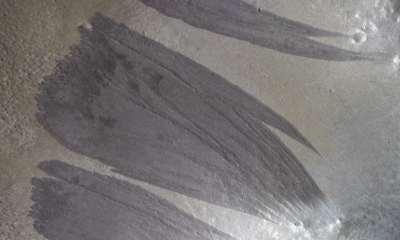
Mars Observed: Detailed Imaging Reveals Dust Avalanche Dynamics
-

 Health2 months ago
Researcher Uncovers Zika Virus Pathway to Placenta Using Nanotubes
-

 Entertainment2 months ago
Jennifer Lopez Addresses A-Rod Split in Candid Interview
-

 World2 months ago
US Passport Ranks Drop Out of Top 10 for First Time Ever