
Science
New Study Questions Whether Earth Received Alien Signals Before

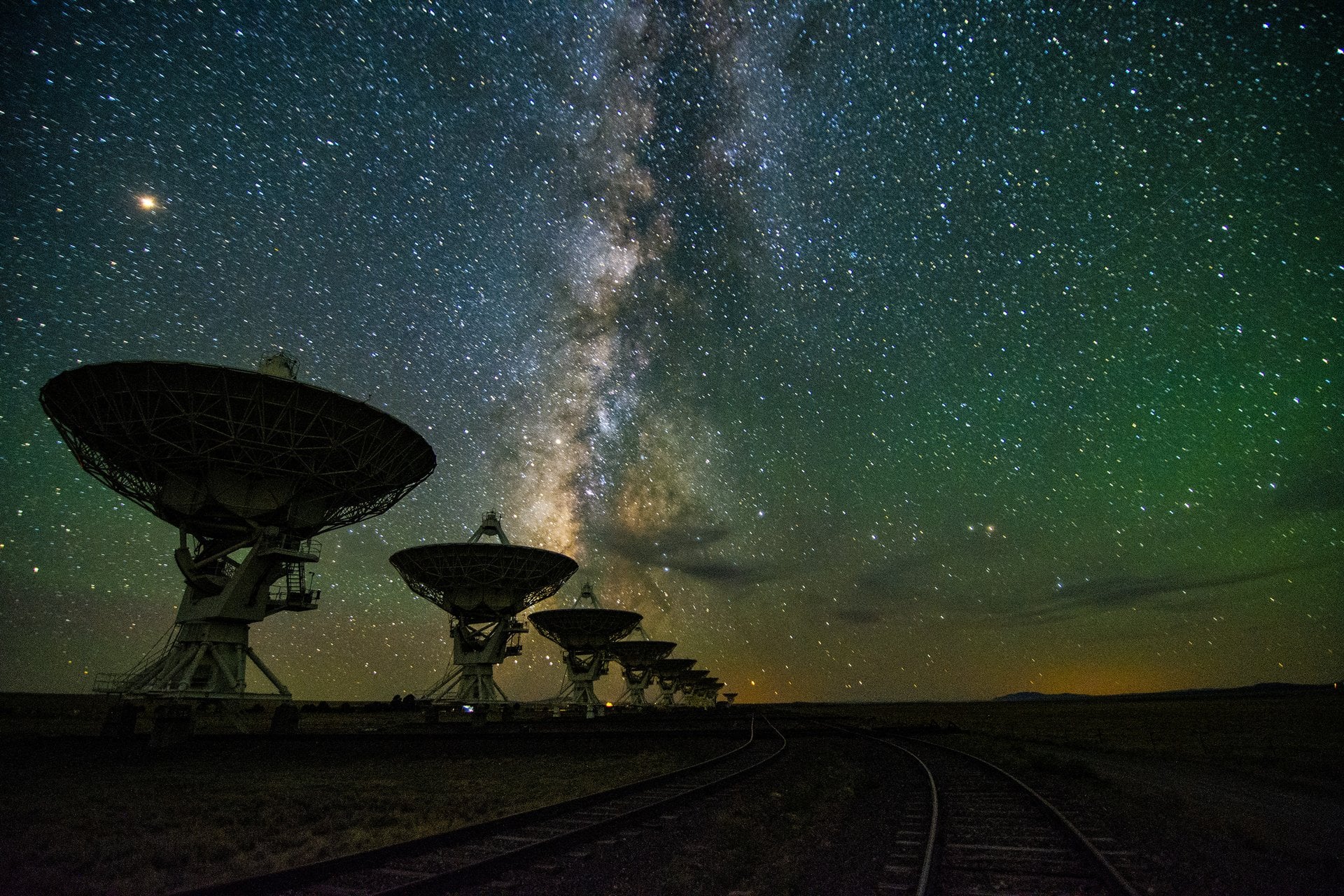
For over sixty years, scientists have been searching for signals from extraterrestrial civilizations. The initial efforts led by Dr. Frank Drake marked the beginning of the Search for Extraterrestrial Intelligence (SETI). Recent advancements in technology have broadened the scope of this search, now including thermal signatures and optical flashes, in addition to traditional radio signals. Despite extensive efforts, no definitive evidence of alien transmissions has emerged.
A new study by Claudio Grimaldi, a researcher at the Swiss Federal Technology Institute of Lausanne (EPFL), sheds light on the possibility of previously undetected signals. Published in The Astrophysical Journal, the study investigates the implications of potential past signals on current SETI initiatives. Grimaldi applied Bayesian Analysis, a statistical method that updates probabilities as new data becomes available, to assess the likelihood of prior undetected signals affecting present-day detection chances.
Investigating Technosignatures
Grimaldi’s study modeled technosignatures as emissions from advanced civilizations that travel at the speed of light, potentially lasting from mere days to thousands of years. The research focused on the conditions under which detection could occur, particularly considering whether the signals were strong enough for our instruments to pick them up. He examined two types of signals: omnidirectional signals, like waste heat from megastructures, and highly focused signals, such as beacons or laser flashes.
The findings present a mixed picture. For those optimistic about finding contact with alien civilizations, the results are discouraging. A significant number of undetected signals would have had to have reached Earth in the past for there to be a reasonable chance of detecting technosignatures closer to our Solar System today. In some scenarios, the estimated number of signals would surpass the number of potentially habitable planets within a few hundred to thousands of light-years from our planet.
Long-Term Prospects for Detection
However, when extending the analysis to greater distances, the results shift. If technosignatures are long-lasting and propagate through the entire Milky Way galaxy, detection becomes more plausible at distances of several thousand light-years or more. Yet, the overall number of detectable signals at any given time remains low, suggesting that while past transmissions may not have been detected, this does not imply future success in finding signals.
The study concludes that transmissions from advanced civilizations are likely to be rare, distant, and long-lasting, as opposed to being frequent or local. This implies that the field of SETI may face a prolonged period of waiting before any discernible technosignatures—whether intentional or unintentional—are identified.
Far from dissuading SETI initiatives, Grimaldi’s findings advocate for a strategic shift in research efforts. Future SETI projects should prioritize extensive surveys that cover larger sections of the Milky Way, rather than concentrating on individual stars or nearby star clusters. This approach may enhance the chances of uncovering signals from civilizations that exist far beyond our immediate cosmic neighborhood.

Urgent Tax Savings Alert: Maximize Deductions Before April 15

Trump’s Administration Faces Uncertainty Over Government Shutdowns

Cosmic Defects: The Mystery of the Universe’s Missing Anomalies

Rapid City Parks Department Opens Registration for Bocce Leagues

Samsung Galaxy Watch 9 to Feature Larger 435mAh Battery Soon

Two Dead After Student Boats Capsize Off Okinawa Coast

Healthy Choice Wellness Reports Earnings with Mixed Results

Prince Harry Positions Himself as Royal Family’s Image Reviver

All Points North Lodge Achieves FSPHP-ETA Accreditation

Send Holiday Parcels for £1.99 with New Comparison Service

University of Hawaiʻi Leads $25M AI Project to Monitor Natural Disasters

Maui County Reopens Upgraded Lānaʻi Fifth Street Courts Today!

Daily Codeword Puzzle Launches on October 21, 2025

Congresswoman Under Fire for Misleading Epstein Donation Claims

Interstellar Object 3I/ATLAS Emits Unique Metal Alloy, Says Scientist

Trump Vows to Resolve Afghanistan-Pakistan Crisis “Very Quickly”

Charles Darwin’s Address Book Reveals Hidden Aspects of His Life

Rediscovering Chrysler: 5 Overlooked Models from the 1980s
-
 Lifestyle8 months ago
Send Holiday Parcels for £1.99 with New Comparison Service
-
Science9 months ago
University of Hawaiʻi Leads $25M AI Project to Monitor Natural Disasters
-
 Top Stories8 months ago
Maui County Reopens Upgraded Lānaʻi Fifth Street Courts Today!
-
 Entertainment10 months ago
Daily Codeword Puzzle Launches on October 21, 2025
-
 Lifestyle9 months ago
Congresswoman Under Fire for Misleading Epstein Donation Claims
-
 Science10 months ago
Interstellar Object 3I/ATLAS Emits Unique Metal Alloy, Says Scientist
-
 Top Stories9 months ago
Trump Vows to Resolve Afghanistan-Pakistan Crisis “Very Quickly”
-
 Science9 months ago
Charles Darwin’s Address Book Reveals Hidden Aspects of His Life
-
 Lifestyle8 months ago
Rediscovering Chrysler: 5 Overlooked Models from the 1980s
-

 Science7 months ago
Understanding Generation Z: Strategies for Engaging the Workforce
-

 Entertainment10 months ago
Kelly McCreary Discusses Future of Maggie and Winston in Grey’s Anatomy
-

 Top Stories8 months ago
aespa Faces Backlash Over G-Dragon Interaction at 2025 MAMAs