
Science
Researchers Explore Temperature Effects on Denitrification Reactors

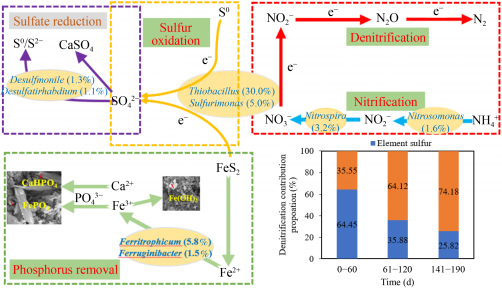
Researchers from the China University of Mining and Technology have revealed significant findings regarding the impact of seasonal temperature shifts on a novel biological treatment method for municipal wastewater. Their study, titled “Insights into seasonal temperature shifts on a robust composite-substrate autotrophic denitrification reactor for treating municipal secondary effluent,” is published in Frontiers of Environmental Science & Engineering, Volume 19, Issue 6.
The study investigates sulfur autotrophic denitrification (SAD), a promising technology for nitrogen removal that does not produce carbon dioxide emissions. Despite the potential of SAD, the influence of fluctuating seasonal temperatures on its effectiveness—particularly when treating real municipal secondary effluent—has not been thoroughly understood until now.
To address this gap, the researchers developed a composite substrate SAD reactor, referred to as the SPSAD reactor, which combines elemental sulfur and pyrite in a specific ratio. This innovative setup, utilizing hollow plastic balls as filler, was evaluated over a period of 190 days under varying temperature conditions.
The results revealed a notable decline in the reactor’s performance as temperatures dropped. When the temperature fell from 35 °C to 9 °C, the nitrate removal loading decreased from 0.060 kg NO3−-N/(m3·d) to 0.032 kg NO3−-N/(m3·d). Similarly, the nitrate removal efficiency dropped from 93.2% to 49.9%, alongside a reduction in the removal rate of phosphate, which fell from 67.9% to 30.2%.
The study highlighted a significant shift in the electron donor used for denitrification as temperatures decreased. The ratio of ΔSO42− to ΔNO3−-N decreased from 6.48 to 5.34, indicating a transition from elemental sulfur to pyrite as the primary electron donor.
Microbial analyses showed that the dominant microbial phylum in the reactor was Proteobacteria, with an average abundance of 53.11%. The genus Thiabacillus, identified as critical for denitrification, experienced a decline in abundance from 33.2% at warmer stages (25–35 °C) to 26.4% in cooler stages (9–11 °C).
The findings provide valuable insights into the feasibility of using the SPSAD reactor for effective nitrogen and phosphate removal in municipal wastewater treatment, particularly in colder climates. The research offers crucial scientific support for stakeholders involved in the deep treatment of municipal secondary effluent.
For those interested in further details, the full study is available at: https://journal.hep.com.cn/fese/EN/10.1007/s11783-025-2002-y.

Urgent Tax Savings Alert: Maximize Deductions Before April 15

Trump’s Administration Faces Uncertainty Over Government Shutdowns

Cosmic Defects: The Mystery of the Universe’s Missing Anomalies

Rapid City Parks Department Opens Registration for Bocce Leagues

Samsung Galaxy Watch 9 to Feature Larger 435mAh Battery Soon

Two Dead After Student Boats Capsize Off Okinawa Coast

Healthy Choice Wellness Reports Earnings with Mixed Results

Prince Harry Positions Himself as Royal Family’s Image Reviver

All Points North Lodge Achieves FSPHP-ETA Accreditation

Send Holiday Parcels for £1.99 with New Comparison Service

University of Hawaiʻi Leads $25M AI Project to Monitor Natural Disasters

Maui County Reopens Upgraded Lānaʻi Fifth Street Courts Today!

Daily Codeword Puzzle Launches on October 21, 2025

Congresswoman Under Fire for Misleading Epstein Donation Claims

Interstellar Object 3I/ATLAS Emits Unique Metal Alloy, Says Scientist

Trump Vows to Resolve Afghanistan-Pakistan Crisis “Very Quickly”

Charles Darwin’s Address Book Reveals Hidden Aspects of His Life

Rediscovering Chrysler: 5 Overlooked Models from the 1980s
-
 Lifestyle8 months ago
Send Holiday Parcels for £1.99 with New Comparison Service
-
Science9 months ago
University of Hawaiʻi Leads $25M AI Project to Monitor Natural Disasters
-
 Top Stories8 months ago
Maui County Reopens Upgraded Lānaʻi Fifth Street Courts Today!
-
 Entertainment10 months ago
Daily Codeword Puzzle Launches on October 21, 2025
-
 Lifestyle9 months ago
Congresswoman Under Fire for Misleading Epstein Donation Claims
-
 Science10 months ago
Interstellar Object 3I/ATLAS Emits Unique Metal Alloy, Says Scientist
-
 Top Stories9 months ago
Trump Vows to Resolve Afghanistan-Pakistan Crisis “Very Quickly”
-
 Science8 months ago
Charles Darwin’s Address Book Reveals Hidden Aspects of His Life
-
 Lifestyle8 months ago
Rediscovering Chrysler: 5 Overlooked Models from the 1980s
-

 Science7 months ago
Understanding Generation Z: Strategies for Engaging the Workforce
-

 Entertainment10 months ago
Kelly McCreary Discusses Future of Maggie and Winston in Grey’s Anatomy
-

 Top Stories8 months ago
aespa Faces Backlash Over G-Dragon Interaction at 2025 MAMAs