
Top Stories
Aliso Canyon Gas Leak Turns 10: Residents Reflect on Impact

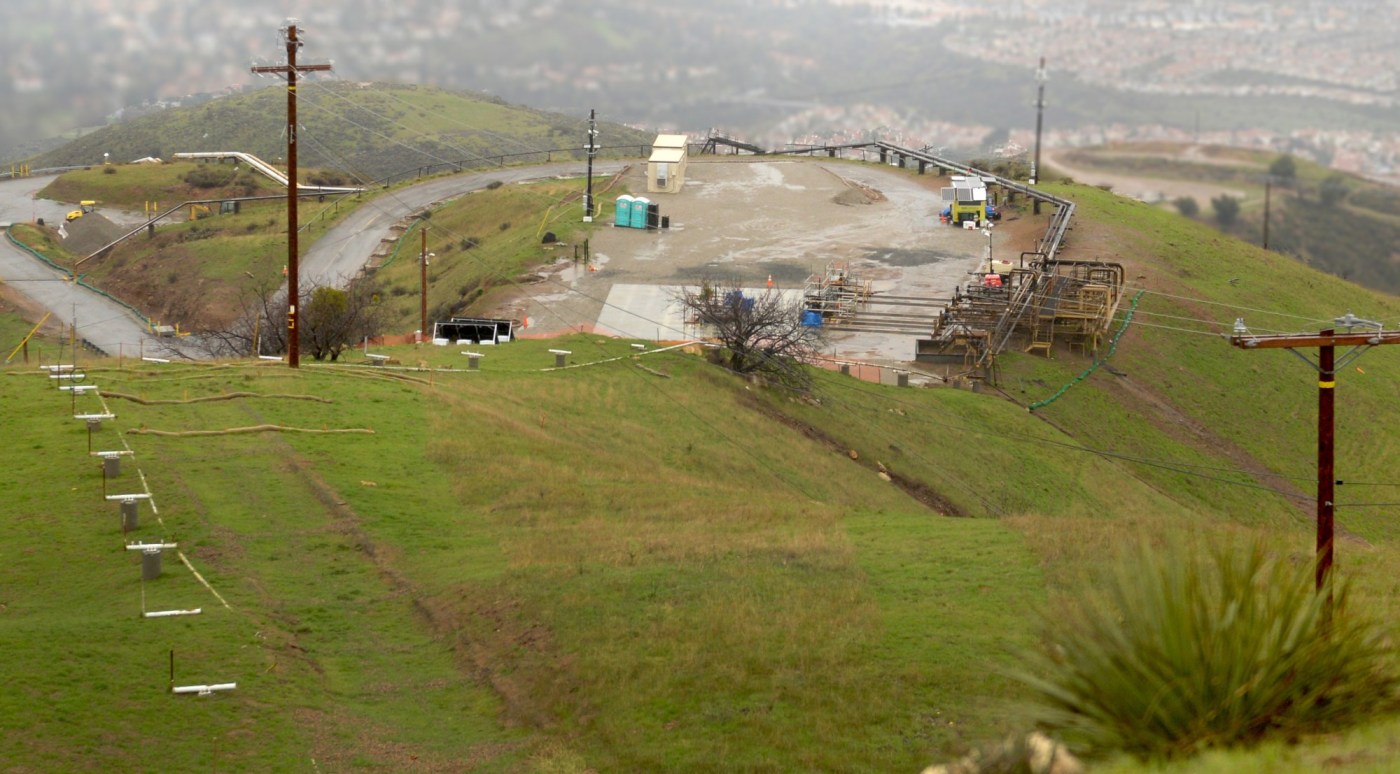
UPDATE: Today marks the tenth anniversary of the infamous Aliso Canyon natural gas leak, a disaster that has left lasting scars on the community of Porter Ranch, California. The October 23, 2015 blowout released over 100,000 tons of methane into the atmosphere, becoming the largest natural gas leak in U.S. history. As residents, school employees, and business owners reflect on the event, the human cost continues to resonate.
This catastrophic event began when SoCalGas discovered a leak at its underground gas storage facility near Oat Mountain. The leak was reported around 3:15 p.m. by a Termo Company employee who noticed a strong gas smell. Initial inspections failed to detect the leak, but it quickly escalated, leading to a full-blown crisis.
The leak was publicly acknowledged on October 26, but it wasn’t until October 31 that SoCalGas sent letters to approximately 8,000 residents, apologizing for the delay in communication. Reports indicated that by mid-November, the well was releasing between 500,000 to 1 million cubic feet of methane daily, prompting the Los Angeles County Department of Public Health to order SoCalGas to provide temporary relocation assistance for affected families.
As the community dealt with symptoms like dizziness and respiratory issues, the fallout from the leak grew. By December 18, 2015, over 2,000 households had relocated due to health concerns. The state declared a state of emergency, enabling federal and state assistance for those impacted.
The leak was finally controlled on February 11, 2016, and SoCalGas officially sealed the well a week later. However, the repercussions continue. SoCalGas has faced lawsuits, including a $4.3 million settlement for failing to promptly report the leak, and ongoing scrutiny from both state and federal regulators.
In response to the disaster, Governor Gavin Newsom has called for stricter safety regulations, emphasizing the need for accountability in the wake of such environmental threats. The incident has sparked significant public outcry and advocacy for reducing reliance on fossil fuels, with many residents pushing for a transition to all-electric homes.
As the community gathers to commemorate this somber anniversary, the lingering effects of the Aliso Canyon disaster serve as a reminder of the urgent need for improved safety measures and environmental protections. Residents are urged to stay informed about ongoing developments and potential legislative changes that could affect their future.
Next Steps: Watch for reactions from local officials and community leaders in the coming days, as discussions continue around the future of the Aliso Canyon facility and the broader implications for energy policy in California. The Aliso Canyon saga is far from over, and its impact will be felt for years to come.

Urgent Tax Savings Alert: Maximize Deductions Before April 15

Trump’s Administration Faces Uncertainty Over Government Shutdowns

Cosmic Defects: The Mystery of the Universe’s Missing Anomalies

Rapid City Parks Department Opens Registration for Bocce Leagues

Samsung Galaxy Watch 9 to Feature Larger 435mAh Battery Soon

Two Dead After Student Boats Capsize Off Okinawa Coast

Healthy Choice Wellness Reports Earnings with Mixed Results

Prince Harry Positions Himself as Royal Family’s Image Reviver

All Points North Lodge Achieves FSPHP-ETA Accreditation

Send Holiday Parcels for £1.99 with New Comparison Service

University of Hawaiʻi Leads $25M AI Project to Monitor Natural Disasters

Maui County Reopens Upgraded Lānaʻi Fifth Street Courts Today!

Daily Codeword Puzzle Launches on October 21, 2025

Congresswoman Under Fire for Misleading Epstein Donation Claims

Interstellar Object 3I/ATLAS Emits Unique Metal Alloy, Says Scientist

Trump Vows to Resolve Afghanistan-Pakistan Crisis “Very Quickly”

Charles Darwin’s Address Book Reveals Hidden Aspects of His Life

Rediscovering Chrysler: 5 Overlooked Models from the 1980s
-
 Lifestyle8 months ago
Send Holiday Parcels for £1.99 with New Comparison Service
-
Science9 months ago
University of Hawaiʻi Leads $25M AI Project to Monitor Natural Disasters
-
 Top Stories8 months ago
Maui County Reopens Upgraded Lānaʻi Fifth Street Courts Today!
-
 Entertainment10 months ago
Daily Codeword Puzzle Launches on October 21, 2025
-
 Lifestyle9 months ago
Congresswoman Under Fire for Misleading Epstein Donation Claims
-
 Science10 months ago
Interstellar Object 3I/ATLAS Emits Unique Metal Alloy, Says Scientist
-
 Top Stories9 months ago
Trump Vows to Resolve Afghanistan-Pakistan Crisis “Very Quickly”
-
 Science8 months ago
Charles Darwin’s Address Book Reveals Hidden Aspects of His Life
-
 Lifestyle8 months ago
Rediscovering Chrysler: 5 Overlooked Models from the 1980s
-

 Science7 months ago
Understanding Generation Z: Strategies for Engaging the Workforce
-

 Entertainment10 months ago
Kelly McCreary Discusses Future of Maggie and Winston in Grey’s Anatomy
-

 Top Stories8 months ago
aespa Faces Backlash Over G-Dragon Interaction at 2025 MAMAs