
Top Stories
China Pressures U.S. to Halt Arms Sales to Taiwan

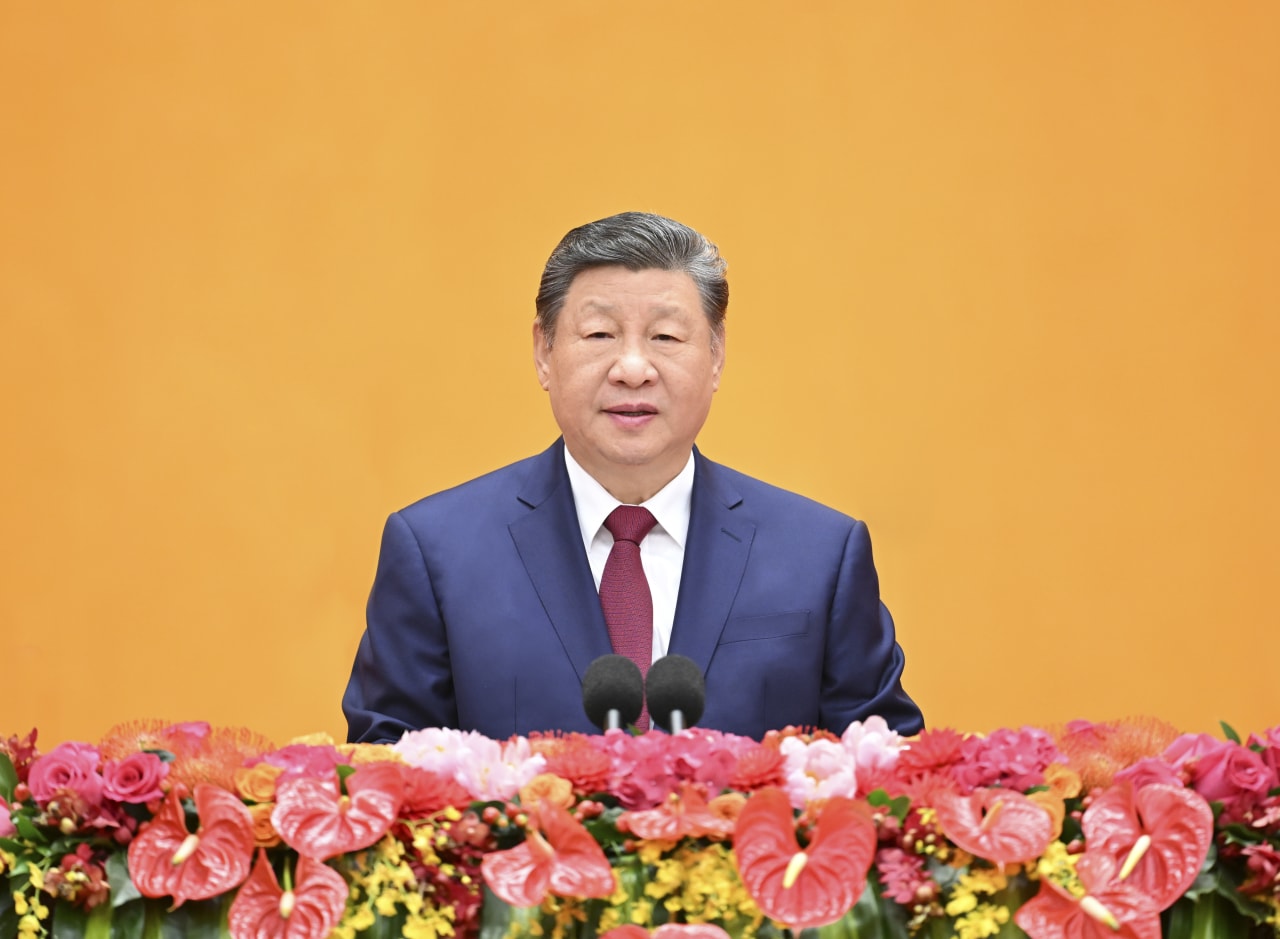
China’s leader, Xi Jinping, has intensified diplomatic pressure on the United States, urging the Biden administration to abandon plans for a significant arms sale to Taiwan. This move reflects Beijing’s ongoing concerns about U.S. military support for Taiwan amid rising tensions in the region.
The U.S. State Department confirmed on March 1, 2024, that it was considering a package of defensive arms valued at approximately $1.2 billion for Taiwan. This includes advanced missile systems and surveillance equipment designed to enhance Taiwan’s defense capabilities. The proposed sale has sparked a swift response from China, which views Taiwan as a breakaway province and opposes any form of military support for the island.
In a recent statement, Wang Yi, China’s Foreign Minister, expressed strong disapproval of the U.S. actions, calling them a violation of the “One China” principle. Wang emphasized that any arms sale to Taiwan would be met with “serious consequences,” underscoring China’s commitment to its territorial claims.
Escalating Tensions in the Taiwan Strait
The situation in the Taiwan Strait has become increasingly volatile, with frequent military exercises conducted by both China and Taiwan. Analysts suggest that these developments have raised the stakes for U.S.-China relations, further complicating an already tense geopolitical landscape.
In response to the potential arms sale, the Defense Security Cooperation Agency has indicated that the proposed equipment is aimed at ensuring Taiwan’s self-defense capabilities. The agency noted that such sales are consistent with U.S. commitments under the Taiwan Relations Act, which mandates American support for Taiwan’s defense.
Despite the U.S. position, the Chinese government maintains that any military transactions with Taiwan undermine stability in the region. Beijing has repeatedly warned that it would not hesitate to take military action if it perceives a threat to its sovereignty.
Implications for U.S.-China Relations
The ongoing dialogue between the U.S. and China regarding Taiwan is critical, as both nations navigate complex economic and diplomatic relations. As tensions escalate, the potential for miscalculation increases, raising concerns among international observers about the risk of conflict.
In light of these developments, President Donald Trump has emphasized the importance of maintaining open communication with China while supporting Taiwan’s right to self-defense. The U.S. administration faces the challenge of balancing its commitments to Taiwan with the need to engage constructively with Beijing.
As the situation unfolds, experts predict that the U.S. will continue to assess its military support for Taiwan while considering the broader implications for regional stability and its relationship with China. The evolving dynamics of U.S.-China relations will likely remain a focal point for international diplomacy in the coming months.

Urgent Tax Savings Alert: Maximize Deductions Before April 15

Trump’s Administration Faces Uncertainty Over Government Shutdowns

Cosmic Defects: The Mystery of the Universe’s Missing Anomalies

Rapid City Parks Department Opens Registration for Bocce Leagues

Samsung Galaxy Watch 9 to Feature Larger 435mAh Battery Soon

Two Dead After Student Boats Capsize Off Okinawa Coast

Healthy Choice Wellness Reports Earnings with Mixed Results

Prince Harry Positions Himself as Royal Family’s Image Reviver

All Points North Lodge Achieves FSPHP-ETA Accreditation

Send Holiday Parcels for £1.99 with New Comparison Service

University of Hawaiʻi Leads $25M AI Project to Monitor Natural Disasters

Maui County Reopens Upgraded Lānaʻi Fifth Street Courts Today!

Daily Codeword Puzzle Launches on October 21, 2025

Congresswoman Under Fire for Misleading Epstein Donation Claims

Interstellar Object 3I/ATLAS Emits Unique Metal Alloy, Says Scientist

Trump Vows to Resolve Afghanistan-Pakistan Crisis “Very Quickly”

Charles Darwin’s Address Book Reveals Hidden Aspects of His Life

Rediscovering Chrysler: 5 Overlooked Models from the 1980s
-
 Lifestyle8 months ago
Send Holiday Parcels for £1.99 with New Comparison Service
-
Science9 months ago
University of Hawaiʻi Leads $25M AI Project to Monitor Natural Disasters
-
 Top Stories8 months ago
Maui County Reopens Upgraded Lānaʻi Fifth Street Courts Today!
-
 Entertainment10 months ago
Daily Codeword Puzzle Launches on October 21, 2025
-
 Lifestyle9 months ago
Congresswoman Under Fire for Misleading Epstein Donation Claims
-
 Science10 months ago
Interstellar Object 3I/ATLAS Emits Unique Metal Alloy, Says Scientist
-
 Top Stories9 months ago
Trump Vows to Resolve Afghanistan-Pakistan Crisis “Very Quickly”
-
 Science8 months ago
Charles Darwin’s Address Book Reveals Hidden Aspects of His Life
-
 Lifestyle8 months ago
Rediscovering Chrysler: 5 Overlooked Models from the 1980s
-

 Science7 months ago
Understanding Generation Z: Strategies for Engaging the Workforce
-

 Entertainment10 months ago
Kelly McCreary Discusses Future of Maggie and Winston in Grey’s Anatomy
-

 Top Stories8 months ago
aespa Faces Backlash Over G-Dragon Interaction at 2025 MAMAs