
Top Stories
Feds Propose Opening Oregon Forests to 1960s Logging Levels

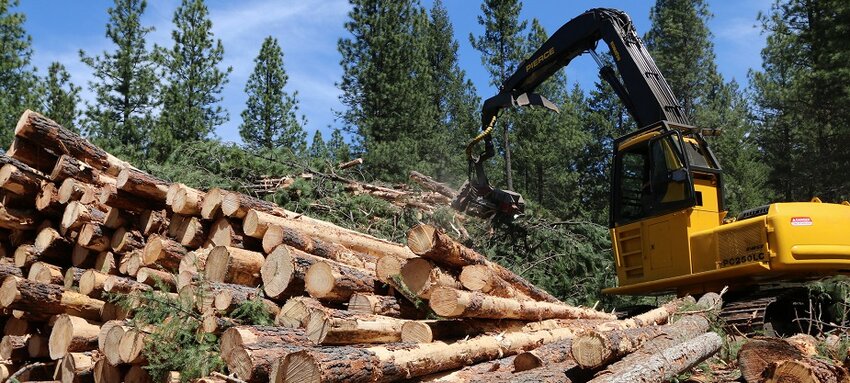
URGENT UPDATE: Federal officials have just announced plans to open up millions of acres of forests in western Oregon for logging at levels not seen since the 1960s. The Bureau of Land Management (BLM) aims to boost timber production dramatically, aligning with priorities set by the Trump administration. This controversial proposal threatens habitats for vulnerable species, including the federally protected northern spotted owl and marbled murrelet.
The BLM released a notice of intent on Thursday, kicking off a 30-day public comment period that ends on March 23. The agency plans to update the Western Oregon Resource Management Plans, which currently govern logging and conservation on 2.5 million acres across 17 Oregon counties. This area, known as the O&C lands, has seen significant protection since the last plan update in 2016.
The proposed changes could see logging rates return to levels more than ten times current harvest levels. Acting BLM Director Bill Groffy stated, “Bringing timber production back to historic levels is essential for reviving local economies and reducing the threat of catastrophic wildfires.” He emphasized that enhanced domestic timber production is crucial for national security and economic prosperity.
However, environmental advocates are alarmed. Chandra LeGue from Oregon Wild described the proposal as a dangerous regression to the days of rampant clear-cutting, which nearly drove key species to extinction. “The public does not want to go back to the days of rampant old-growth clearcutting,” LeGue said. “These are treasured public lands, and we’re going to fight for them.”
President Trump’s executive order titled “Immediate Expansion of American Timber Production” empowers the BLM to use the Endangered Species Act Committee—known as the “God Squad”—to override species protections that currently hinder logging expansion. This committee, which has rarely been utilized since its inception in 1978, has the authority to influence the fate of endangered species.
Travis Joseph, president of the American Forest Resource Council, praised the BLM’s initiative, emphasizing the need for increased logging to alleviate overstocked forest conditions, which he claims heightens the risk of catastrophic wildfires. “Bureau of Land Management lands in western Oregon continue to grow significantly more timber each year than is harvested,” he stated.
In stark contrast, experts like Bev Law, a forest scientist at Oregon State University, have criticized the proposed logging levels, calling it “insanity.” Law highlighted the importance of these forests in carbon storage. “These forests are the low hanging fruit… The best thing that we can do is to let the forest grow,” she urged.
The history of logging in Oregon has been contentious, particularly since the 1990s when aggressive logging practices led to significant ecological damage and legal action. Arran Robertson from Oregon Wild noted that previous administrations faced lawsuits that curtailed logging expansions, but now, “this administration is going full throttle.”
As the public comment period unfolds, stakeholders from both sides of the debate prepare for an intense discussion over the future of Oregon’s forests. With environmentalists and logging advocates on opposing ends, the outcome of this proposal could have lasting consequences for the region’s ecology and economy.
Stay tuned for more updates as this developing story unfolds. The implications of these changes could resonate far beyond Oregon, impacting national policies on timber production and conservation efforts.

Urgent Tax Savings Alert: Maximize Deductions Before April 15

Trump’s Administration Faces Uncertainty Over Government Shutdowns

Cosmic Defects: The Mystery of the Universe’s Missing Anomalies

Rapid City Parks Department Opens Registration for Bocce Leagues

Samsung Galaxy Watch 9 to Feature Larger 435mAh Battery Soon

Two Dead After Student Boats Capsize Off Okinawa Coast

Healthy Choice Wellness Reports Earnings with Mixed Results

Prince Harry Positions Himself as Royal Family’s Image Reviver

All Points North Lodge Achieves FSPHP-ETA Accreditation

Send Holiday Parcels for £1.99 with New Comparison Service

University of Hawaiʻi Leads $25M AI Project to Monitor Natural Disasters

Maui County Reopens Upgraded Lānaʻi Fifth Street Courts Today!

Daily Codeword Puzzle Launches on October 21, 2025

Congresswoman Under Fire for Misleading Epstein Donation Claims

Interstellar Object 3I/ATLAS Emits Unique Metal Alloy, Says Scientist

Trump Vows to Resolve Afghanistan-Pakistan Crisis “Very Quickly”

Charles Darwin’s Address Book Reveals Hidden Aspects of His Life

Rediscovering Chrysler: 5 Overlooked Models from the 1980s
-
 Lifestyle8 months ago
Send Holiday Parcels for £1.99 with New Comparison Service
-
Science9 months ago
University of Hawaiʻi Leads $25M AI Project to Monitor Natural Disasters
-
 Top Stories8 months ago
Maui County Reopens Upgraded Lānaʻi Fifth Street Courts Today!
-
 Entertainment10 months ago
Daily Codeword Puzzle Launches on October 21, 2025
-
 Lifestyle9 months ago
Congresswoman Under Fire for Misleading Epstein Donation Claims
-
 Science10 months ago
Interstellar Object 3I/ATLAS Emits Unique Metal Alloy, Says Scientist
-
 Top Stories9 months ago
Trump Vows to Resolve Afghanistan-Pakistan Crisis “Very Quickly”
-
 Science8 months ago
Charles Darwin’s Address Book Reveals Hidden Aspects of His Life
-
 Lifestyle8 months ago
Rediscovering Chrysler: 5 Overlooked Models from the 1980s
-

 Science7 months ago
Understanding Generation Z: Strategies for Engaging the Workforce
-

 Entertainment10 months ago
Kelly McCreary Discusses Future of Maggie and Winston in Grey’s Anatomy
-

 Top Stories8 months ago
aespa Faces Backlash Over G-Dragon Interaction at 2025 MAMAs