
Top Stories
Korean Team Unveils Groundbreaking 4D Printing Tech from Sulfur Waste

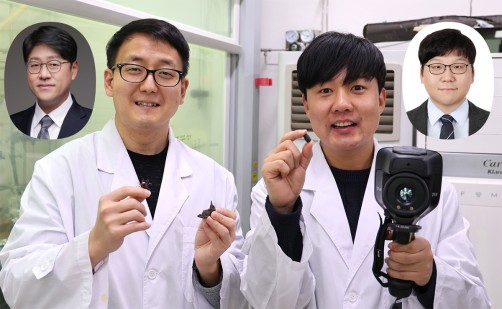
BREAKING: A revolutionary new technology has emerged from South Korea, enabling the creation of self-actuating soft robots using waste sulfur from petroleum refining. A collaborative team led by Dr. Dong-Gyun Kim from the Korea Research Institute of Chemical Technology (KRICT), along with experts from Hanyang University and Sejong University, has just announced this groundbreaking advancement in 4D printing technology.
This technology leverages the vast amounts of sulfur—approximately 85 million tons produced globally in 2024—typically discarded as industrial waste. By transforming this by-product into high-value materials, researchers are addressing pressing environmental concerns while pioneering the next generation of robotics.
The team has developed a unique process that creates sulfur plastics, which not only possess innovative properties like infrared light transmission but also aid in heavy metal capture, making them ideal for applications in water purification. These materials are now recognized as environmentally friendly options that contribute to sustainability and the advancement of technology.
However, past attempts to use sulfur in 3D printing faced challenges due to its complex internal structure. The research team overcame this by engineering a loosely cross-linked sulfur polymer network that can easily be extruded into intricate shapes. This allows for 4D printing capable of creating structures that can autonomously change shape in response to heat or light.
A remarkable feature of this technology is the ability to use a near-infrared (NIR) laser for just eight seconds. This activates a chemical welding process that enables printed components to bond without adhesives, akin to assembling LEGO blocks. Additionally, incorporating 20% magnetic particles allows for the creation of soft robots smaller than 1 cm, which move autonomously using external magnetic fields.
The closed-loop manufacturing capability of this technology is also noteworthy. Once used, the 4D structures can be melted and fully recycled into printing feedstock, establishing a sustainable manufacturing system that promotes resource circulation.
Dr. Kim emphasized the significance of this study, stating,
“This study represents the first example of upcycling industrial sulfur waste into advanced robotic materials. Smart materials that can move autonomously and be recycled are expected to become key drivers of future soft robotics and automation technologies.”
This innovative research was published in the prestigious journal Advanced Materials and marks a significant leap towards integrating sustainability with advanced technology. As the world increasingly seeks solutions to environmental challenges, the implications of this research could be profound, potentially altering the landscape of robotics and materials science.
As developments continue, all eyes will be on KRICT and its partners as they pave the way for a new era in soft robotics and sustainable manufacturing. Stay tuned for further updates on this urgent and exciting technological breakthrough.

Urgent Tax Savings Alert: Maximize Deductions Before April 15

Trump’s Administration Faces Uncertainty Over Government Shutdowns

Cosmic Defects: The Mystery of the Universe’s Missing Anomalies

Rapid City Parks Department Opens Registration for Bocce Leagues

Samsung Galaxy Watch 9 to Feature Larger 435mAh Battery Soon

Two Dead After Student Boats Capsize Off Okinawa Coast

Healthy Choice Wellness Reports Earnings with Mixed Results

Prince Harry Positions Himself as Royal Family’s Image Reviver

All Points North Lodge Achieves FSPHP-ETA Accreditation

Send Holiday Parcels for £1.99 with New Comparison Service

University of Hawaiʻi Leads $25M AI Project to Monitor Natural Disasters

Maui County Reopens Upgraded Lānaʻi Fifth Street Courts Today!

Interstellar Object 3I/ATLAS Emits Unique Metal Alloy, Says Scientist

Kelly McCreary Discusses Future of Maggie and Winston in Grey’s Anatomy

Daily Codeword Puzzle Launches on October 21, 2025

Congresswoman Under Fire for Misleading Epstein Donation Claims

Trump Vows to Resolve Afghanistan-Pakistan Crisis “Very Quickly”

Researchers Achieve Fastest Genome Sequencing in Under Four Hours
-
 Lifestyle4 months ago
Send Holiday Parcels for £1.99 with New Comparison Service
-
Science5 months ago
University of Hawaiʻi Leads $25M AI Project to Monitor Natural Disasters
-
 Top Stories4 months ago
Maui County Reopens Upgraded Lānaʻi Fifth Street Courts Today!
-
 Science6 months ago
Interstellar Object 3I/ATLAS Emits Unique Metal Alloy, Says Scientist
-
 Entertainment6 months ago
Kelly McCreary Discusses Future of Maggie and Winston in Grey’s Anatomy
-
 Entertainment6 months ago
Daily Codeword Puzzle Launches on October 21, 2025
-
 Lifestyle5 months ago
Congresswoman Under Fire for Misleading Epstein Donation Claims
-
 Top Stories5 months ago
Trump Vows to Resolve Afghanistan-Pakistan Crisis “Very Quickly”
-
 Science6 months ago
Researchers Achieve Fastest Genome Sequencing in Under Four Hours
-

 Business6 months ago
Iconic Sand Dollar Social Club Listed for $3 Million in Folly Beach
-

 Politics6 months ago
Afghan Refugee Detained by ICE After Asylum Hearing in New York
-

 Science4 months ago
Charles Darwin’s Address Book Reveals Hidden Aspects of His Life