
Top Stories
NASA’s Expedition 74 Advances Health Research as ISS Orbit Elevates

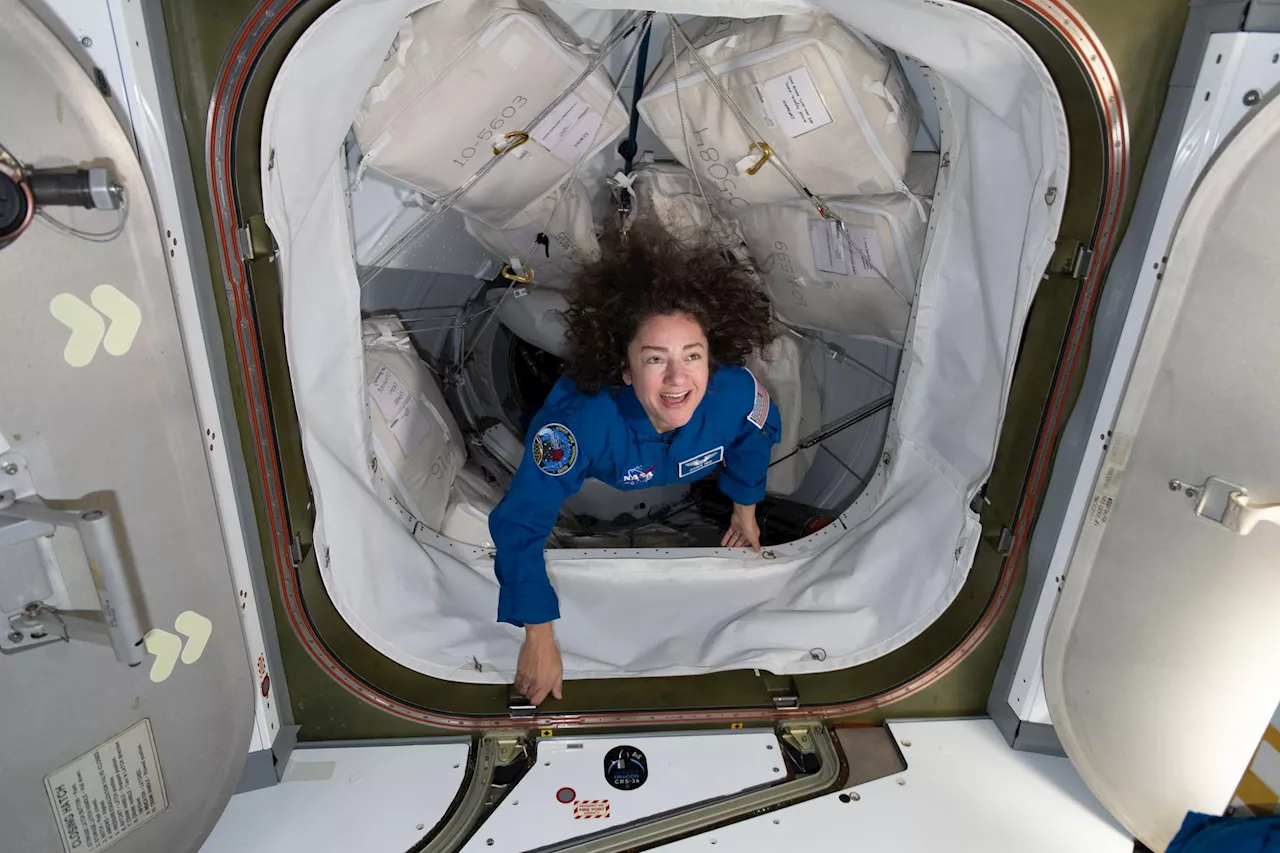
NASA’s Expedition 74 crew engaged in critical human health research aboard the International Space Station (ISS) on February 19, 2026, while the station’s orbit was elevated following a thruster firing by the Progress 93 cargo spacecraft. This dual focus aims to enhance astronaut well-being during prolonged space missions.
Research on stress reduction and sleep improvement was led by NASA Flight Engineer Jessica Meir and ESA (European Space Agency) Flight Engineer Sophie Adenot. The astronauts began their day by completing a questionnaire that documented their emotions and stress levels while living in space. They subsequently collected saliva samples, allowing researchers to measure stress and immunity in microgravity. This effort is part of the RelaxPro study, which investigates non-invasive relaxation and meditation techniques to bolster astronaut health and mission success.
In the afternoon, Meir and Adenot collaborated on the ARED Kinematics exercise study. They prepared equipment in the Tranquility module, watching instructional videos to ensure proper positioning of four cameras to capture workout data. This research seeks to understand the effects of weightlessness on muscle and bone health during long-term missions.
Meanwhile, Jack Hathaway, another NASA Flight Engineer, organized biomedical samples from a science freezer for analysis and prepared food supplies for the crew. He also loaded cargo into a SpaceX Dragon spacecraft for its return to Earth. Hathaway joined Meir later in the day to discuss their experience piloting the Dragon crew spacecraft during its docking on February 14.
In addition to his duties, Chris Williams assisted Meir in taking her blood sample for examination of bone health. Toward the end of the day, he underwent imaging of his eyes with medical technology, allowing ground doctors to monitor the impact of microgravity on his vision.
Russian astronaut Andrey Fedyaev, on his second spaceflight, participated in two advanced research projects. He used virtual reality goggles to test his balance and orientation in space, and he also worked with artificial intelligence tools to improve data documentation and communication with ground control.
Station Commander Sergey Kud-Sverchkov supported Fedyaev in these advanced studies while training for medical emergency procedures aboard the ISS. He also gathered and analyzed radiation data, essential for understanding the environmental conditions faced by astronauts.
On the maintenance front, Roscosmos Flight Engineer Sergei Mikaev spent the day inventorying hardware in the Russian segment of the station. He ensured the functionality of the Elektron oxygen generator by checking water tanks for air bubbles, a critical task for maintaining life support systems.
The Progress 93 spacecraft performed a thruster firing for 10 minutes and 55 seconds, boosting the ISS’s altitude by approximately 2 miles. The current orbit is now recorded at 269.2 by 255 statute miles. This maneuver prepares the station for the upcoming arrival of the Progress 94 resupply spacecraft.
For ongoing updates on ISS activities, follow the space station blog and social media channels on X, Facebook, and Instagram.

Urgent Tax Savings Alert: Maximize Deductions Before April 15

Trump’s Administration Faces Uncertainty Over Government Shutdowns

Cosmic Defects: The Mystery of the Universe’s Missing Anomalies

Rapid City Parks Department Opens Registration for Bocce Leagues

Samsung Galaxy Watch 9 to Feature Larger 435mAh Battery Soon

Two Dead After Student Boats Capsize Off Okinawa Coast

Healthy Choice Wellness Reports Earnings with Mixed Results

Prince Harry Positions Himself as Royal Family’s Image Reviver

All Points North Lodge Achieves FSPHP-ETA Accreditation

Send Holiday Parcels for £1.99 with New Comparison Service

University of Hawaiʻi Leads $25M AI Project to Monitor Natural Disasters

Maui County Reopens Upgraded Lānaʻi Fifth Street Courts Today!

Daily Codeword Puzzle Launches on October 21, 2025

Congresswoman Under Fire for Misleading Epstein Donation Claims

Interstellar Object 3I/ATLAS Emits Unique Metal Alloy, Says Scientist

Trump Vows to Resolve Afghanistan-Pakistan Crisis “Very Quickly”

Charles Darwin’s Address Book Reveals Hidden Aspects of His Life

Rediscovering Chrysler: 5 Overlooked Models from the 1980s
-
 Lifestyle8 months ago
Send Holiday Parcels for £1.99 with New Comparison Service
-
Science9 months ago
University of Hawaiʻi Leads $25M AI Project to Monitor Natural Disasters
-
 Top Stories8 months ago
Maui County Reopens Upgraded Lānaʻi Fifth Street Courts Today!
-
 Entertainment10 months ago
Daily Codeword Puzzle Launches on October 21, 2025
-
 Lifestyle9 months ago
Congresswoman Under Fire for Misleading Epstein Donation Claims
-
 Science10 months ago
Interstellar Object 3I/ATLAS Emits Unique Metal Alloy, Says Scientist
-
 Top Stories9 months ago
Trump Vows to Resolve Afghanistan-Pakistan Crisis “Very Quickly”
-
 Science8 months ago
Charles Darwin’s Address Book Reveals Hidden Aspects of His Life
-
 Lifestyle8 months ago
Rediscovering Chrysler: 5 Overlooked Models from the 1980s
-

 Science7 months ago
Understanding Generation Z: Strategies for Engaging the Workforce
-

 Entertainment10 months ago
Kelly McCreary Discusses Future of Maggie and Winston in Grey’s Anatomy
-

 Entertainment7 months ago
Landmark Shift as Iconic Anime Series Concludes After 26 Years