
Top Stories
New Sub-Terahertz Sensors Revolutionize Safety Against Black Ice

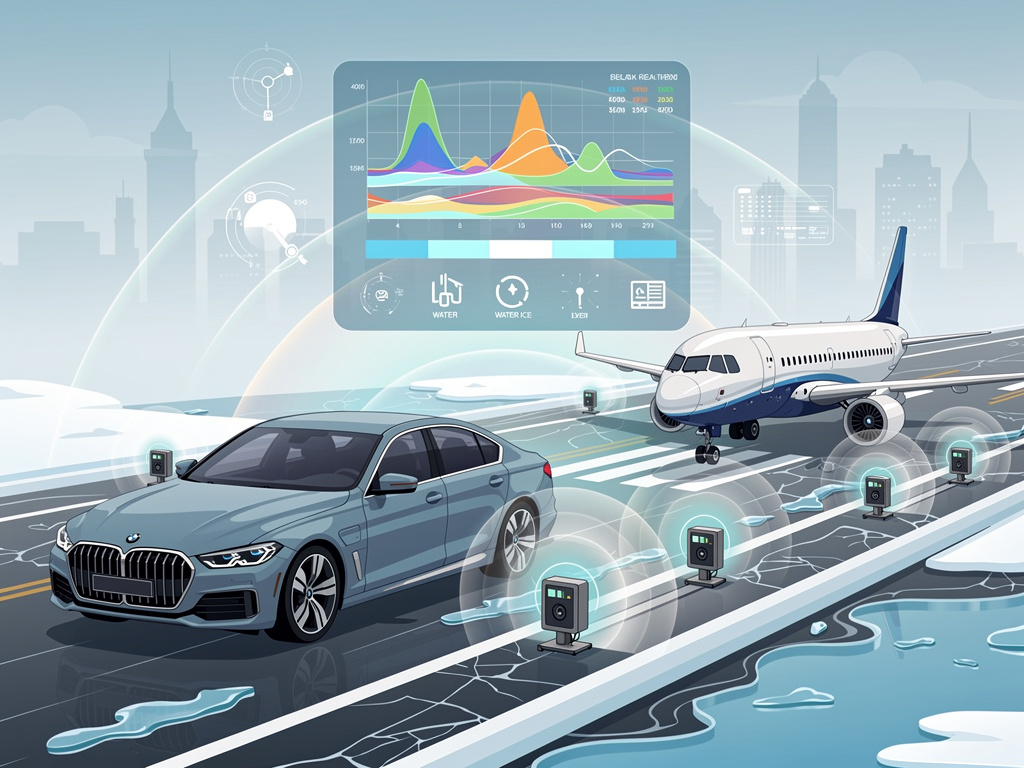
BREAKING: A groundbreaking development in road safety has emerged as researchers at the University of Sheffield unveil a new sub-terahertz sensor technology designed to combat the deadly threat of black ice. This innovation could save countless lives by providing real-time data that automotive and aviation industries have long lacked.
For decades, reliance on ambient air temperature has left vehicles vulnerable to black ice conditions, leading to thousands of fatalities annually. This “black ice gap” creates a dangerous blind spot where roads freeze before air temperatures drop. Now, with the introduction of sub-terahertz sensors, the automotive sector is poised for a revolutionary shift in how vehicles perceive and respond to icy conditions.
The latest reports, including findings highlighted by Digital Trends, indicate that these sensors analyze the spectral signatures of road surfaces, allowing them to differentiate between dry asphalt, liquid water, and black ice. This technology is crucial as it transforms vehicles from passive observers into active monitors of road conditions, enabling them to anticipate low-friction scenarios before they occur.
The implications for autonomous vehicles (AVs) are profound. The National Highway Traffic Safety Administration (NHTSA) reveals that weather-related accidents account for a significant portion of crashes. With the new sensors, AVs can now discern the difference between safe wet roads and hazardous black ice patches, allowing for dynamic adjustments in trajectory that human drivers might overlook. This predictive capability is essential for the safe operation of self-driving cars in northern climates.
In the aviation sector, the stakes are equally high. Runway excursions pose a major safety risk, with the Federal Aviation Administration (FAA) emphasizing the need for better real-time data. Sub-terahertz sensors mounted on aircraft could provide immediate insights into runway conditions, reducing the reliance on potentially outdated reports from ground crews. This could drastically enhance safety during critical landing phases.
Moreover, the economic impact of this technology could be substantial. Airlines currently face significant costs due to delays caused by de-icing procedures, often undertaken without precise knowledge of runway conditions. The new sensors could enable targeted de-icing, thereby improving turnaround times and minimizing environmental impacts associated with de-icing fluids.
As this technology gains traction, it is expected to disrupt the insurance landscape as well. Vehicles equipped with these sensors may reduce liability for accidents related to black ice, prompting insurers to reconsider premium structures and potentially mandating sensor installations for fleets operating in icy conditions.
However, challenges remain. The main hurdles involve miniaturization and cost-effectiveness. Historically, terahertz sources and detectors have been bulky and expensive, limiting their application. For widespread adoption in everyday vehicles, costs must decrease significantly, likely requiring advances in silicon-based terahertz chips.
Despite these challenges, the urgency behind this innovation is clear. As the automotive and aviation industries face increasing scrutiny over safety, the deployment of sub-terahertz sensors represents a vital step toward protecting lives and enhancing operational efficiencies.
Stay tuned for further updates as this story develops, and consider how these advancements could transform travel safety in your region. The future of road and air safety is rapidly evolving, and sub-terahertz sensors are leading the charge.

Urgent Tax Savings Alert: Maximize Deductions Before April 15

Trump’s Administration Faces Uncertainty Over Government Shutdowns

Cosmic Defects: The Mystery of the Universe’s Missing Anomalies

Rapid City Parks Department Opens Registration for Bocce Leagues

Samsung Galaxy Watch 9 to Feature Larger 435mAh Battery Soon

Two Dead After Student Boats Capsize Off Okinawa Coast

Healthy Choice Wellness Reports Earnings with Mixed Results

Prince Harry Positions Himself as Royal Family’s Image Reviver

All Points North Lodge Achieves FSPHP-ETA Accreditation

Send Holiday Parcels for £1.99 with New Comparison Service

University of Hawaiʻi Leads $25M AI Project to Monitor Natural Disasters

Maui County Reopens Upgraded Lānaʻi Fifth Street Courts Today!

Daily Codeword Puzzle Launches on October 21, 2025

Congresswoman Under Fire for Misleading Epstein Donation Claims

Interstellar Object 3I/ATLAS Emits Unique Metal Alloy, Says Scientist

Trump Vows to Resolve Afghanistan-Pakistan Crisis “Very Quickly”

Charles Darwin’s Address Book Reveals Hidden Aspects of His Life

Rediscovering Chrysler: 5 Overlooked Models from the 1980s
-
 Lifestyle8 months ago
Send Holiday Parcels for £1.99 with New Comparison Service
-
Science9 months ago
University of Hawaiʻi Leads $25M AI Project to Monitor Natural Disasters
-
 Top Stories8 months ago
Maui County Reopens Upgraded Lānaʻi Fifth Street Courts Today!
-
 Entertainment10 months ago
Daily Codeword Puzzle Launches on October 21, 2025
-
 Lifestyle9 months ago
Congresswoman Under Fire for Misleading Epstein Donation Claims
-
 Science10 months ago
Interstellar Object 3I/ATLAS Emits Unique Metal Alloy, Says Scientist
-
 Top Stories9 months ago
Trump Vows to Resolve Afghanistan-Pakistan Crisis “Very Quickly”
-
 Science8 months ago
Charles Darwin’s Address Book Reveals Hidden Aspects of His Life
-
 Lifestyle8 months ago
Rediscovering Chrysler: 5 Overlooked Models from the 1980s
-

 Science7 months ago
Understanding Generation Z: Strategies for Engaging the Workforce
-

 Entertainment10 months ago
Kelly McCreary Discusses Future of Maggie and Winston in Grey’s Anatomy
-

 Top Stories8 months ago
aespa Faces Backlash Over G-Dragon Interaction at 2025 MAMAs