
Top Stories
Tokyo Inflation Eases in December, BOJ Signals Gradual Rate Hikes

UPDATE: Tokyo’s inflation rate cooled more than anticipated in December, yet remains above the Bank of Japan’s (BOJ) 2% target, signaling a continued path toward gradual interest rate hikes. Core consumer prices in the capital surged 2.3% year-on-year, down from 2.8% in November and below market expectations of 2.5%.
The deceleration in inflation was propelled by lower utility and energy costs, alongside a slowdown in food price increases. A closely monitored “core-core” inflation measure, which excludes fresh food and energy prices, also softened to 2.6% from 2.8% previously. The headline consumer price index (CPI) dropped to 2.0% from 2.7%, marking the first significant easing in Tokyo’s inflation momentum since August.
Despite this slowdown, all inflation gauges remain above the BOJ’s target, reinforcing the notion that inflationary pressures have become entrenched. Tokyo’s CPI is seen as a leading indicator for the national trend, indicating a gradual cooling of inflation rather than a sharp decline.
This data arrives shortly after the BOJ’s decision to raise its policy rate to 0.75% — the highest level in nearly three decades. BOJ Governor Kazuo Ueda emphasized that further tightening is likely if wages and prices align with the central bank’s projections, although he avoided specifying the pace or final rate levels.
Markets now interpret December’s data as aligned with the BOJ’s baseline scenario: inflation is easing as energy impacts subside, but remains firm enough to warrant further rate hikes over time. Analysts predict a gradual hiking cycle, anticipating rates to rise approximately every six months, potentially reaching a terminal level of around 1.25%, provided wage growth remains strong.
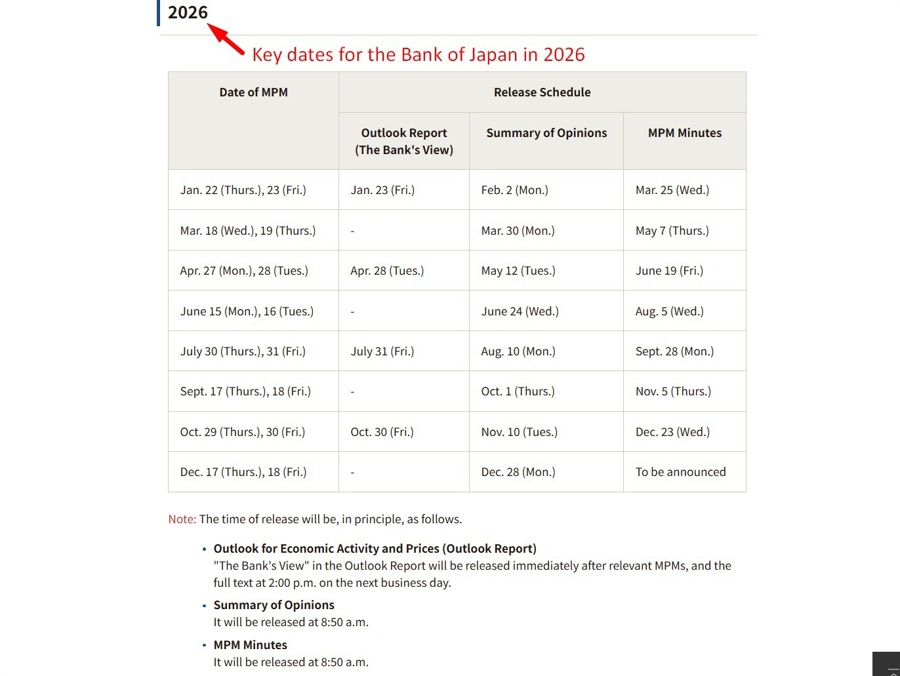
The softer-than-expected core inflation figure slightly alleviates the pressure for an immediate follow-up rate hike but does not derail the overall tightening trajectory. With core inflation still above the target and supportive wage dynamics, the BOJ is likely to adopt a cautious approach. A pause in rate adjustments appears probable at the upcoming meeting on January 22-23, 2026.
The implications of these developments are significant for financial markets, affecting the yen, Japanese Government Bonds (JGBs), and the Nikkei index. Investors will be closely monitoring the BOJ’s next steps as inflation trends continue to evolve.
This evolving situation underscores the delicate balance the BOJ must maintain in fostering economic stability while addressing persistent inflationary pressures. As the situation develops, stakeholders will need to stay alert to the BOJ’s policy decisions and their impact on the broader economy.

Urgent Tax Savings Alert: Maximize Deductions Before April 15

Trump’s Administration Faces Uncertainty Over Government Shutdowns

Cosmic Defects: The Mystery of the Universe’s Missing Anomalies

Rapid City Parks Department Opens Registration for Bocce Leagues

Samsung Galaxy Watch 9 to Feature Larger 435mAh Battery Soon

Two Dead After Student Boats Capsize Off Okinawa Coast

Healthy Choice Wellness Reports Earnings with Mixed Results

Prince Harry Positions Himself as Royal Family’s Image Reviver

All Points North Lodge Achieves FSPHP-ETA Accreditation

Send Holiday Parcels for £1.99 with New Comparison Service

University of Hawaiʻi Leads $25M AI Project to Monitor Natural Disasters

Maui County Reopens Upgraded Lānaʻi Fifth Street Courts Today!

Daily Codeword Puzzle Launches on October 21, 2025

Congresswoman Under Fire for Misleading Epstein Donation Claims

Interstellar Object 3I/ATLAS Emits Unique Metal Alloy, Says Scientist

Trump Vows to Resolve Afghanistan-Pakistan Crisis “Very Quickly”

Charles Darwin’s Address Book Reveals Hidden Aspects of His Life

Rediscovering Chrysler: 5 Overlooked Models from the 1980s
-
 Lifestyle8 months ago
Send Holiday Parcels for £1.99 with New Comparison Service
-
Science9 months ago
University of Hawaiʻi Leads $25M AI Project to Monitor Natural Disasters
-
 Top Stories8 months ago
Maui County Reopens Upgraded Lānaʻi Fifth Street Courts Today!
-
 Entertainment10 months ago
Daily Codeword Puzzle Launches on October 21, 2025
-
 Lifestyle9 months ago
Congresswoman Under Fire for Misleading Epstein Donation Claims
-
 Science10 months ago
Interstellar Object 3I/ATLAS Emits Unique Metal Alloy, Says Scientist
-
 Top Stories10 months ago
Trump Vows to Resolve Afghanistan-Pakistan Crisis “Very Quickly”
-
 Science9 months ago
Charles Darwin’s Address Book Reveals Hidden Aspects of His Life
-
 Lifestyle8 months ago
Rediscovering Chrysler: 5 Overlooked Models from the 1980s
-

 Science7 months ago
Understanding Generation Z: Strategies for Engaging the Workforce
-

 Entertainment10 months ago
Kelly McCreary Discusses Future of Maggie and Winston in Grey’s Anatomy
-

 Top Stories8 months ago
aespa Faces Backlash Over G-Dragon Interaction at 2025 MAMAs