
World
China Rejects U.S.-Proposed ‘G2’ Framework for Global Governance

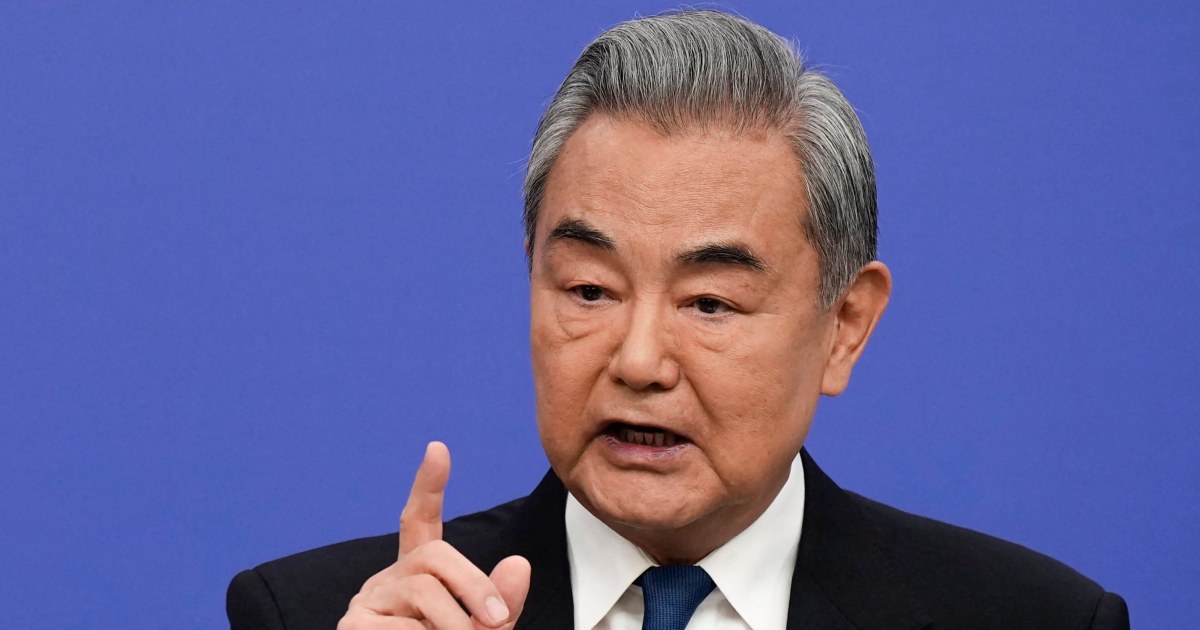
President Donald Trump has suggested a new global power dynamic centered around a partnership between the United States and China, referred to as the “G2.” However, Chinese officials have publicly dismissed this notion, emphasizing a more inclusive approach to international relations.
The term “G2” was originally introduced in 2005 by American economist C. Fred Bergsten to highlight the need for cooperation between the world’s two largest economies. Although it gained some traction among policymakers, the concept has waned in popularity, particularly during Trump’s presidency, which has been marked by increasing tensions between the two nations.
Trump has recently revived the term “G2,” particularly during discussions about his upcoming meeting with Chinese President Xi Jinping in South Korea. Yet, he has not clarified how such a framework would function in practice. This meeting is part of a series of interactions planned between the two leaders, with Trump set to visit China from March 31, 2024.
For China, Trump’s reference to a “G2” signals a recognition of its rising influence on the global stage. Chinese officials believe it implies parity in international affairs, yet this has raised concerns among U.S. allies. Many fear that an exclusive partnership between Washington and Beijing could marginalize their interests in critical global decisions.
During a news conference at China’s annual legislative session, Chinese Foreign Minister Wang Yi addressed these concerns. “There is no doubt that China and the U.S. have a significant impact on the world. But we should not forget there are more than 190 countries on our planet,” Wang stated, reinforcing the idea that global governance should involve a diverse coalition of nations.
The “G2” concept poses challenges for China, which has developed its foreign policy around the notion of supporting developing countries and opposing unilateral dominance by major powers. Wang reiterated that China does not seek global hegemony and wishes to foster a multipolar world where power is distributed more evenly.
“Great power rivalry and bloc confrontation have invariably inflicted disaster and pain on humanity,” Wang said. He emphasized that China aims to avoid following the traditional path of seeking dominance as it grows stronger.
Wang noted that the state of U.S.-China relations carries “far-reaching and global implications,” warning that a breakdown in communication could lead to miscalculations and potential conflict. He underscored the importance of dialogue, stating, “Sliding into conflict or confrontation could drag the whole world down.”
Despite tensions stemming from trade disputes and tariffs imposed by the Trump administration, both leaders have maintained a dialogue. Wang expressed optimism about their interactions, mentioning that the two presidents have spoken multiple times since their last meeting.
Looking ahead, Trump and Xi are expected to meet several times in 2024, starting with Trump’s visit to China. Following this, Xi may visit the U.S. and attend the G20 summit in Miami in December. The Asia-Pacific Economic Cooperation (APEC) summit, hosted by China in Shenzhen, is also on the agenda for November.
Wang characterized 2026 as a pivotal year for U.S.-China relations, asserting that high-level exchanges are already being planned. He stressed the need for both sides to prepare adequately, manage existing risks, and create a conducive environment for cooperation.
One potential obstacle to the upcoming summit is the ongoing military actions involving Israel and Iran, which could complicate U.S.-China relations given China’s ties with Iran. Wang has called for an immediate cessation of hostilities, emphasizing that such conflicts only lead to further suffering. He firmly rejected the use of force, stating, “The law of the jungle must not return and rule the world.”
As the international community watches closely, the evolving dynamics between the U.S. and China will undoubtedly shape global governance in the years to come. The future of their relationship hinges on whether both nations can navigate their differences and collaborate on shared challenges.

Urgent Tax Savings Alert: Maximize Deductions Before April 15

Trump’s Administration Faces Uncertainty Over Government Shutdowns

Cosmic Defects: The Mystery of the Universe’s Missing Anomalies

Rapid City Parks Department Opens Registration for Bocce Leagues

Samsung Galaxy Watch 9 to Feature Larger 435mAh Battery Soon

Two Dead After Student Boats Capsize Off Okinawa Coast

Healthy Choice Wellness Reports Earnings with Mixed Results

Prince Harry Positions Himself as Royal Family’s Image Reviver

All Points North Lodge Achieves FSPHP-ETA Accreditation

Send Holiday Parcels for £1.99 with New Comparison Service

University of Hawaiʻi Leads $25M AI Project to Monitor Natural Disasters

Maui County Reopens Upgraded Lānaʻi Fifth Street Courts Today!

Daily Codeword Puzzle Launches on October 21, 2025

Congresswoman Under Fire for Misleading Epstein Donation Claims

Interstellar Object 3I/ATLAS Emits Unique Metal Alloy, Says Scientist

Trump Vows to Resolve Afghanistan-Pakistan Crisis “Very Quickly”

Charles Darwin’s Address Book Reveals Hidden Aspects of His Life

Rediscovering Chrysler: 5 Overlooked Models from the 1980s
-
 Lifestyle8 months ago
Send Holiday Parcels for £1.99 with New Comparison Service
-
Science9 months ago
University of Hawaiʻi Leads $25M AI Project to Monitor Natural Disasters
-
 Top Stories8 months ago
Maui County Reopens Upgraded Lānaʻi Fifth Street Courts Today!
-
 Entertainment10 months ago
Daily Codeword Puzzle Launches on October 21, 2025
-
 Lifestyle9 months ago
Congresswoman Under Fire for Misleading Epstein Donation Claims
-
 Science10 months ago
Interstellar Object 3I/ATLAS Emits Unique Metal Alloy, Says Scientist
-
 Top Stories9 months ago
Trump Vows to Resolve Afghanistan-Pakistan Crisis “Very Quickly”
-
 Science8 months ago
Charles Darwin’s Address Book Reveals Hidden Aspects of His Life
-
 Lifestyle8 months ago
Rediscovering Chrysler: 5 Overlooked Models from the 1980s
-

 Science7 months ago
Understanding Generation Z: Strategies for Engaging the Workforce
-

 Entertainment10 months ago
Kelly McCreary Discusses Future of Maggie and Winston in Grey’s Anatomy
-

 Entertainment7 months ago
Landmark Shift as Iconic Anime Series Concludes After 26 Years