
World
China Sets Lowest Growth Target in 35 Years Amid Economic Struggles

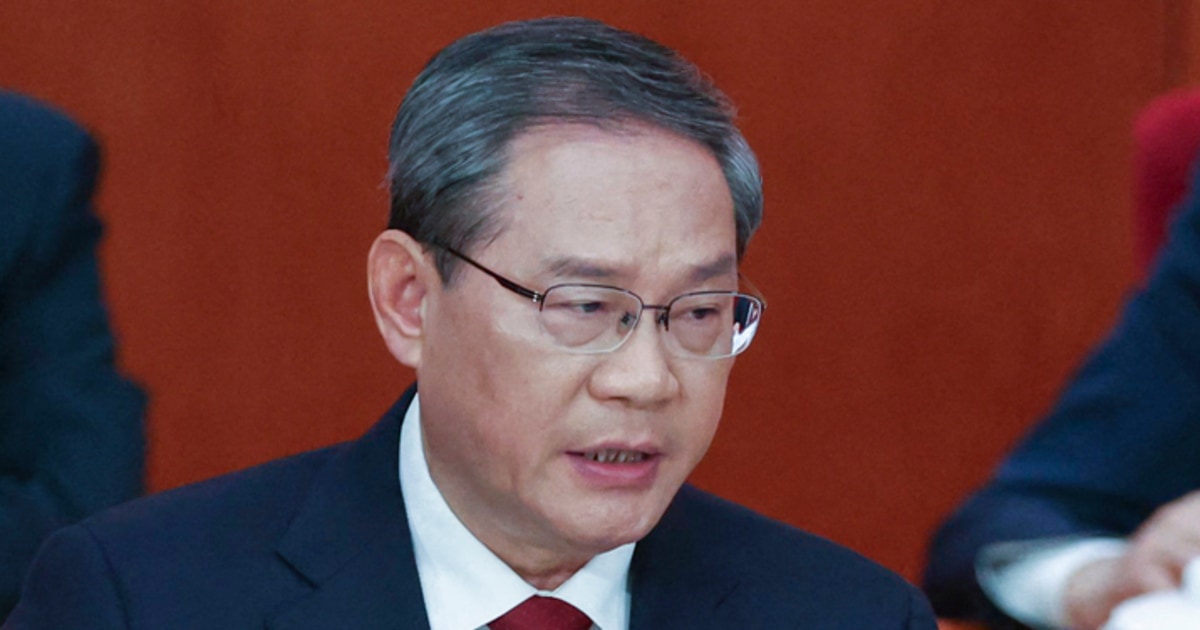
China has established its lowest economic growth target in over three decades, reflecting the increasing challenges faced by the world’s second-largest economy. On March 7, 2024, during the opening session of the National People’s Congress in Beijing, Premier Li Qiang announced a target for gross domestic product (GDP) growth of between 4.5% and 5%. This figure marks the first formal downgrade since 2023 and is the lowest target since 1991.
In his extensive address, which lasted over an hour, Li emphasized the need for realistic goals, stating, “While recognizing our achievements, we are also clear-eyed about the difficulties and challenges we face.” The National People’s Congress is a significant event for the ruling Communist Party, where economic targets and policies are set for the coming year.
Economic Challenges and Strategic Shifts
China is grappling with a range of economic hurdles, including a prolonged property slump, high local government debt, and industrial overcapacity. These issues have intensified as the country seeks to transition from an export-driven model to one that prioritizes domestic demand. Li indicated that the government would implement economic policies aimed at mitigating the effects of U.S. tariffs, which have fluctuated since Donald Trump reignited trade tensions with China in 2023.
Despite the decrease in exports to the U.S. due to these tariffs, China reported a record trade surplus of nearly $1.2 trillion last year, driven by increased sales to other global markets.
The backdrop of escalating international tensions complicates China’s economic landscape. The recent U.S.-Israeli strikes on Iran, a strategic ally, have raised concerns over regional stability. Notably, China imports around 80% of Iran’s crude oil, although this only constitutes about 13% of its total oil imports. The Strait of Hormuz, critical for China’s energy supply, remains a focal point of concern, as it accounts for one-third of China’s oil imports and a quarter of its gas.
Military and Social Initiatives
In a separate budget report, defense spending for the year is set to increase by 7%, reaching over $275 billion. This marks a slight decrease from the previous year’s increase of 7.2%. The government aims to modernize its military by 2035, focusing on enhancing combat capabilities amid rising tensions in the region.
Li also addressed demographic challenges that threaten long-term growth. China’s aging population, with more than one-fifth of citizens over 60, necessitates improvements in eldercare services. The administration is prioritizing initiatives to promote a “childbirth-friendly society,” addressing concerns about low marriage and birth rates among younger generations.
These demographic shifts are compounded by economic pressures, as many young Chinese feel the cost of raising children is unattainable and job prospects are limited. Li proposed expanding sports programs and increasing eldercare facilities to meet the needs of an aging population.
As China navigates these multifaceted challenges, it seeks to project confidence and stability amidst global uncertainties. The upcoming visit of Donald Trump to China on March 31, 2024, for discussions with Xi Jinping, underscores the importance of maintaining stable relations with the U.S. While tensions rise, China remains focused on fostering a multipolar world that balances its interests against those of other global powers.
The government’s commitment to addressing both economic and social issues reflects an ongoing effort to adapt to changing realities while striving for growth in a complicated international landscape.

Urgent Tax Savings Alert: Maximize Deductions Before April 15

Trump’s Administration Faces Uncertainty Over Government Shutdowns

Cosmic Defects: The Mystery of the Universe’s Missing Anomalies

Rapid City Parks Department Opens Registration for Bocce Leagues

Samsung Galaxy Watch 9 to Feature Larger 435mAh Battery Soon

Two Dead After Student Boats Capsize Off Okinawa Coast

Healthy Choice Wellness Reports Earnings with Mixed Results

Prince Harry Positions Himself as Royal Family’s Image Reviver

All Points North Lodge Achieves FSPHP-ETA Accreditation

Send Holiday Parcels for £1.99 with New Comparison Service

University of Hawaiʻi Leads $25M AI Project to Monitor Natural Disasters

Maui County Reopens Upgraded Lānaʻi Fifth Street Courts Today!

Daily Codeword Puzzle Launches on October 21, 2025

Congresswoman Under Fire for Misleading Epstein Donation Claims

Interstellar Object 3I/ATLAS Emits Unique Metal Alloy, Says Scientist

Trump Vows to Resolve Afghanistan-Pakistan Crisis “Very Quickly”

Charles Darwin’s Address Book Reveals Hidden Aspects of His Life

Rediscovering Chrysler: 5 Overlooked Models from the 1980s
-
 Lifestyle8 months ago
Send Holiday Parcels for £1.99 with New Comparison Service
-
Science9 months ago
University of Hawaiʻi Leads $25M AI Project to Monitor Natural Disasters
-
 Top Stories8 months ago
Maui County Reopens Upgraded Lānaʻi Fifth Street Courts Today!
-
 Entertainment10 months ago
Daily Codeword Puzzle Launches on October 21, 2025
-
 Lifestyle9 months ago
Congresswoman Under Fire for Misleading Epstein Donation Claims
-
 Science10 months ago
Interstellar Object 3I/ATLAS Emits Unique Metal Alloy, Says Scientist
-
 Top Stories9 months ago
Trump Vows to Resolve Afghanistan-Pakistan Crisis “Very Quickly”
-
 Science8 months ago
Charles Darwin’s Address Book Reveals Hidden Aspects of His Life
-
 Lifestyle8 months ago
Rediscovering Chrysler: 5 Overlooked Models from the 1980s
-

 Science7 months ago
Understanding Generation Z: Strategies for Engaging the Workforce
-

 Entertainment10 months ago
Kelly McCreary Discusses Future of Maggie and Winston in Grey’s Anatomy
-

 Top Stories8 months ago
aespa Faces Backlash Over G-Dragon Interaction at 2025 MAMAs