
World
EU Lawmaker Advocates for Syrian Refugees to Return Home

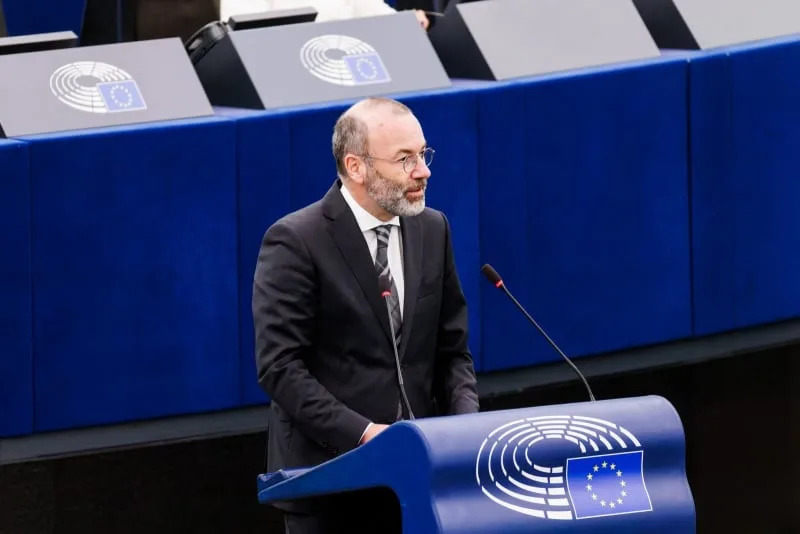
The leader of the conservative European People’s Party (EPP) in the European Parliament, Manfred Weber, has stated that Syrian refugees should return to their home country, although he allowed for certain exceptions. In comments published by the mass-circulation tabloid Bild on Sunday, Weber emphasized that those capable of aiding in the reconstruction of Syria should leave Germany and other European nations.
Weber articulated a clear legal framework regarding refugee assistance, stating, “We provide help in emergencies, but when the war is over, you have to return to your home country.” While he endorsed the principle of repatriation, he cautioned against imposing strict deadlines. “If deportations in the first month are not possible because parts of Syria are still completely destroyed, then it might work the following month,” he explained. “But the principle must ultimately be implemented.”
Exceptions for Integrated Refugees
Weber also highlighted the contributions of many Syrians who have successfully integrated into the German labor market. He questioned the wisdom of sending these individuals back to Syria, noting, “There are many Syrians in Germany who are making an important contribution here.” This sentiment reflects a broader recognition of the role that migrants play, particularly in essential sectors like healthcare.
The EPP leader’s remarks come at a time of internal strife within the conservative bloc regarding the issue of returns to Syria. Notably, Foreign Minister Johann Wadephul stirred controversy last week after visiting a devastated suburb of Damascus. He expressed skepticism about the feasibility of large-scale voluntary returns, stating that living conditions in the war-torn area make it “barely possible” to live there with dignity.
Weber’s statements reflect ongoing debates in Europe about the future of Syrian refugees, many of whom have fled a decade-long civil war. The discussion has become increasingly relevant as the situation in Syria evolves, with some areas experiencing reconstruction while others remain perilously damaged.
As these conversations progress within political circles, the wider implications for refugee policy in Europe continue to unfold, raising questions about the balance between humanitarian assistance and the responsibilities of host countries.

Urgent Tax Savings Alert: Maximize Deductions Before April 15

Trump’s Administration Faces Uncertainty Over Government Shutdowns

Cosmic Defects: The Mystery of the Universe’s Missing Anomalies

Rapid City Parks Department Opens Registration for Bocce Leagues

Samsung Galaxy Watch 9 to Feature Larger 435mAh Battery Soon

Two Dead After Student Boats Capsize Off Okinawa Coast

Healthy Choice Wellness Reports Earnings with Mixed Results

Prince Harry Positions Himself as Royal Family’s Image Reviver

All Points North Lodge Achieves FSPHP-ETA Accreditation

Send Holiday Parcels for £1.99 with New Comparison Service

University of Hawaiʻi Leads $25M AI Project to Monitor Natural Disasters

Maui County Reopens Upgraded Lānaʻi Fifth Street Courts Today!

Daily Codeword Puzzle Launches on October 21, 2025

Congresswoman Under Fire for Misleading Epstein Donation Claims

Interstellar Object 3I/ATLAS Emits Unique Metal Alloy, Says Scientist

Trump Vows to Resolve Afghanistan-Pakistan Crisis “Very Quickly”

Charles Darwin’s Address Book Reveals Hidden Aspects of His Life

Rediscovering Chrysler: 5 Overlooked Models from the 1980s
-
 Lifestyle8 months ago
Send Holiday Parcels for £1.99 with New Comparison Service
-
Science9 months ago
University of Hawaiʻi Leads $25M AI Project to Monitor Natural Disasters
-
 Top Stories8 months ago
Maui County Reopens Upgraded Lānaʻi Fifth Street Courts Today!
-
 Entertainment10 months ago
Daily Codeword Puzzle Launches on October 21, 2025
-
 Lifestyle9 months ago
Congresswoman Under Fire for Misleading Epstein Donation Claims
-
 Science10 months ago
Interstellar Object 3I/ATLAS Emits Unique Metal Alloy, Says Scientist
-
 Top Stories9 months ago
Trump Vows to Resolve Afghanistan-Pakistan Crisis “Very Quickly”
-
 Science8 months ago
Charles Darwin’s Address Book Reveals Hidden Aspects of His Life
-
 Lifestyle8 months ago
Rediscovering Chrysler: 5 Overlooked Models from the 1980s
-

 Science7 months ago
Understanding Generation Z: Strategies for Engaging the Workforce
-

 Entertainment10 months ago
Kelly McCreary Discusses Future of Maggie and Winston in Grey’s Anatomy
-

 Top Stories8 months ago
aespa Faces Backlash Over G-Dragon Interaction at 2025 MAMAs