
World
Eurofighter Typhoon Challenges Lockheed Martin’s Fighter Dominance

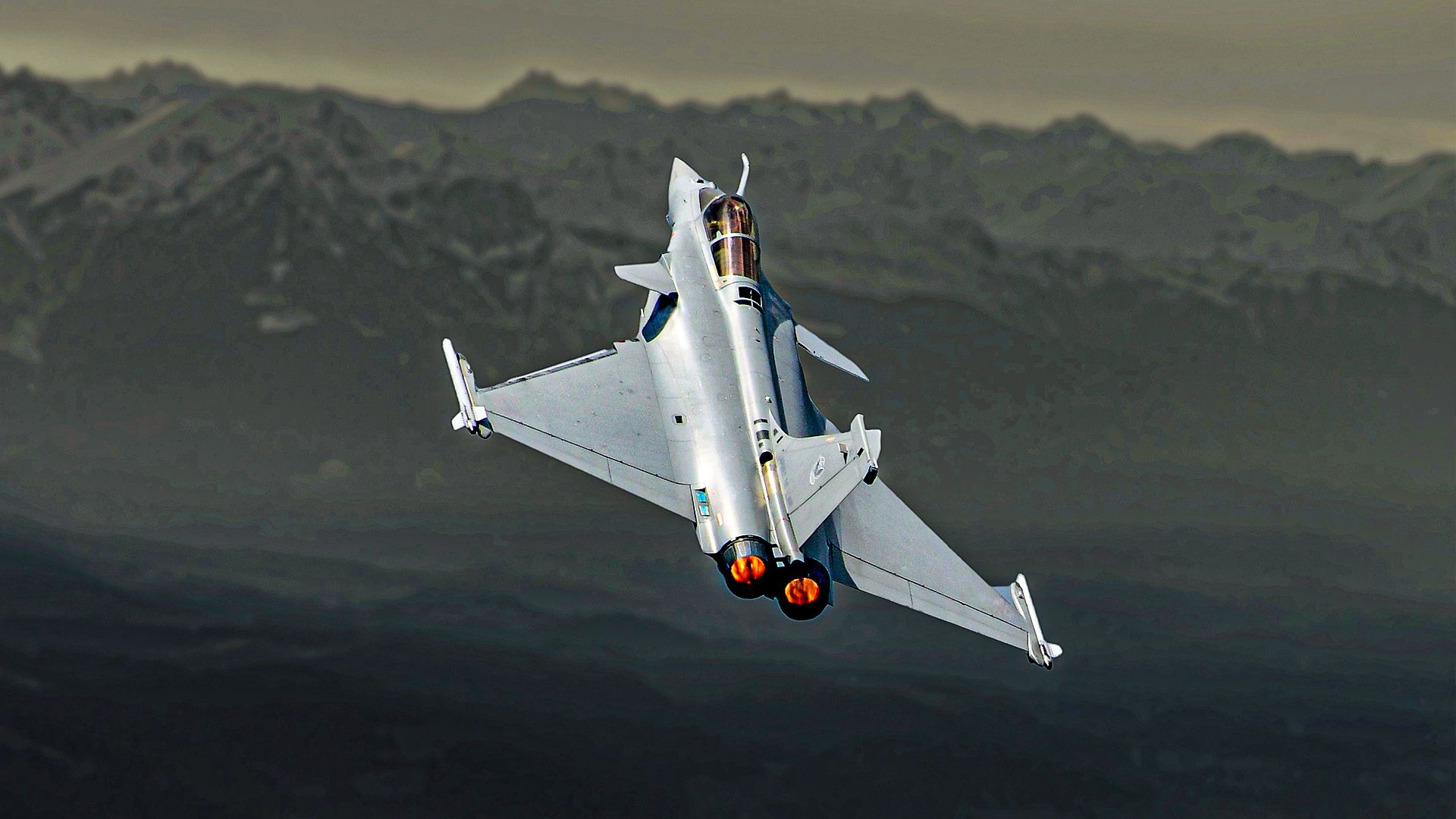
The Eurofighter Typhoon, recognized as one of the world’s most advanced swing-role combat aircraft, poses a significant challenge to Lockheed Martin and its dominant position in the global fighter jet market. While Lockheed’s F-35 Lightning II program has secured a substantial share of sales, the Typhoon’s ongoing modernization efforts and export potential are reshaping the competitive landscape in advanced air combat.
The Typhoon, developed by a consortium of European nations, continues to evolve with advancements in technology and capabilities. Recent reports indicate that the aircraft has attracted interest from various countries looking to enhance their air defense systems. This interest highlights the Typhoon’s adaptability and appeal, particularly as nations assess their defense needs in a rapidly changing geopolitical environment.
One of the key factors contributing to the Typhoon’s resurgence is its multi-role capability. Designed for air-to-air and air-to-ground missions, the Typhoon can engage various threats, making it a versatile option for military forces. In contrast, while the F-35 is often lauded for its stealth features and advanced sensors, it faces challenges in terms of operational costs and integration with existing military infrastructure.
Modernization Efforts Bolster Typhoon’s Appeal
The ongoing modernization of the Typhoon is crucial to its competitive edge. Recent upgrades include enhanced avionics, weapons systems, and improved performance metrics. These improvements not only extend the aircraft’s operational lifespan but also ensure that it remains relevant in the face of evolving threats.
In 2023, several nations have expressed interest in acquiring the Typhoon, further complicating Lockheed Martin’s market position. Countries such as Germany, Italy, and Spain are already utilizing the aircraft, and recent discussions indicate that additional nations may follow suit. The potential for new contracts could significantly bolster the Typhoon’s production and export capabilities.
Moreover, the Eurofighter consortium’s collaborative approach to development and upgrades allows for shared costs and expertise, enhancing the aircraft’s development trajectory. This multinational effort contrasts with Lockheed Martin’s predominantly American-centric production model, which may face scrutiny regarding costs and technological updates.
Strategic Implications for Global Defense Markets
The competition between the Typhoon and the F-35 reflects broader trends in the global defense market. As nations reassess their military capabilities, the demand for versatile, cost-effective aircraft is likely to increase. The Typhoon’s ability to participate in joint missions with various allied forces further strengthens its attractiveness.
According to defense analysts, the increasing geopolitical tensions and the need for robust defense capabilities are likely to drive demand for advanced combat aircraft. The Typhoon’s proven capabilities and ongoing modernization efforts position it as a strong contender in this landscape.
Lockheed Martin’s response to this challenge will be crucial as it seeks to maintain its market dominance amidst rising competition. The company may need to consider further innovations and partnerships to solidify its standing against the Typhoon and other emerging platforms.
As the situation unfolds, the rivalry between these two aircraft will not only shape the future of air combat but also influence the strategic decisions of nations around the world. The outcome remains to be seen, but the implications for international defense dynamics could be significant.

Urgent Tax Savings Alert: Maximize Deductions Before April 15

Trump’s Administration Faces Uncertainty Over Government Shutdowns

Cosmic Defects: The Mystery of the Universe’s Missing Anomalies

Rapid City Parks Department Opens Registration for Bocce Leagues

Samsung Galaxy Watch 9 to Feature Larger 435mAh Battery Soon

Two Dead After Student Boats Capsize Off Okinawa Coast

Healthy Choice Wellness Reports Earnings with Mixed Results

Prince Harry Positions Himself as Royal Family’s Image Reviver

All Points North Lodge Achieves FSPHP-ETA Accreditation

Send Holiday Parcels for £1.99 with New Comparison Service

University of Hawaiʻi Leads $25M AI Project to Monitor Natural Disasters

Maui County Reopens Upgraded Lānaʻi Fifth Street Courts Today!

Daily Codeword Puzzle Launches on October 21, 2025

Congresswoman Under Fire for Misleading Epstein Donation Claims

Interstellar Object 3I/ATLAS Emits Unique Metal Alloy, Says Scientist

Trump Vows to Resolve Afghanistan-Pakistan Crisis “Very Quickly”

Charles Darwin’s Address Book Reveals Hidden Aspects of His Life

Rediscovering Chrysler: 5 Overlooked Models from the 1980s
-
 Lifestyle8 months ago
Send Holiday Parcels for £1.99 with New Comparison Service
-
Science9 months ago
University of Hawaiʻi Leads $25M AI Project to Monitor Natural Disasters
-
 Top Stories8 months ago
Maui County Reopens Upgraded Lānaʻi Fifth Street Courts Today!
-
 Entertainment10 months ago
Daily Codeword Puzzle Launches on October 21, 2025
-
 Lifestyle9 months ago
Congresswoman Under Fire for Misleading Epstein Donation Claims
-
 Science10 months ago
Interstellar Object 3I/ATLAS Emits Unique Metal Alloy, Says Scientist
-
 Top Stories9 months ago
Trump Vows to Resolve Afghanistan-Pakistan Crisis “Very Quickly”
-
 Science8 months ago
Charles Darwin’s Address Book Reveals Hidden Aspects of His Life
-
 Lifestyle8 months ago
Rediscovering Chrysler: 5 Overlooked Models from the 1980s
-

 Science7 months ago
Understanding Generation Z: Strategies for Engaging the Workforce
-

 Entertainment10 months ago
Kelly McCreary Discusses Future of Maggie and Winston in Grey’s Anatomy
-

 Top Stories8 months ago
aespa Faces Backlash Over G-Dragon Interaction at 2025 MAMAs