
World
Federal Investigation Launched Amid Soaring U.S. Beef Prices

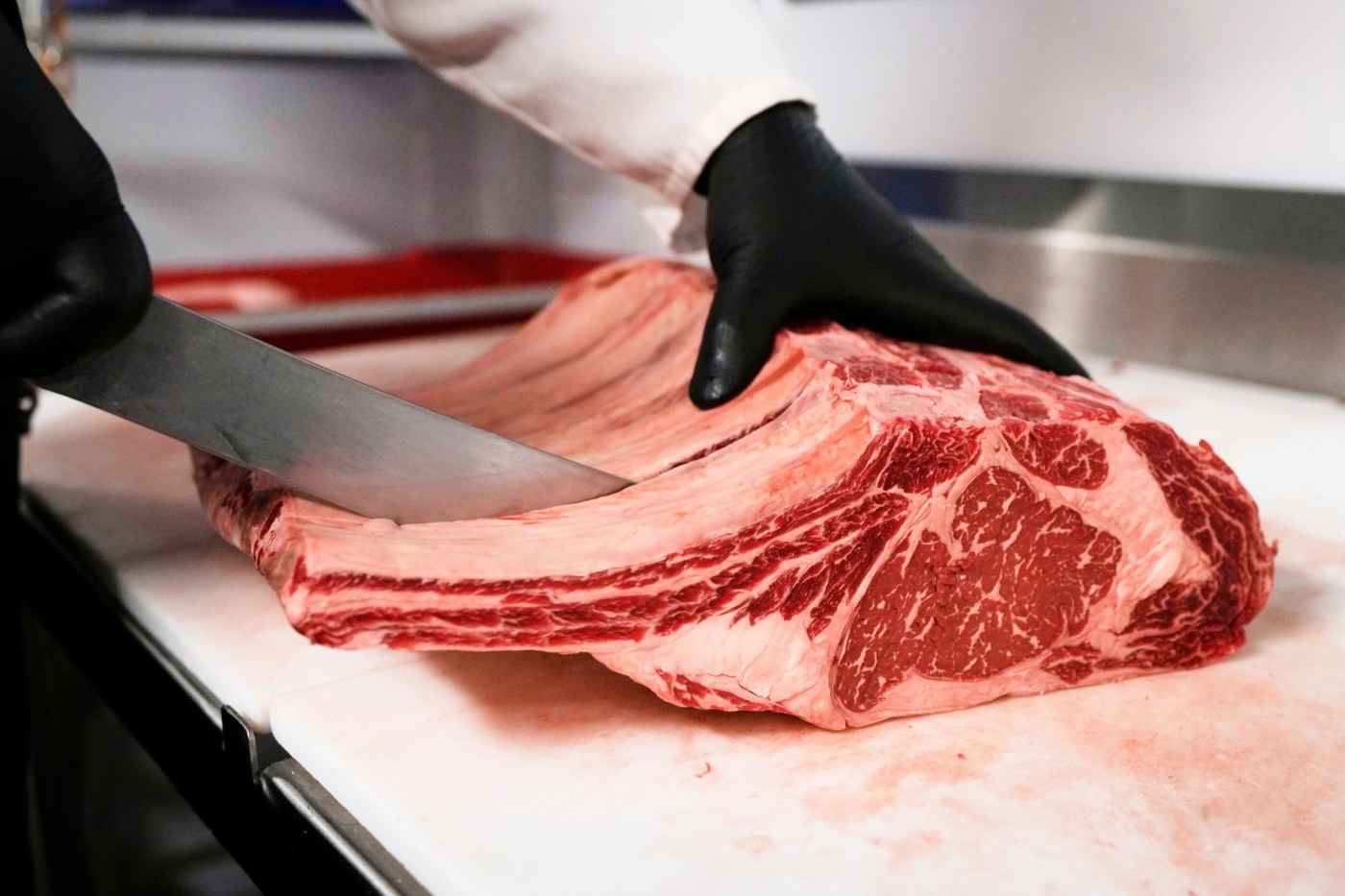
Record-high beef prices have prompted a federal investigation into the largest meatpackers in the United States. Despite the rising costs, American consumers continue to purchase steaks and burgers without reducing their consumption. The investigation, initiated in early November 2023, follows accusations against major beef processors for potential collusion, price-fixing, and market manipulation.
President Donald Trump directed the Department of Justice (DOJ) to pursue a formal inquiry into what he described as the monopolistic practices of the country’s leading beef processors. In a statement on social media, Trump emphasized the need to protect American ranchers from exploitation by foreign-owned companies that inflate prices and threaten the security of the nation’s food supply. He stated, “Action must be taken immediately to protect Consumers, combat Illegal Monopolies, and ensure these Corporations are not criminally profiting at the expense of the American People.”
The investigation is particularly focused on the four companies that dominate approximately 85% of the U.S. beef processing market: JBS, Cargill, Tyson Foods, and National Beef. According to the White House, two of these firms, including JBS, the world’s largest meatpacker, are either foreign-owned or significantly influenced by foreign entities. This concentration of market power starkly contrasts with the industry landscape four decades ago, when the top four processors controlled just 36% of the market.
How the Industry Became Concentrated
The consolidation of the beef processing industry began in the 1980s and 1990s, driven by the establishment of large, efficient slaughter and processing facilities. These plants could manage a greater volume of cattle at lower costs compared to smaller regional plants, according to the U.S. Department of Agriculture (USDA). In 1980, a typical top-four-owned plant processed around 417,000 cattle annually; by 2002, this figure had surged to over one million.
As the largest processors expanded, smaller plants either closed or were acquired, further consolidating power among the big players. By the mid-1990s, the four dominant companies controlled more than 80% of the beef processing market, a trend that has continued to grow.
Surprisingly, early USDA research indicated that this consolidation was not exclusively detrimental. Studies from the 1990s showed that larger plants were often more cost-efficient, leading to lower beef prices for consumers and initially benefiting cattle producers.
Market Dynamics Shift
The turning point came around 2015, when the competitive landscape shifted drastically. Packers had maintained excess capacity, incentivizing them to bid aggressively for cattle. As the industry moved to full capacity, the need for such competition diminished. Consequently, the disparity between the prices paid to ranchers and the profits earned from selling boxed beef began to widen significantly. Reports indicate that in some years, this price gap doubled or even tripled compared to earlier decades.
The Trump administration argues that the combination of record-high beef prices, diminishing margins for ranchers, and the overwhelming market share held by just four companies raises concerns about potential market manipulation. Currently, ground beef prices have reached approximately $6.33 per pound, reflecting an increase of over 11% from the previous year, according to the latest consumer price index.
The DOJ’s investigation aims to restore competition within the market and ensure fair pricing throughout the supply chain, from ranchers to consumers. As the inquiry unfolds, the focus will remain on the implications for both the beef industry and consumers alike.

Urgent Tax Savings Alert: Maximize Deductions Before April 15

Trump’s Administration Faces Uncertainty Over Government Shutdowns

Cosmic Defects: The Mystery of the Universe’s Missing Anomalies

Rapid City Parks Department Opens Registration for Bocce Leagues

Samsung Galaxy Watch 9 to Feature Larger 435mAh Battery Soon

Two Dead After Student Boats Capsize Off Okinawa Coast

Healthy Choice Wellness Reports Earnings with Mixed Results

Prince Harry Positions Himself as Royal Family’s Image Reviver

All Points North Lodge Achieves FSPHP-ETA Accreditation

Send Holiday Parcels for £1.99 with New Comparison Service

University of Hawaiʻi Leads $25M AI Project to Monitor Natural Disasters

Maui County Reopens Upgraded Lānaʻi Fifth Street Courts Today!

Daily Codeword Puzzle Launches on October 21, 2025

Congresswoman Under Fire for Misleading Epstein Donation Claims

Interstellar Object 3I/ATLAS Emits Unique Metal Alloy, Says Scientist

Trump Vows to Resolve Afghanistan-Pakistan Crisis “Very Quickly”

Charles Darwin’s Address Book Reveals Hidden Aspects of His Life

Rediscovering Chrysler: 5 Overlooked Models from the 1980s
-
 Lifestyle8 months ago
Send Holiday Parcels for £1.99 with New Comparison Service
-
Science9 months ago
University of Hawaiʻi Leads $25M AI Project to Monitor Natural Disasters
-
 Top Stories8 months ago
Maui County Reopens Upgraded Lānaʻi Fifth Street Courts Today!
-
 Entertainment10 months ago
Daily Codeword Puzzle Launches on October 21, 2025
-
 Lifestyle9 months ago
Congresswoman Under Fire for Misleading Epstein Donation Claims
-
 Science10 months ago
Interstellar Object 3I/ATLAS Emits Unique Metal Alloy, Says Scientist
-
 Top Stories9 months ago
Trump Vows to Resolve Afghanistan-Pakistan Crisis “Very Quickly”
-
 Science8 months ago
Charles Darwin’s Address Book Reveals Hidden Aspects of His Life
-
 Lifestyle8 months ago
Rediscovering Chrysler: 5 Overlooked Models from the 1980s
-

 Science7 months ago
Understanding Generation Z: Strategies for Engaging the Workforce
-

 Entertainment10 months ago
Kelly McCreary Discusses Future of Maggie and Winston in Grey’s Anatomy
-

 Top Stories8 months ago
aespa Faces Backlash Over G-Dragon Interaction at 2025 MAMAs