
World
ICC Urged to Combat Threats as States Parties Consider Response

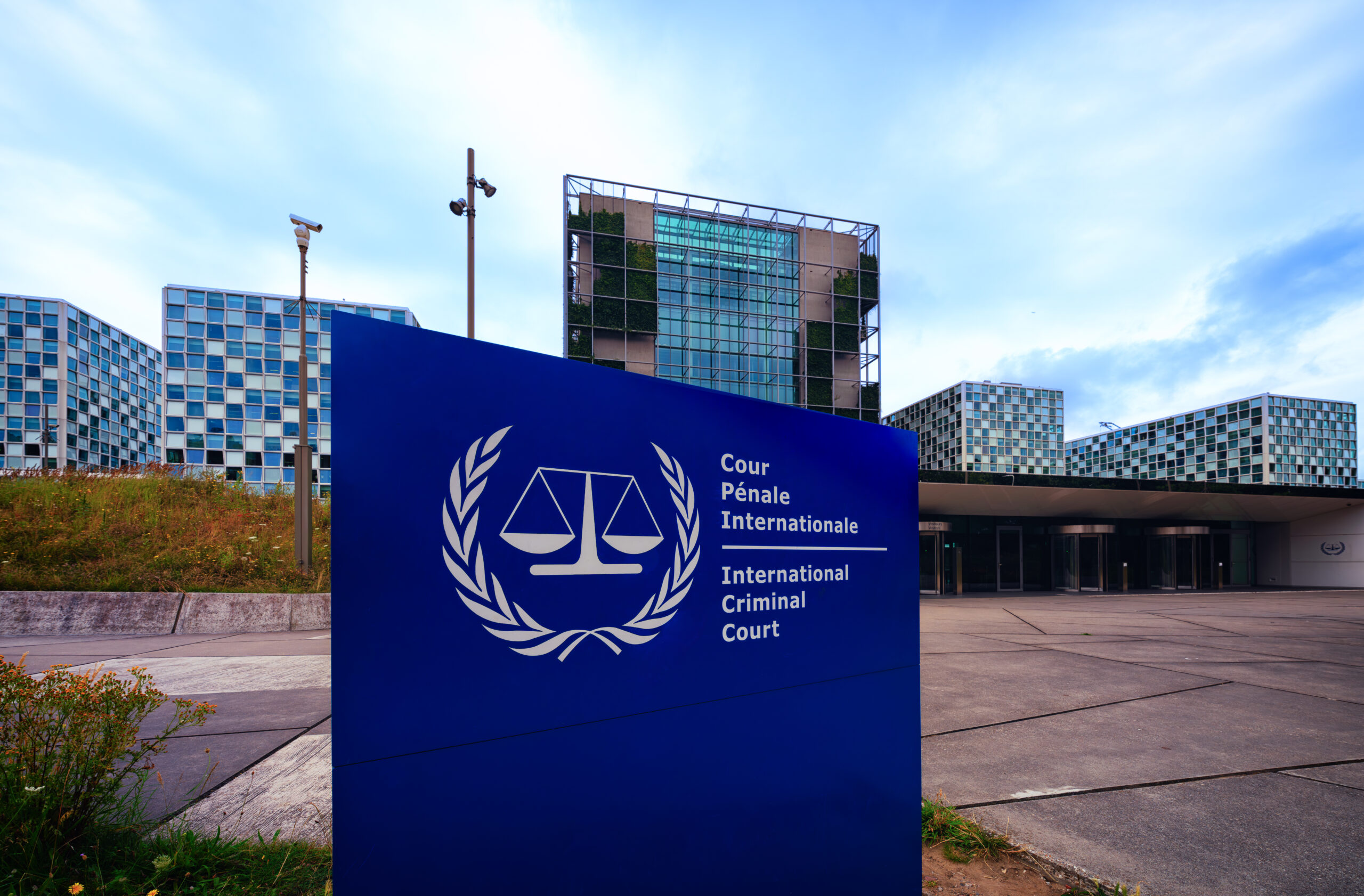
Human Rights Watch (HRW) has called on member states of the International Criminal Court (ICC) to take decisive action to protect the court and combat impunity for international crimes. This appeal came during the Assembly of States Parties (ASP), highlighting the increasing threats, sanctions, and attacks that the ICC faces from various states attempting to undermine its authority.
The press release from HRW underscored that certain States Parties are actively working against the ICC’s role as a court of last resort. For example, in February 2025, then-President Donald Trump issued an executive order allowing for the freezing of assets and imposing entry bans on ICC officials, as well as individuals supporting the court’s operations. This order has led to sanctions against ICC officials, a United Nations expert, and Palestinian human rights organizations.
According to HRW, the sanctions imposed by the United States could severely hinder the ICC’s ability to function effectively. Financial institutions often comply with US sanctions, which may result in significant funding losses for the ICC and restrict access to essential banking services. In response to these challenges, HRW has suggested that the European Union implement its blocking statute to counteract the effects of US sanctions. This statute is designed to prevent the extraterritorial application of laws from other countries that conflict with international law.
Failure to Comply with Arrest Warrants
Another pressing issue raised by HRW is the failure of States Parties to arrest and surrender individuals against whom the ICC has issued arrest warrants. Notably, Hungary did not arrest Israel’s Prime Minister Benjamin Netanyahu when he visited Budapest in April 2025. Subsequently, Hungary announced its formal withdrawal from the ICC on June 2, 2025, with the withdrawal taking effect one year later. Additionally, three other States Parties—Burkina Faso, Niger, and Mali—have also indicated their intent to withdraw from the ICC as of September 2025.
The ICC has also faced significant challenges from Russia. Under the leadership of Vladimir Putin, the Russian government issued arrest warrants against ICC officials in reaction to warrants that had been issued for Putin and Russian Foreign Minister Sergey Lavrov. The ICC’s security was further compromised by a second major cyber attack in June.
Liz Evenson, HRW’s International Justice Director, commented on the broader implications of these actions, stating, “Government efforts to undermine the ICC reflect broader attacks on the global rule of law, aiming to disable institutions that seek to hold those responsible for the worst crimes to account.”
Recent Achievements Despite Challenges
Despite these numerous challenges, HRW highlights that the ICC continues to make significant strides in international justice. In March 2025, the Philippines arrested and surrendered former President Rodrigo Duterte, who faces charges of crimes against humanity stemming from his controversial “war on drugs.” Additionally, the ICC has delivered landmark rulings related to the situations in the Central African Republic and Darfur. Notably, on July 24, 2025, the court convicted two senior leaders of the Anti-Balaka movement for war crimes and crimes against humanity committed in Bangui and the surrounding regions. Furthermore, on October 6, 2025, the ICC found Ali Muhammad Ali Abd-Al-Rahman, a former leader of the Janjaweed militia, guilty of 27 counts of crimes against humanity and war crimes linked to the conflict in Darfur, Sudan.
The upcoming Assembly of States Parties, scheduled for December 1 to 6, 2025, in The Hague, Netherlands, will primarily focus on issues of non-compliance by ICC member states. Evenson stressed the vital role of the ICC, stating it “remains the court of last resort for thousands of victims and their families who have nowhere else to turn.” Established in 2002, the ICC holds jurisdiction over individuals accused of international crimes as defined by the Rome Statute, including war crimes, crimes against humanity, and genocide.

Urgent Tax Savings Alert: Maximize Deductions Before April 15

Trump’s Administration Faces Uncertainty Over Government Shutdowns

Cosmic Defects: The Mystery of the Universe’s Missing Anomalies

Rapid City Parks Department Opens Registration for Bocce Leagues

Samsung Galaxy Watch 9 to Feature Larger 435mAh Battery Soon

Two Dead After Student Boats Capsize Off Okinawa Coast

Healthy Choice Wellness Reports Earnings with Mixed Results

Prince Harry Positions Himself as Royal Family’s Image Reviver

All Points North Lodge Achieves FSPHP-ETA Accreditation

Send Holiday Parcels for £1.99 with New Comparison Service

University of Hawaiʻi Leads $25M AI Project to Monitor Natural Disasters

Maui County Reopens Upgraded Lānaʻi Fifth Street Courts Today!

Daily Codeword Puzzle Launches on October 21, 2025

Congresswoman Under Fire for Misleading Epstein Donation Claims

Interstellar Object 3I/ATLAS Emits Unique Metal Alloy, Says Scientist

Trump Vows to Resolve Afghanistan-Pakistan Crisis “Very Quickly”

Charles Darwin’s Address Book Reveals Hidden Aspects of His Life

Rediscovering Chrysler: 5 Overlooked Models from the 1980s
-
 Lifestyle8 months ago
Send Holiday Parcels for £1.99 with New Comparison Service
-
Science9 months ago
University of Hawaiʻi Leads $25M AI Project to Monitor Natural Disasters
-
 Top Stories8 months ago
Maui County Reopens Upgraded Lānaʻi Fifth Street Courts Today!
-
 Entertainment10 months ago
Daily Codeword Puzzle Launches on October 21, 2025
-
 Lifestyle9 months ago
Congresswoman Under Fire for Misleading Epstein Donation Claims
-
 Science10 months ago
Interstellar Object 3I/ATLAS Emits Unique Metal Alloy, Says Scientist
-
 Top Stories9 months ago
Trump Vows to Resolve Afghanistan-Pakistan Crisis “Very Quickly”
-
 Science9 months ago
Charles Darwin’s Address Book Reveals Hidden Aspects of His Life
-
 Lifestyle8 months ago
Rediscovering Chrysler: 5 Overlooked Models from the 1980s
-

 Science7 months ago
Understanding Generation Z: Strategies for Engaging the Workforce
-

 Entertainment10 months ago
Kelly McCreary Discusses Future of Maggie and Winston in Grey’s Anatomy
-

 Top Stories8 months ago
aespa Faces Backlash Over G-Dragon Interaction at 2025 MAMAs