
World
Iran Faces Strategic Assault from US and Israel Amid Houthi Silence

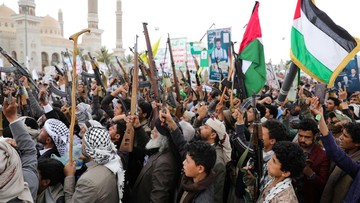
Recent military actions have escalated tensions in the Middle East as the United States and Israel launched a series of coordinated strikes against Iranian targets. This week-long offensive has raised questions about the role of the Houthi militias in Yemen, who have notably remained silent during these developments.
Details of the Offensive
The attacks commenced on March 1, 2024, and have targeted key installations within Iran, aiming to diminish its military capabilities. The coordinated effort involves airstrikes and intelligence-sharing between the US and Israeli forces, marking a significant escalation in their approach towards Tehran. This operation is viewed as part of a broader strategy to curtail Iran’s influence in the region, particularly in light of its support for various proxy groups.
Despite the intensity of the offensive, the Houthi militias, who have often positioned themselves as adversaries of both the US and Israel, have refrained from vocalizing their stance. This silence is particularly striking given their previous declarations against external interventions in the Middle East. The Houthis control significant portions of Yemen and have received support from Iran, yet their current inaction raises questions about their strategic calculations.
Implications for Regional Dynamics
The lack of response from the Houthis could suggest a shifting dynamic within the region. Analysts speculate that the group may be reassessing its position in light of the current military developments. Some experts suggest that the Houthis might be adopting a more cautious approach, potentially to avoid further escalation that could draw them into direct conflict with US and Israeli forces.
This silence has also prompted discussions about the future of Iranian influence in Yemen. Should the Houthis choose to engage, it could lead to a more complex battlefield, potentially complicating the already fraught situation in the region.
The implications of these events extend beyond immediate military concerns. They reflect the intricate web of alliances and hostilities that characterize Middle Eastern politics. As the US and Israel aim to diminish Iran’s reach, the response—or lack thereof—from groups like the Houthis will be closely monitored by regional observers.
The situation remains fluid, and as military actions continue, the geopolitical landscape in the Middle East could experience significant shifts. The coming days may reveal more about the Houthis’ intentions and their long-term strategy in response to the unfolding crisis.

Urgent Tax Savings Alert: Maximize Deductions Before April 15

Trump’s Administration Faces Uncertainty Over Government Shutdowns

Cosmic Defects: The Mystery of the Universe’s Missing Anomalies

Rapid City Parks Department Opens Registration for Bocce Leagues

Samsung Galaxy Watch 9 to Feature Larger 435mAh Battery Soon

Two Dead After Student Boats Capsize Off Okinawa Coast

Healthy Choice Wellness Reports Earnings with Mixed Results

Prince Harry Positions Himself as Royal Family’s Image Reviver

All Points North Lodge Achieves FSPHP-ETA Accreditation

Send Holiday Parcels for £1.99 with New Comparison Service

University of Hawaiʻi Leads $25M AI Project to Monitor Natural Disasters

Maui County Reopens Upgraded Lānaʻi Fifth Street Courts Today!

Daily Codeword Puzzle Launches on October 21, 2025

Congresswoman Under Fire for Misleading Epstein Donation Claims

Interstellar Object 3I/ATLAS Emits Unique Metal Alloy, Says Scientist

Trump Vows to Resolve Afghanistan-Pakistan Crisis “Very Quickly”

Charles Darwin’s Address Book Reveals Hidden Aspects of His Life

Rediscovering Chrysler: 5 Overlooked Models from the 1980s
-
 Lifestyle8 months ago
Send Holiday Parcels for £1.99 with New Comparison Service
-
Science9 months ago
University of Hawaiʻi Leads $25M AI Project to Monitor Natural Disasters
-
 Top Stories8 months ago
Maui County Reopens Upgraded Lānaʻi Fifth Street Courts Today!
-
 Entertainment10 months ago
Daily Codeword Puzzle Launches on October 21, 2025
-
 Lifestyle8 months ago
Congresswoman Under Fire for Misleading Epstein Donation Claims
-
 Science10 months ago
Interstellar Object 3I/ATLAS Emits Unique Metal Alloy, Says Scientist
-
 Top Stories9 months ago
Trump Vows to Resolve Afghanistan-Pakistan Crisis “Very Quickly”
-
 Science8 months ago
Charles Darwin’s Address Book Reveals Hidden Aspects of His Life
-
 Lifestyle8 months ago
Rediscovering Chrysler: 5 Overlooked Models from the 1980s
-

 Science7 months ago
Understanding Generation Z: Strategies for Engaging the Workforce
-

 Entertainment10 months ago
Kelly McCreary Discusses Future of Maggie and Winston in Grey’s Anatomy
-

 Entertainment7 months ago
Landmark Shift as Iconic Anime Series Concludes After 26 Years