
World
Iranian Media Admits False Claims on Downed Israeli F-35s

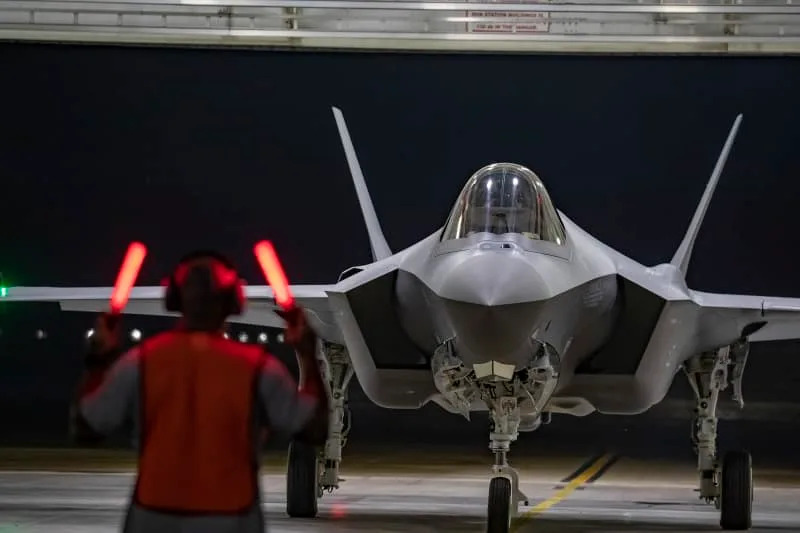
The head of the Iranian Broadcasting Corporation, Peyman Jabali, has acknowledged that the organization’s claims regarding the downing of two Israeli F-35 fighter jets were unfounded. This admission emerged during a discussion with students at Shahid Beheshti University on Tuesday, as reported by Mehr News Agency, a semi-official Iranian news outlet.
Jabali stated that the Iranian media had not been directly monitoring the military operations or the defense systems involved and instead relied on unreliable information from military sources. He explained, “Were we in the sky to witness the fighter jet crash? Were we behind the defense system? Someone from the military informed us, and then they eventually realized…that the information was not credible.” This miscommunication, he noted, has adversely affected the credibility of IRIB.
Impact of False Reporting on IRIB’s Credibility
During his remarks, Jabali emphasized the importance of maintaining the media’s independence from other institutions and organizations. He stated, “Media officials should not make their credibility dependent on the credibility of other institutions and organizations.” The incident has raised concerns about the reliability of military reporting in Iran, especially given the contentious nature of its relations with Israel.
Jabali also shared his perspective on the broader geopolitical implications of the incident, claiming that Israeli Prime Minister Benjamin Netanyahu had anticipated the collapse of Iran following an attack on IRIB’s facilities. He asserted, “He thought that, in his opinion, the end of the Islamic Republic would be on June 16 with the bombing of the Iranian Broadcasting Corporation.” Jabali framed this assertion within the context of Iran’s resilience during conflicts, stating that the country had successfully resisted external pressures and challenges over the years.
Further discussing the dynamics of military strategy, Jabali indicated that Israel’s miscalculations stemmed not only from its intelligence but also from internal perceptions within Iran that projected a narrative of weakness. “Those who made the narrative of weakness prevail over the narrative of strength; those who did not see the capabilities, highlighted the weaknesses,” he explained, suggesting that such internal signals contributed to Israel’s errors in judgment regarding Iran’s military capabilities.
The Broader Context of Iranian-Israeli Relations
Jabali’s comments come at a time of heightened tensions between Iran and Israel, particularly concerning military operations and intelligence. The acknowledgment of misinformation regarding the downed F-35 jets highlights the challenges faced by media organizations in conflict zones, where information is often difficult to verify.
As the situation in the region remains fluid, the implications of Jabali’s statements could extend beyond mere media credibility. They may also influence public perception and strategic calculations on both sides of the conflict. The Iranian military’s public relations efforts will likely be scrutinized in the aftermath of this incident, as maintaining credibility is crucial in a landscape marked by intense rivalry and misinformation.
The Iranian Broadcasting Corporation’s admission of false reporting illustrates the complexities and challenges inherent in military communication and media reporting, particularly in a region fraught with conflict and suspicion.

Urgent Tax Savings Alert: Maximize Deductions Before April 15

Trump’s Administration Faces Uncertainty Over Government Shutdowns

Cosmic Defects: The Mystery of the Universe’s Missing Anomalies

Rapid City Parks Department Opens Registration for Bocce Leagues

Samsung Galaxy Watch 9 to Feature Larger 435mAh Battery Soon

Two Dead After Student Boats Capsize Off Okinawa Coast

Healthy Choice Wellness Reports Earnings with Mixed Results

Prince Harry Positions Himself as Royal Family’s Image Reviver

All Points North Lodge Achieves FSPHP-ETA Accreditation

Send Holiday Parcels for £1.99 with New Comparison Service

University of Hawaiʻi Leads $25M AI Project to Monitor Natural Disasters

Maui County Reopens Upgraded Lānaʻi Fifth Street Courts Today!

Daily Codeword Puzzle Launches on October 21, 2025

Congresswoman Under Fire for Misleading Epstein Donation Claims

Interstellar Object 3I/ATLAS Emits Unique Metal Alloy, Says Scientist

Trump Vows to Resolve Afghanistan-Pakistan Crisis “Very Quickly”

Charles Darwin’s Address Book Reveals Hidden Aspects of His Life

Rediscovering Chrysler: 5 Overlooked Models from the 1980s
-
 Lifestyle8 months ago
Send Holiday Parcels for £1.99 with New Comparison Service
-
Science9 months ago
University of Hawaiʻi Leads $25M AI Project to Monitor Natural Disasters
-
 Top Stories8 months ago
Maui County Reopens Upgraded Lānaʻi Fifth Street Courts Today!
-
 Entertainment10 months ago
Daily Codeword Puzzle Launches on October 21, 2025
-
 Lifestyle9 months ago
Congresswoman Under Fire for Misleading Epstein Donation Claims
-
 Science10 months ago
Interstellar Object 3I/ATLAS Emits Unique Metal Alloy, Says Scientist
-
 Top Stories9 months ago
Trump Vows to Resolve Afghanistan-Pakistan Crisis “Very Quickly”
-
 Science8 months ago
Charles Darwin’s Address Book Reveals Hidden Aspects of His Life
-
 Lifestyle8 months ago
Rediscovering Chrysler: 5 Overlooked Models from the 1980s
-

 Science7 months ago
Understanding Generation Z: Strategies for Engaging the Workforce
-

 Entertainment10 months ago
Kelly McCreary Discusses Future of Maggie and Winston in Grey’s Anatomy
-

 Top Stories8 months ago
aespa Faces Backlash Over G-Dragon Interaction at 2025 MAMAs