
World
Iranians Regain Limited International Calling Amid Protests

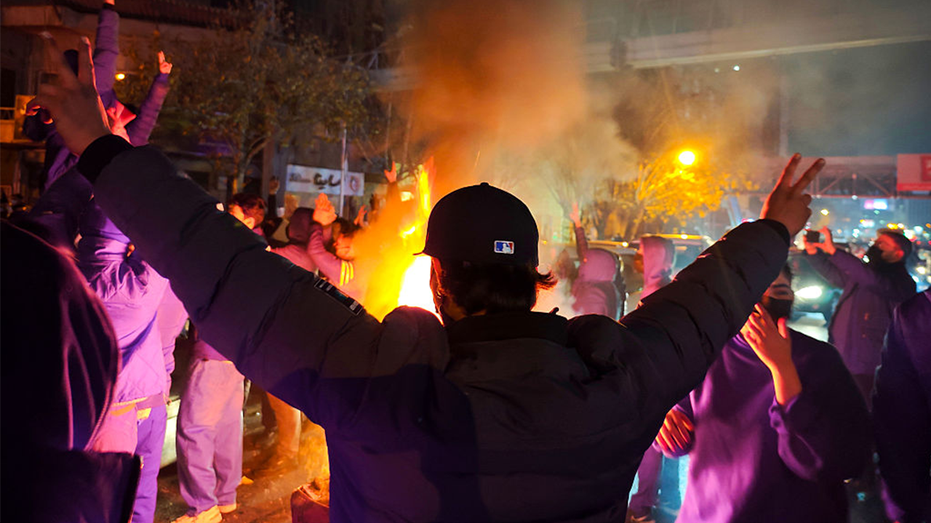
Iranians have begun to make some international phone calls for the first time since the government imposed a communications blackout amid ongoing anti-regime protests. On January 8, 2026, residents in Tehran reported that calls to numbers outside the country were briefly connected, although text messaging remained disabled and internet access was still restricted to government-approved domestic websites. This partial restoration of communication has come as security forces maintain a significant presence throughout central Tehran, with riot police, Revolutionary Guard units, and plainclothes officers deployed at critical locations to control the unrest.
The protests, which have intensified in recent weeks, stem from Iran’s worsening economic crisis. Activist groups assert that hundreds have been killed during the violent crackdowns, although verifying the true toll has proven challenging due to the internet blackout and stringent state controls on information. Residents noted that some government offices and financial institutions sustained damage during the protests, while merchants reported being ordered to reopen their businesses despite ongoing security operations. As a result, foot traffic remains sparse in many areas of the capital.
International Response and Tensions
The situation in Iran has drawn significant international attention, particularly as tensions escalate between Tehran and Washington. U.S. President Donald Trump stated that Iran is seeking to negotiate with his administration, following his threats to launch military action in response to the protests. “Iran better not start shooting, because we’ll start shooting, too,” Trump warned.
In an interview with Al Jazeera aired on the same day, Iranian Foreign Minister Abbas Araghchi confirmed that communication with U.S. envoy Steve Witkoff has continued before and after the protests. Araghchi emphasized that “Washington’s proposed ideas and threats against our country are incompatible,” while also stating that Tehran is “fully prepared for war” if the U.S. attacks.
White House Press Secretary Karoline Leavitt reiterated that diplomacy remains Trump’s primary approach, but she acknowledged his willingness to consider military options if necessary. “He certainly doesn’t want to see people being killed in the streets of Tehran. And unfortunately, that’s something we are seeing right now,” Leavitt remarked.
Protests and Government Reactions
On the same day, tens of thousands of pro-government demonstrators took to the streets, following several days of protests against the rule of Supreme Leader Ayatollah Ali Khamenei. Iranian state television broadcasted the chants of the crowd, including slogans such as “Death to America!” and “Death to Israel!” The attorney general of Iran has warned that participants in protests will be considered “enemies of God,” a designation that carries the death penalty.
In response to the ongoing unrest, Trump announced that countries conducting business with Iran would face a 25% tariff effective immediately. This move is part of a broader strategy aimed at pressuring the Iranian government to change its approach to the protests and the economic situation.
As the situation evolves, the international community continues to monitor developments closely, highlighting the urgent need for dialogue and resolution in a country grappling with both internal unrest and external diplomatic pressures.

Urgent Tax Savings Alert: Maximize Deductions Before April 15

Trump’s Administration Faces Uncertainty Over Government Shutdowns

Cosmic Defects: The Mystery of the Universe’s Missing Anomalies

Rapid City Parks Department Opens Registration for Bocce Leagues

Samsung Galaxy Watch 9 to Feature Larger 435mAh Battery Soon

Two Dead After Student Boats Capsize Off Okinawa Coast

Healthy Choice Wellness Reports Earnings with Mixed Results

Prince Harry Positions Himself as Royal Family’s Image Reviver

All Points North Lodge Achieves FSPHP-ETA Accreditation

Send Holiday Parcels for £1.99 with New Comparison Service

University of Hawaiʻi Leads $25M AI Project to Monitor Natural Disasters

Maui County Reopens Upgraded Lānaʻi Fifth Street Courts Today!

Daily Codeword Puzzle Launches on October 21, 2025

Congresswoman Under Fire for Misleading Epstein Donation Claims

Interstellar Object 3I/ATLAS Emits Unique Metal Alloy, Says Scientist

Trump Vows to Resolve Afghanistan-Pakistan Crisis “Very Quickly”

Charles Darwin’s Address Book Reveals Hidden Aspects of His Life

Rediscovering Chrysler: 5 Overlooked Models from the 1980s
-
 Lifestyle8 months ago
Send Holiday Parcels for £1.99 with New Comparison Service
-
Science9 months ago
University of Hawaiʻi Leads $25M AI Project to Monitor Natural Disasters
-
 Top Stories8 months ago
Maui County Reopens Upgraded Lānaʻi Fifth Street Courts Today!
-
 Entertainment10 months ago
Daily Codeword Puzzle Launches on October 21, 2025
-
 Lifestyle9 months ago
Congresswoman Under Fire for Misleading Epstein Donation Claims
-
 Science10 months ago
Interstellar Object 3I/ATLAS Emits Unique Metal Alloy, Says Scientist
-
 Top Stories9 months ago
Trump Vows to Resolve Afghanistan-Pakistan Crisis “Very Quickly”
-
 Science8 months ago
Charles Darwin’s Address Book Reveals Hidden Aspects of His Life
-
 Lifestyle8 months ago
Rediscovering Chrysler: 5 Overlooked Models from the 1980s
-

 Science7 months ago
Understanding Generation Z: Strategies for Engaging the Workforce
-

 Entertainment10 months ago
Kelly McCreary Discusses Future of Maggie and Winston in Grey’s Anatomy
-

 Entertainment7 months ago
Landmark Shift as Iconic Anime Series Concludes After 26 Years