
World
Mass Surveillance Sparks Backlash as Public Voices Concerns

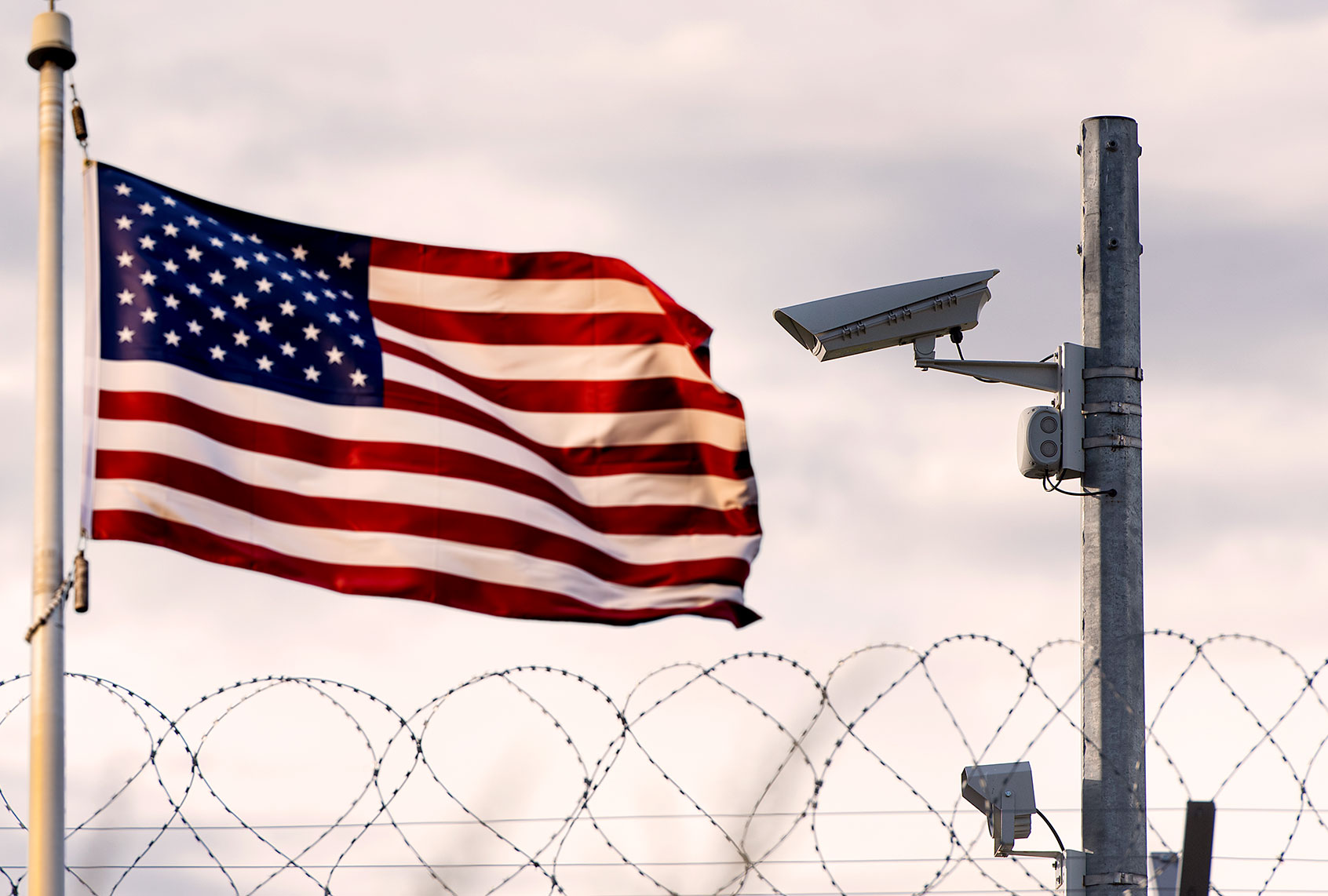
The rise of mass surveillance technology has prompted a significant backlash among the public, as concerns over privacy and government overreach intensify. Recent events have highlighted the pervasive nature of surveillance tools and their potential misuse, drawing attention to the balance between security and civil liberties.
Public Awareness Grows Amid Surveillance Concerns
As society progresses deeper into the 21st century, the promise of a high-tech utopia seems overshadowed by a reality more reminiscent of a cyberpunk dystopia. Major tech companies wield unprecedented power, often surpassing the financial capabilities of many nations, leading to a sense of corporate feudalism. With advancements in warfare technology, including drones and artificial intelligence, the ability to monitor individuals has become alarmingly sophisticated.
A recent advertisement by Amazon’s Ring, aimed at promoting its surveillance capabilities for locating lost pets, inadvertently exposed the extent of its surveillance network. Viewers quickly recognized the implications of such technology, realizing that these devices could potentially enable constant monitoring of individuals’ movements, regardless of their legal status. This realization spurred public outcry, resulting in Ring’s decision to withdraw from a partnership with Flock Safety, a company known for providing surveillance technology to law enforcement.
Flock Safety has faced criticism for its business model, which often involves circumventing privacy laws to implement surveillance systems. Its tools, including license plate readers and automated drones, have been deployed in various communities across the United States, raising ethical questions about their use. In a statement, Flock affirmed its commitment to supporting law enforcement while claiming adherence to local laws.
Surveillance Technology Raises Ethical Questions
The implications of these surveillance systems extend beyond mere crime prevention. Local law enforcement agencies have reportedly shared data collected from Flock cameras with Immigration and Customs Enforcement (ICE), raising alarms about the potential for racial profiling and targeting of dissenters. The use of surveillance to track protesters and individuals deemed non-compliant has drawn scrutiny, particularly given the ambiguous definition of “crime” in political discourse.
While surveillance tools can assist in tracking down serious criminals, such as arsonists or mass-shooting suspects, their application in monitoring dissenters poses a significant threat to civil liberties. Reports indicate that ICE has utilized facial recognition technology to identify protesters, leading to concerns about the erosion of privacy rights.
Despite claims of innocence from companies like Ring and Flock, many argue that their technologies facilitate a system of mass surveillance that infringes upon individual freedoms. Jamie Siminoff, founder of Ring, attempted to downplay the implications of surveillance, suggesting that users have control over their devices. However, incidents involving unauthorized access to stored footage have intensified skepticism regarding the security of these systems.
As public awareness of surveillance issues grows, a significant portion of the population is beginning to reject the invasive nature of such technologies. Data from a Gallup poll conducted in March 2024 revealed that only 27% of Americans expressed high confidence in large technology companies. This sentiment is echoed in a survey by the Tech Oversight Project, which indicated that a majority of Americans are concerned about the close ties between Big Tech and political leaders.
The ongoing debate surrounding mass surveillance reflects broader societal concerns about privacy and control. Individuals are increasingly utilizing tools such as VPNs and cookie-blockers to safeguard their online activities, not merely from government scrutiny but also from commercial exploitation of personal data. The demand for privacy is rooted in the fundamental desire for autonomy in an increasingly monitored world.
The landscape of surveillance is not a new phenomenon. Historically, law enforcement has leveraged technology to uphold the interests of the wealthy. As Percy Bysshe Shelley noted in his 1820 essay, the disproportionate enrichment of the rich often comes at the expense of the poor, echoing the current dynamics between technology companies and societal control.
While the prevalence of surveillance technology poses significant challenges, there are signs of resistance among the public. Grassroots movements and community initiatives are emerging to counteract the influence of mass surveillance. The realization that mutual support among neighbors can outweigh the capabilities of surveillance technology offers a glimmer of hope for reclaiming agency in a rapidly evolving landscape.
As conversations around mass surveillance continue to evolve, it is crucial for the public to remain vigilant and engaged. The balance between security and privacy is delicate, and collective action will be key in shaping a future that prioritizes individual rights in the face of advancing technology.

Urgent Tax Savings Alert: Maximize Deductions Before April 15

Trump’s Administration Faces Uncertainty Over Government Shutdowns

Cosmic Defects: The Mystery of the Universe’s Missing Anomalies

Rapid City Parks Department Opens Registration for Bocce Leagues

Samsung Galaxy Watch 9 to Feature Larger 435mAh Battery Soon

Two Dead After Student Boats Capsize Off Okinawa Coast

Healthy Choice Wellness Reports Earnings with Mixed Results

Prince Harry Positions Himself as Royal Family’s Image Reviver

All Points North Lodge Achieves FSPHP-ETA Accreditation

Send Holiday Parcels for £1.99 with New Comparison Service

University of Hawaiʻi Leads $25M AI Project to Monitor Natural Disasters

Maui County Reopens Upgraded Lānaʻi Fifth Street Courts Today!

Daily Codeword Puzzle Launches on October 21, 2025

Congresswoman Under Fire for Misleading Epstein Donation Claims

Interstellar Object 3I/ATLAS Emits Unique Metal Alloy, Says Scientist

Trump Vows to Resolve Afghanistan-Pakistan Crisis “Very Quickly”

Charles Darwin’s Address Book Reveals Hidden Aspects of His Life

Rediscovering Chrysler: 5 Overlooked Models from the 1980s
-
 Lifestyle8 months ago
Send Holiday Parcels for £1.99 with New Comparison Service
-
Science9 months ago
University of Hawaiʻi Leads $25M AI Project to Monitor Natural Disasters
-
 Top Stories8 months ago
Maui County Reopens Upgraded Lānaʻi Fifth Street Courts Today!
-
 Entertainment10 months ago
Daily Codeword Puzzle Launches on October 21, 2025
-
 Lifestyle9 months ago
Congresswoman Under Fire for Misleading Epstein Donation Claims
-
 Science10 months ago
Interstellar Object 3I/ATLAS Emits Unique Metal Alloy, Says Scientist
-
 Top Stories9 months ago
Trump Vows to Resolve Afghanistan-Pakistan Crisis “Very Quickly”
-
 Science8 months ago
Charles Darwin’s Address Book Reveals Hidden Aspects of His Life
-
 Lifestyle8 months ago
Rediscovering Chrysler: 5 Overlooked Models from the 1980s
-

 Science7 months ago
Understanding Generation Z: Strategies for Engaging the Workforce
-

 Entertainment10 months ago
Kelly McCreary Discusses Future of Maggie and Winston in Grey’s Anatomy
-

 Top Stories8 months ago
aespa Faces Backlash Over G-Dragon Interaction at 2025 MAMAs