
World
NASA Delays Moon Rocket Launch After Critical Fuel Leak Test

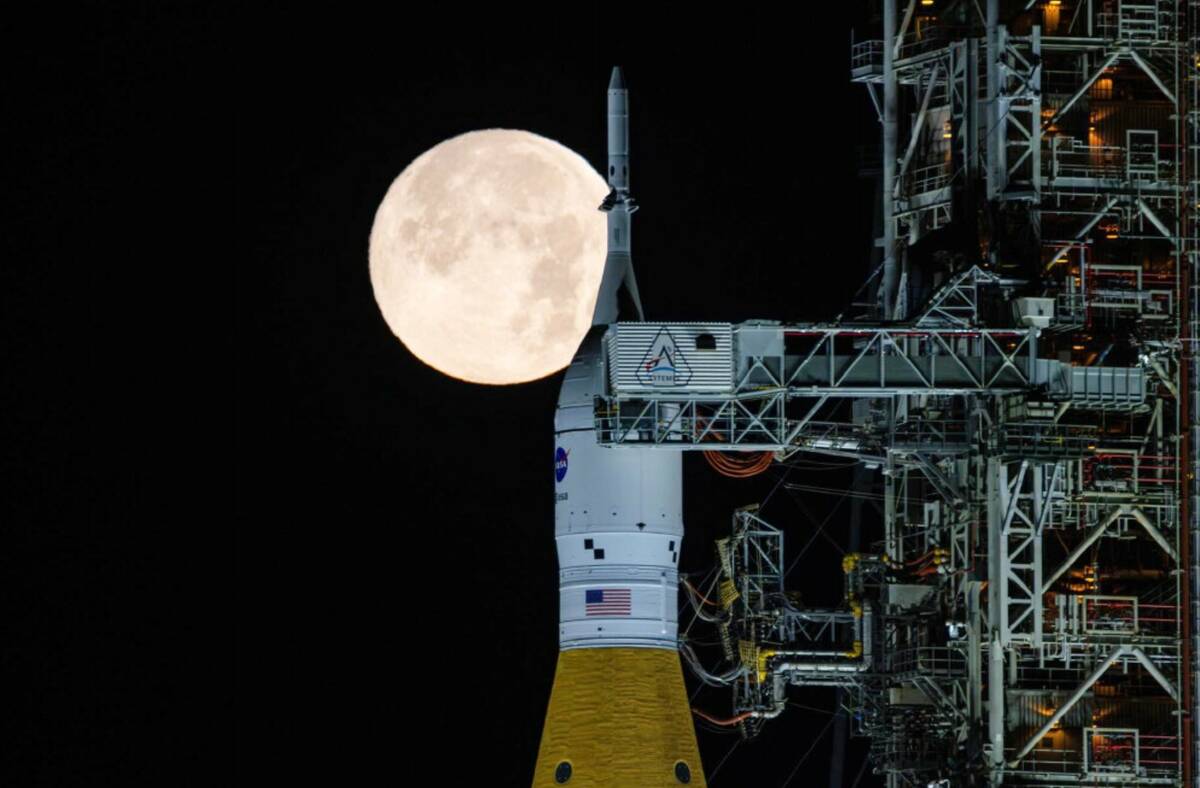
NASA has postponed the launch of its new moon rocket, now targeting March 2024, due to fuel leaks discovered during a crucial test run. The announcement, made on Tuesday, follows a day of testing at the Kennedy Space Center in Cape Canaveral, Florida, where the leaks emerged just hours into the fueling operation.
The agency stated that this delay will provide teams the necessary time to review data from the test and conduct a second wet dress rehearsal before the flight test. The leaks are reminiscent of challenges faced during the rocket’s initial test three years ago, raising concerns about the timeline for sending astronauts to the moon.
NASA plans to move the four astronauts assigned to the mission—three Americans and one Canadian—out of their nearly two-week quarantine. They will re-enter quarantine approximately two weeks before the next planned launch window. While the agency did not specify an exact launch date in March, it emphasized the need to thoroughly evaluate the data from the test and address all issues before proceeding.
Before the delay, the earliest potential launch date was set for Sunday, as launch controllers began fueling the 322-foot (98-meter) rocket with super-cold hydrogen and oxygen. A total of over 700,000 gallons (2.6 million liters) were to be loaded into the rocket’s tanks, simulating the final countdown phases. However, excessive hydrogen accumulation near the rocket’s base led to multiple halts in the fueling process, prompting the launch team to apply strategies developed during previous tests.
NASA’s statement also highlighted issues encountered during the test, including delays in close-out operations and recurring audio dropout problems affecting ground crew communications. The astronauts monitored the critical rehearsal from nearly 1,000 miles (1,600 kilometers) away in Houston, home to the Johnson Space Center.
The space agency faces a limited window for launching the rocket, with only a few days available each month. The extreme cold in February had already shortened this month’s launch window by two days. The countdown clocks began ticking on Saturday night, allowing controllers to conduct a full test of the systems and troubleshoot any remaining problems. The clocks were set to halt just before engine ignition, 30 seconds from zero.
The upcoming mission aims to send the astronauts beyond the moon, around its far side, and back to Earth. This flight will serve as a vital test of the capsule’s life support and other essential systems, although the crew will not enter lunar orbit or attempt a landing on the moon.
As NASA continues to tackle these challenges, the agency remains committed to advancing its ambitious plans for lunar exploration, with eyes set firmly on the future.

Urgent Tax Savings Alert: Maximize Deductions Before April 15

Trump’s Administration Faces Uncertainty Over Government Shutdowns

Cosmic Defects: The Mystery of the Universe’s Missing Anomalies

Rapid City Parks Department Opens Registration for Bocce Leagues

Samsung Galaxy Watch 9 to Feature Larger 435mAh Battery Soon

Two Dead After Student Boats Capsize Off Okinawa Coast

Healthy Choice Wellness Reports Earnings with Mixed Results

Prince Harry Positions Himself as Royal Family’s Image Reviver

All Points North Lodge Achieves FSPHP-ETA Accreditation

Send Holiday Parcels for £1.99 with New Comparison Service

University of Hawaiʻi Leads $25M AI Project to Monitor Natural Disasters

Maui County Reopens Upgraded Lānaʻi Fifth Street Courts Today!

Daily Codeword Puzzle Launches on October 21, 2025

Congresswoman Under Fire for Misleading Epstein Donation Claims

Interstellar Object 3I/ATLAS Emits Unique Metal Alloy, Says Scientist

Trump Vows to Resolve Afghanistan-Pakistan Crisis “Very Quickly”

Charles Darwin’s Address Book Reveals Hidden Aspects of His Life

Rediscovering Chrysler: 5 Overlooked Models from the 1980s
-
 Lifestyle8 months ago
Send Holiday Parcels for £1.99 with New Comparison Service
-
Science9 months ago
University of Hawaiʻi Leads $25M AI Project to Monitor Natural Disasters
-
 Top Stories8 months ago
Maui County Reopens Upgraded Lānaʻi Fifth Street Courts Today!
-
 Entertainment10 months ago
Daily Codeword Puzzle Launches on October 21, 2025
-
 Lifestyle9 months ago
Congresswoman Under Fire for Misleading Epstein Donation Claims
-
 Science10 months ago
Interstellar Object 3I/ATLAS Emits Unique Metal Alloy, Says Scientist
-
 Top Stories9 months ago
Trump Vows to Resolve Afghanistan-Pakistan Crisis “Very Quickly”
-
 Science8 months ago
Charles Darwin’s Address Book Reveals Hidden Aspects of His Life
-
 Lifestyle8 months ago
Rediscovering Chrysler: 5 Overlooked Models from the 1980s
-

 Science7 months ago
Understanding Generation Z: Strategies for Engaging the Workforce
-

 Entertainment10 months ago
Kelly McCreary Discusses Future of Maggie and Winston in Grey’s Anatomy
-

 Entertainment7 months ago
Landmark Shift as Iconic Anime Series Concludes After 26 Years