
World
NASA’s X-43: The Fastest Aircraft That Redefined Flight

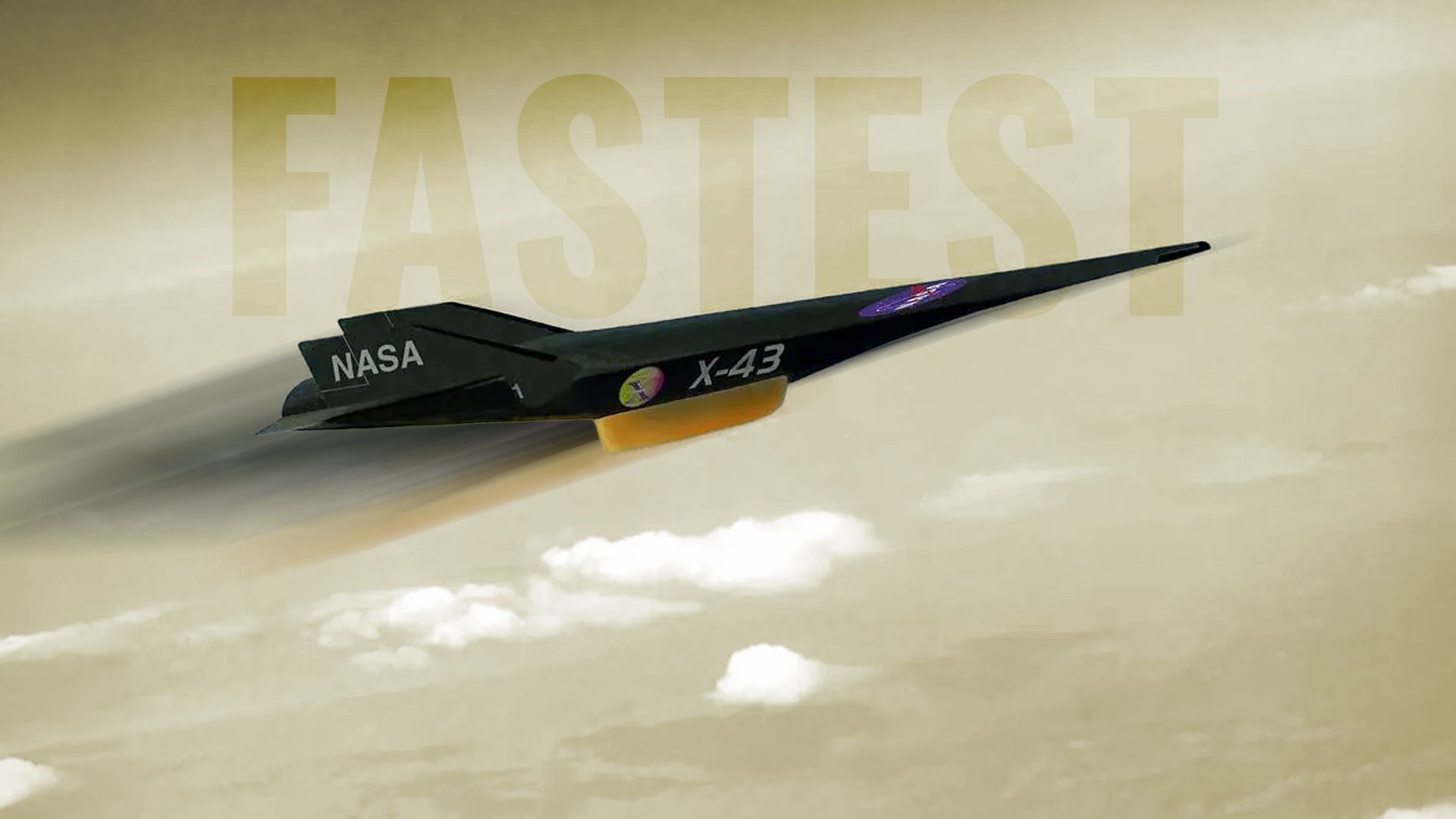
The NASA X-43 holds the title of the fastest air-breathing vehicle ever constructed, achieving remarkable speeds during its test flights. Only three units of this experimental aircraft were built, with one lost during an early test. The X-43, measuring approximately 12 feet in length and 5 feet in width, was specifically designed to explore hypersonic flight capabilities, marking a significant milestone in aerospace engineering.
The X-43 program, which spanned eight years and cost around $230 million, aimed to address the challenges of hypersonic flight. Prior to its development, no aircraft had successfully reached hypersonic speeds using an air-breathing engine. The X-43 achieved its fastest flight on November 16, 2004, reaching an impressive Mach 9.6, while the fastest manned aircraft, the North American X-15, still holds the record at Mach 6.7.
Understanding the X-43’s Design and Technology
The X-43 was an unmanned hypersonic parasitic aircraft launched from a B-52 Superfortress. It was engineered to be single-use, with each unit designed for one flight only. To reach its maximum speed, the X-43 was first carried by the B-52 before being propelled by a rocket booster. Once in the air, its scramjet engine ignited, allowing it to achieve hypersonic speeds.
Scramjet engines operate differently from traditional rocket engines. As noted by NASA, “Unlike rocket-powered vehicles like the space shuttle, scramjet-powered vehicles offer more airplane-like operations, promising increased affordability, flexibility, and safety for ultra-high-speed flights.” This technology eliminates the need for onboard oxidizers, making scramjets smaller and lighter than conventional rocket engines.
Hypersonic speeds are classified as anything above Mach 5, or five times the speed of sound. The X-43’s primary goal was to test these extreme flight capabilities, operating under conditions that had never been attempted before. The program commenced in the late 1990s, with its first flight occurring on June 2, 2001. Unfortunately, this initial test ended in failure as the vehicle was destroyed shortly after takeoff.
The X-43’s second flight on March 27, 2004, achieved a significant milestone, reaching Mach 6.8. The third and final flight hit Mach 9.6, setting a record for the fastest speed achieved by a NASA aircraft. The vehicle glided for approximately ten minutes following its powered flight before crashing into the ocean, as intended.
The Future of Hypersonic Technology
Despite its achievements, the X-43 may soon be surpassed. Australia’s Hypersonix is collaborating with NASA to develop a hypersonic vehicle expected to reach speeds of Mach 12, powered by hydrogen fuel. This initiative reflects a growing interest in hypersonic technology, which is viewed as integral to the future of aerospace and defense.
The race to develop hypersonic vehicles is intensifying globally. Various nations, including the United States, are investing in military applications of this technology. The U.S. Air Force has several hypersonic programs in progress, including the Air-Launched Rapid Response Weapon (ARRW) and the Hypersonic Attack Cruise Missile (HACM).
Moreover, companies like Hypersonix are exploring commercial applications for scramjet technology, with ambitions for hypersonic passenger travel. Their Spartan scramjet is noted as the world’s first entirely 3D-printed scramjet engine, showcasing significant advancements in aerospace engineering.
The intersection of military and commercial interests in hypersonic technology suggests a future where these advancements are not only used for defense but also for commercial aviation, potentially revolutionizing air travel.
In summary, the NASA X-43 remains a pivotal achievement in aerospace history, pushing the boundaries of what is possible in flight. As new technologies emerge, the legacy of the X-43 will undoubtedly influence the next generation of hypersonic vehicles.

Urgent Tax Savings Alert: Maximize Deductions Before April 15

Trump’s Administration Faces Uncertainty Over Government Shutdowns

Cosmic Defects: The Mystery of the Universe’s Missing Anomalies

Rapid City Parks Department Opens Registration for Bocce Leagues

Samsung Galaxy Watch 9 to Feature Larger 435mAh Battery Soon

Two Dead After Student Boats Capsize Off Okinawa Coast

Healthy Choice Wellness Reports Earnings with Mixed Results

Prince Harry Positions Himself as Royal Family’s Image Reviver

All Points North Lodge Achieves FSPHP-ETA Accreditation

Send Holiday Parcels for £1.99 with New Comparison Service

University of Hawaiʻi Leads $25M AI Project to Monitor Natural Disasters

Maui County Reopens Upgraded Lānaʻi Fifth Street Courts Today!

Daily Codeword Puzzle Launches on October 21, 2025

Congresswoman Under Fire for Misleading Epstein Donation Claims

Interstellar Object 3I/ATLAS Emits Unique Metal Alloy, Says Scientist

Trump Vows to Resolve Afghanistan-Pakistan Crisis “Very Quickly”

Charles Darwin’s Address Book Reveals Hidden Aspects of His Life

Rediscovering Chrysler: 5 Overlooked Models from the 1980s
-
 Lifestyle8 months ago
Send Holiday Parcels for £1.99 with New Comparison Service
-
Science9 months ago
University of Hawaiʻi Leads $25M AI Project to Monitor Natural Disasters
-
 Top Stories8 months ago
Maui County Reopens Upgraded Lānaʻi Fifth Street Courts Today!
-
 Entertainment10 months ago
Daily Codeword Puzzle Launches on October 21, 2025
-
 Lifestyle9 months ago
Congresswoman Under Fire for Misleading Epstein Donation Claims
-
 Science10 months ago
Interstellar Object 3I/ATLAS Emits Unique Metal Alloy, Says Scientist
-
 Top Stories9 months ago
Trump Vows to Resolve Afghanistan-Pakistan Crisis “Very Quickly”
-
 Science8 months ago
Charles Darwin’s Address Book Reveals Hidden Aspects of His Life
-
 Lifestyle8 months ago
Rediscovering Chrysler: 5 Overlooked Models from the 1980s
-

 Science7 months ago
Understanding Generation Z: Strategies for Engaging the Workforce
-

 Entertainment10 months ago
Kelly McCreary Discusses Future of Maggie and Winston in Grey’s Anatomy
-

 Top Stories8 months ago
aespa Faces Backlash Over G-Dragon Interaction at 2025 MAMAs