
World
NATO Reaffirms Stance on Article 5 After Missile Incident

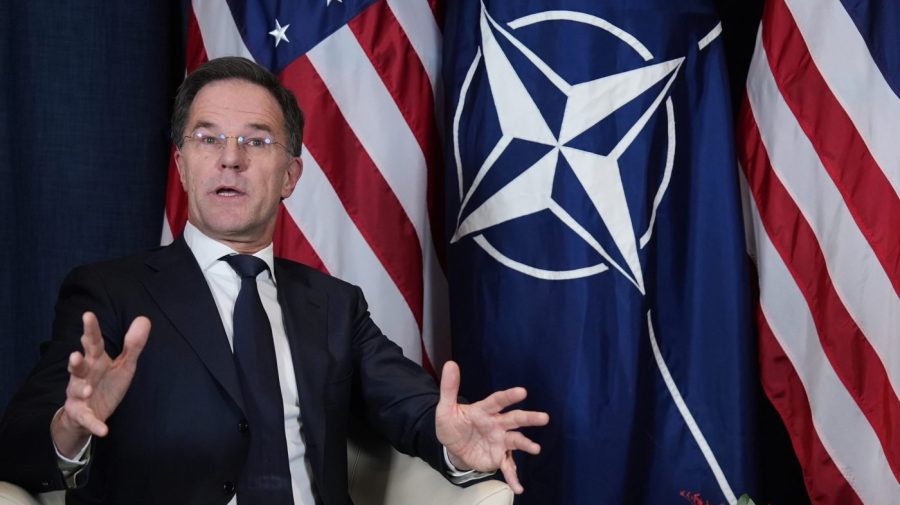
NATO Secretary General Mark Rutte confirmed that the alliance will not invoke Article 5 following an incident where an Iranian missile entered Turkish airspace. Rutte emphasized on Thursday that discussions surrounding Article 5, which pertains to collective defense, are not currently on the table. “Nobody’s talking about Article 5,” Rutte stated in comments to Reuters.
The missile incident, which occurred on the evening of March 7, 2024, raised concerns about regional security and the potential for conflict escalation. Rutte noted that the most critical takeaway from the situation is the demonstration of NATO’s strength and vigilance in the face of threats. He remarked that the adversaries have been shown that “NATO is so strong and so vigilant.”
NATO’s collective defense clause, enshrined in Article 5 of the North Atlantic Treaty, asserts that an attack against one member is an attack against all. Although the missile did not cause any damage or casualties, the situation underscores the complexities of geopolitical tensions in the region. Rutte’s comments serve to reassure NATO allies of the alliance’s commitment to collective security without escalating the situation further.
Turkey, a NATO member since 1952, has historically been at the forefront of conflicts involving neighboring countries. The country has often faced threats from various groups, including those based in Syria and Iraq. The recent missile launch from Iran adds another layer to Turkey’s security challenges, particularly as it continues to navigate its relationships with both NATO allies and regional powers.
While NATO’s decision not to invoke Article 5 may reflect a desire to avoid unnecessary escalation, it also highlights the alliance’s ongoing commitment to monitoring threats in the region. Rutte’s statements indicate that NATO is prepared to respond to security challenges while maintaining diplomatic avenues for resolution.
As the situation evolves, NATO’s response will be closely watched by both member states and adversaries alike. The alliance’s ability to balance deterrence with diplomacy is crucial in maintaining stability in an increasingly volatile geopolitical landscape.

Urgent Tax Savings Alert: Maximize Deductions Before April 15

Trump’s Administration Faces Uncertainty Over Government Shutdowns

Cosmic Defects: The Mystery of the Universe’s Missing Anomalies

Rapid City Parks Department Opens Registration for Bocce Leagues

Samsung Galaxy Watch 9 to Feature Larger 435mAh Battery Soon

Two Dead After Student Boats Capsize Off Okinawa Coast

Healthy Choice Wellness Reports Earnings with Mixed Results

Prince Harry Positions Himself as Royal Family’s Image Reviver

All Points North Lodge Achieves FSPHP-ETA Accreditation

Send Holiday Parcels for £1.99 with New Comparison Service

University of Hawaiʻi Leads $25M AI Project to Monitor Natural Disasters

Maui County Reopens Upgraded Lānaʻi Fifth Street Courts Today!

Interstellar Object 3I/ATLAS Emits Unique Metal Alloy, Says Scientist

Kelly McCreary Discusses Future of Maggie and Winston in Grey’s Anatomy

Daily Codeword Puzzle Launches on October 21, 2025

Congresswoman Under Fire for Misleading Epstein Donation Claims

Trump Vows to Resolve Afghanistan-Pakistan Crisis “Very Quickly”

Researchers Achieve Fastest Genome Sequencing in Under Four Hours
-
 Lifestyle4 months ago
Send Holiday Parcels for £1.99 with New Comparison Service
-
Science5 months ago
University of Hawaiʻi Leads $25M AI Project to Monitor Natural Disasters
-
 Top Stories4 months ago
Maui County Reopens Upgraded Lānaʻi Fifth Street Courts Today!
-
 Science6 months ago
Interstellar Object 3I/ATLAS Emits Unique Metal Alloy, Says Scientist
-
 Entertainment6 months ago
Kelly McCreary Discusses Future of Maggie and Winston in Grey’s Anatomy
-
 Entertainment6 months ago
Daily Codeword Puzzle Launches on October 21, 2025
-
 Lifestyle5 months ago
Congresswoman Under Fire for Misleading Epstein Donation Claims
-
 Top Stories6 months ago
Trump Vows to Resolve Afghanistan-Pakistan Crisis “Very Quickly”
-
 Science6 months ago
Researchers Achieve Fastest Genome Sequencing in Under Four Hours
-

 Business6 months ago
Iconic Sand Dollar Social Club Listed for $3 Million in Folly Beach
-

 Science5 months ago
Charles Darwin’s Address Book Reveals Hidden Aspects of His Life
-

 Politics6 months ago
Afghan Refugee Detained by ICE After Asylum Hearing in New York