
World
Russia’s 1939 Winter War Against Finland: Historical Echoes Resurface

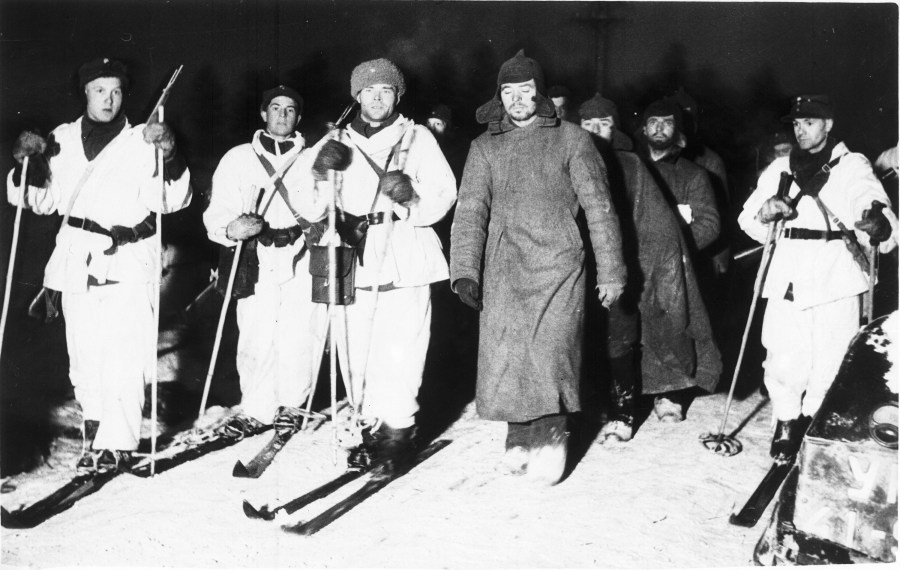
On November 30, 1939, the Soviet Union launched an invasion of Finland, marking the beginning of the conflict known as the **Winter War**. This military aggression formed part of a broader strategy by the Soviet leadership to reshape Eastern Europe, aligning with Nazi Germany under a non-aggression treaty at that time. The invasion aimed to secure territorial gains and assert Soviet dominance in the region.
The conflict unfolded as Finland, despite being significantly outnumbered, mounted a fierce resistance against the Soviet forces. The **Winter War** lasted until March 13, 1940, culminating in the **Moscow Peace Treaty**. Finland ceded approximately 10% of its territory, including the strategically important city of Viipuri, but retained its sovereignty. The war resulted in considerable losses for both sides, with estimates of Soviet casualties ranging from 126,000 to 250,000, while Finnish losses stood at around 25,000.
Historical Context and Strategic Motivations
The **Winter War** occurred against the backdrop of escalating tensions in Europe. Following the signing of the **Molotov-Ribbentrop Pact** in August 1939, the Soviet Union and Nazi Germany had agreed to divide Eastern Europe between themselves. The Soviet leadership viewed Finland as a crucial buffer state, essential for protecting Leningrad, now known as St. Petersburg. The invasion was seen as a necessary step to establish a more secure border.
Russian propaganda from that era painted the invasion as a protective measure for the Soviet people. Official narratives portrayed Finnish forces as aggressors, despite the clear reality of the Soviet assault. This tactic of reinterpreting historical events for domestic and international audiences has continued throughout subsequent conflicts, suggesting a troubling continuity in state-sponsored messaging.
Modern Resonances of Historical Propaganda
In contemporary geopolitics, parallels can be drawn between the **Winter War** and current narratives surrounding Russia’s actions in Ukraine. The use of historical propaganda to justify military interventions raises significant questions about the role of government narratives in shaping public perception. Just as in the past, the Russian state has employed rhetoric that frames its actions as defensive rather than aggressive.
The implications of revisiting the **Winter War** are profound. Analysts suggest that understanding this historical context is crucial for interpreting modern conflicts involving Russia. The same themes of territorial ambition and the justification of military action recur, reflecting a cyclical pattern in Russian foreign policy.
As the world observes these developments, the lessons from the **Winter War** remain relevant. Understanding the motivations behind historical aggression is vital for addressing current global tensions. The echoes of the past serve as a reminder of the complex interplay between power, propaganda, and the quest for territorial control.

Urgent Tax Savings Alert: Maximize Deductions Before April 15

Trump’s Administration Faces Uncertainty Over Government Shutdowns

Cosmic Defects: The Mystery of the Universe’s Missing Anomalies

Rapid City Parks Department Opens Registration for Bocce Leagues

Samsung Galaxy Watch 9 to Feature Larger 435mAh Battery Soon

Two Dead After Student Boats Capsize Off Okinawa Coast

Healthy Choice Wellness Reports Earnings with Mixed Results

Prince Harry Positions Himself as Royal Family’s Image Reviver

All Points North Lodge Achieves FSPHP-ETA Accreditation

Send Holiday Parcels for £1.99 with New Comparison Service

University of Hawaiʻi Leads $25M AI Project to Monitor Natural Disasters

Maui County Reopens Upgraded Lānaʻi Fifth Street Courts Today!

Daily Codeword Puzzle Launches on October 21, 2025

Congresswoman Under Fire for Misleading Epstein Donation Claims

Interstellar Object 3I/ATLAS Emits Unique Metal Alloy, Says Scientist

Trump Vows to Resolve Afghanistan-Pakistan Crisis “Very Quickly”

Charles Darwin’s Address Book Reveals Hidden Aspects of His Life

Rediscovering Chrysler: 5 Overlooked Models from the 1980s
-
 Lifestyle8 months ago
Send Holiday Parcels for £1.99 with New Comparison Service
-
Science9 months ago
University of Hawaiʻi Leads $25M AI Project to Monitor Natural Disasters
-
 Top Stories8 months ago
Maui County Reopens Upgraded Lānaʻi Fifth Street Courts Today!
-
 Entertainment10 months ago
Daily Codeword Puzzle Launches on October 21, 2025
-
 Lifestyle9 months ago
Congresswoman Under Fire for Misleading Epstein Donation Claims
-
 Science10 months ago
Interstellar Object 3I/ATLAS Emits Unique Metal Alloy, Says Scientist
-
 Top Stories9 months ago
Trump Vows to Resolve Afghanistan-Pakistan Crisis “Very Quickly”
-
 Science8 months ago
Charles Darwin’s Address Book Reveals Hidden Aspects of His Life
-
 Lifestyle8 months ago
Rediscovering Chrysler: 5 Overlooked Models from the 1980s
-

 Science7 months ago
Understanding Generation Z: Strategies for Engaging the Workforce
-

 Entertainment10 months ago
Kelly McCreary Discusses Future of Maggie and Winston in Grey’s Anatomy
-

 Top Stories8 months ago
aespa Faces Backlash Over G-Dragon Interaction at 2025 MAMAs