
World
Ryanair Cuts Routes Across Europe, Slashing Millions of Seats in 2026

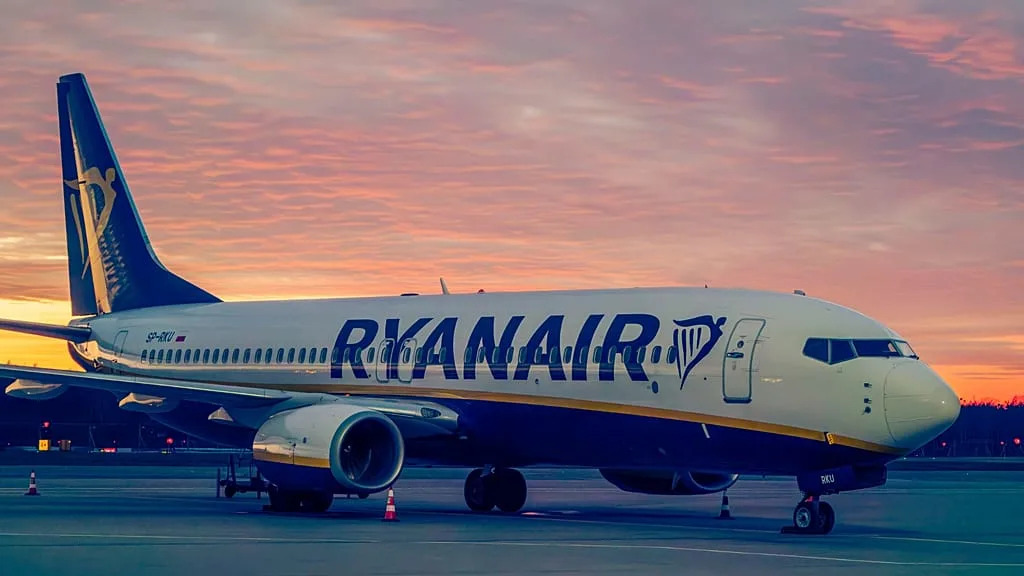
Ryanair has announced significant route cuts for 2026, impacting multiple destinations across Europe. The budget airline is set to reduce its capacity by approximately three million seats, affecting connections in countries such as Germany, Spain, France, Belgium, and Portugal. This decision comes amidst rising operational costs and regulatory challenges that Ryanair claims undermine its competitiveness in the market.
Major Cuts in Germany
In October 2025, Ryanair revealed plans to eliminate 24 routes to and from Germany, resulting in a reduction of nearly 800,000 seats for the Winter 2025/2026 schedule. Airports in Hamburg, Berlin, Cologne, Memmingen, Frankfurt-Hahn, Dresden, Dortmund, and Leipzig will be among those affected. Operations at Leipzig, Dresden, and Dortmund will remain suspended throughout 2026.
Ryanair attributes these cuts to high air traffic control (ATC) and security fees, excessive German aviation taxes, and frequent changes at airports. The airline’s chief executive, Michael O’Leary, criticized the German government, stating that these factors have severely hampered the recovery of air traffic in Germany, which currently operates at only 88 percent of pre-pandemic levels. Ryanair has also indicated that it may transfer capacity to countries with more favorable operational costs unless the government addresses these issues.
Impact on Spanish Routes
The airline’s strategy for Spain mirrors its approach in Germany, with a capacity reduction of approximately 1.2 million seats from its summer 2026 schedule. This includes the complete cessation of flights to Asturias and Vigo, as well as the closure of its base in Santiago de Compostela. Ryanair will also reduce capacity on routes to Santander and Zaragoza and limit connections to the Canary Islands.
The airline has cited ongoing disputes with Spanish airport operator Aena over steep tax increases and “illegal bag fines” as primary reasons for its decision. Ryanair argues that the pricing structure imposed by Aena disadvantages regional airports, making them less competitive compared to alternatives in Morocco and Italy. As a result, the airline is reallocating capacity to larger Spanish airports with higher passenger demand.
Route Changes in France and Belgium
Ryanair’s cuts extend to France, where the airline has suspended 25 routes and eliminated 750,000 seats for the upcoming winter. While flights to Bergerac are set to resume in summer 2026 following negotiations with French authorities, services to Brive and Strasbourg remain halted. Ryanair has warned that additional cancellations could occur if current trends continue.
In Belgium, the airline plans to withdraw 20 routes and one million seats from its winter 2026/27 schedule due to a new aviation tax that doubles the fee to €10 per passenger. This follows the removal of key routes to cities including Milan-Bergamo and Barcelona. Ryanair has urged the Belgian government to reconsider this tax, arguing that it will stifle traffic and tourism.
Challenges in Portugal and the Balkans
Ryanair will also discontinue all six of its routes to the Azores by the end of March 2026, affecting around 400,000 passengers annually. This cut represents a 22 percent reduction in the airline’s capacity in Portugal, driven by rising air traffic control fees and a newly introduced €2 travel tax that Ryanair describes as counterproductive.
In the Balkans, the airline is reducing services in Bosnia and Serbia, cutting six weekly flights from Banja Luka and two weekly flights from Niš to Vienna and Malta. The airline cites the need to reallocate resources to regions with growing demand, such as Croatia.
In summary, Ryanair’s sweeping route reductions across Europe underscore the airline’s response to rising operational costs and regulatory hurdles. As it navigates these challenges, Ryanair remains open to increasing capacity if conditions improve, particularly in markets that provide a more competitive environment.

Urgent Tax Savings Alert: Maximize Deductions Before April 15

Trump’s Administration Faces Uncertainty Over Government Shutdowns

Cosmic Defects: The Mystery of the Universe’s Missing Anomalies

Rapid City Parks Department Opens Registration for Bocce Leagues

Samsung Galaxy Watch 9 to Feature Larger 435mAh Battery Soon

Two Dead After Student Boats Capsize Off Okinawa Coast

Healthy Choice Wellness Reports Earnings with Mixed Results

Prince Harry Positions Himself as Royal Family’s Image Reviver

All Points North Lodge Achieves FSPHP-ETA Accreditation

Send Holiday Parcels for £1.99 with New Comparison Service

University of Hawaiʻi Leads $25M AI Project to Monitor Natural Disasters

Maui County Reopens Upgraded Lānaʻi Fifth Street Courts Today!

Daily Codeword Puzzle Launches on October 21, 2025

Congresswoman Under Fire for Misleading Epstein Donation Claims

Interstellar Object 3I/ATLAS Emits Unique Metal Alloy, Says Scientist

Trump Vows to Resolve Afghanistan-Pakistan Crisis “Very Quickly”

Charles Darwin’s Address Book Reveals Hidden Aspects of His Life

Rediscovering Chrysler: 5 Overlooked Models from the 1980s
-
 Lifestyle8 months ago
Send Holiday Parcels for £1.99 with New Comparison Service
-
Science9 months ago
University of Hawaiʻi Leads $25M AI Project to Monitor Natural Disasters
-
 Top Stories8 months ago
Maui County Reopens Upgraded Lānaʻi Fifth Street Courts Today!
-
 Entertainment10 months ago
Daily Codeword Puzzle Launches on October 21, 2025
-
 Lifestyle9 months ago
Congresswoman Under Fire for Misleading Epstein Donation Claims
-
 Science10 months ago
Interstellar Object 3I/ATLAS Emits Unique Metal Alloy, Says Scientist
-
 Top Stories9 months ago
Trump Vows to Resolve Afghanistan-Pakistan Crisis “Very Quickly”
-
 Science8 months ago
Charles Darwin’s Address Book Reveals Hidden Aspects of His Life
-
 Lifestyle8 months ago
Rediscovering Chrysler: 5 Overlooked Models from the 1980s
-

 Science7 months ago
Understanding Generation Z: Strategies for Engaging the Workforce
-

 Entertainment10 months ago
Kelly McCreary Discusses Future of Maggie and Winston in Grey’s Anatomy
-

 Top Stories8 months ago
aespa Faces Backlash Over G-Dragon Interaction at 2025 MAMAs