
World
South Korea Passes Controversial Bill Targeting ‘Fake News’

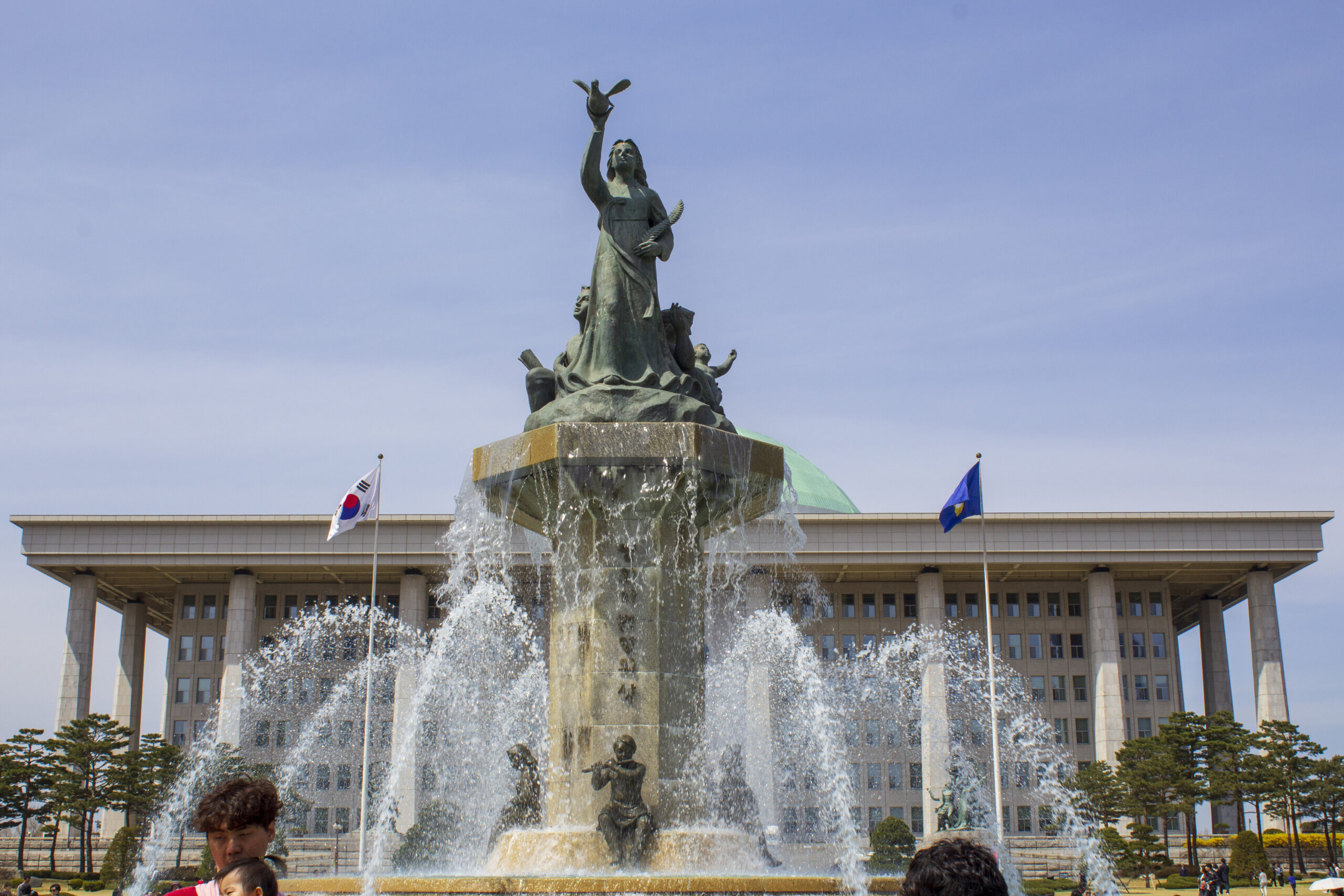
The National Assembly of South Korea approved a contentious bill aimed at traditional and online news outlets that disseminate what is deemed “false or fabricated information.” This legislation, which has raised profound concerns regarding press freedom, allows for significant punitive damages against media organizations. The Democratic Party successfully passed the bill with a vote of 170 in favor out of 177 members present, following a 24-hour filibuster by the Conservative Party.
The new law broadens the definition of unlawful content to encompass defamation, incitement to discrimination, and false information. Proponents argue that the legislation is crucial in combating the rising tide of fake news and disinformation, which they claim poses a direct threat to democracy. Should the bill become law, courts would have the authority to levy punitive damages up to five times the amount of proven losses.
Critics of the bill, including journalist groups and civil liberties advocates, have voiced alarm over its vague language regarding the content it targets. They fear it could lead to increased censorship and urged President Lee to veto the legislation to safeguard press freedoms. Song Ji-Won, a representative attorney at the Communication Law Institute, highlighted concerns that the bill’s provisions could allow for the removal of entire media content based on a single inaccuracy.
The political landscape in South Korea has become increasingly polarized following the impeachment of former President Yoon Suk Yeol in 2024. This political turmoil has coincided with the rise of conspiracy theories propagated by right-wing YouTubers, who often depict Yoon as a victim of the political left. The media environment has become increasingly fragmented, marked by a surge in hate speech and misinformation.
In recent months, the necessity for regulation has been emphasized by the Democratic Party, which cited concerns over the harmful effects of false information and hate speech. The political climate has further deteriorated, with Yoon Suk Yeol facing indictment for allegedly covering up a military investigation. Additionally, another former leader was indicted for actions during the martial law of December 2024, contributing to a sense of instability within the nation.
The passage of this bill marks a significant moment in South Korea’s ongoing struggle to balance the fight against misinformation with the protection of freedom of the press. As the situation evolves, the implications of this legislation will likely resonate beyond the realm of journalism, affecting public discourse and democratic integrity in the country.

Urgent Tax Savings Alert: Maximize Deductions Before April 15

Trump’s Administration Faces Uncertainty Over Government Shutdowns

Cosmic Defects: The Mystery of the Universe’s Missing Anomalies

Rapid City Parks Department Opens Registration for Bocce Leagues

Samsung Galaxy Watch 9 to Feature Larger 435mAh Battery Soon

Two Dead After Student Boats Capsize Off Okinawa Coast

Healthy Choice Wellness Reports Earnings with Mixed Results

Prince Harry Positions Himself as Royal Family’s Image Reviver

All Points North Lodge Achieves FSPHP-ETA Accreditation

Send Holiday Parcels for £1.99 with New Comparison Service

University of Hawaiʻi Leads $25M AI Project to Monitor Natural Disasters

Maui County Reopens Upgraded Lānaʻi Fifth Street Courts Today!

Daily Codeword Puzzle Launches on October 21, 2025

Congresswoman Under Fire for Misleading Epstein Donation Claims

Interstellar Object 3I/ATLAS Emits Unique Metal Alloy, Says Scientist

Trump Vows to Resolve Afghanistan-Pakistan Crisis “Very Quickly”

Charles Darwin’s Address Book Reveals Hidden Aspects of His Life

Rediscovering Chrysler: 5 Overlooked Models from the 1980s
-
 Lifestyle8 months ago
Send Holiday Parcels for £1.99 with New Comparison Service
-
Science9 months ago
University of Hawaiʻi Leads $25M AI Project to Monitor Natural Disasters
-
 Top Stories8 months ago
Maui County Reopens Upgraded Lānaʻi Fifth Street Courts Today!
-
 Entertainment10 months ago
Daily Codeword Puzzle Launches on October 21, 2025
-
 Lifestyle9 months ago
Congresswoman Under Fire for Misleading Epstein Donation Claims
-
 Science10 months ago
Interstellar Object 3I/ATLAS Emits Unique Metal Alloy, Says Scientist
-
 Top Stories9 months ago
Trump Vows to Resolve Afghanistan-Pakistan Crisis “Very Quickly”
-
 Science8 months ago
Charles Darwin’s Address Book Reveals Hidden Aspects of His Life
-
 Lifestyle8 months ago
Rediscovering Chrysler: 5 Overlooked Models from the 1980s
-

 Science7 months ago
Understanding Generation Z: Strategies for Engaging the Workforce
-

 Entertainment10 months ago
Kelly McCreary Discusses Future of Maggie and Winston in Grey’s Anatomy
-

 Top Stories8 months ago
aespa Faces Backlash Over G-Dragon Interaction at 2025 MAMAs