
World
Supply Chain Strain Threatens Pentagon’s Space Ambitions

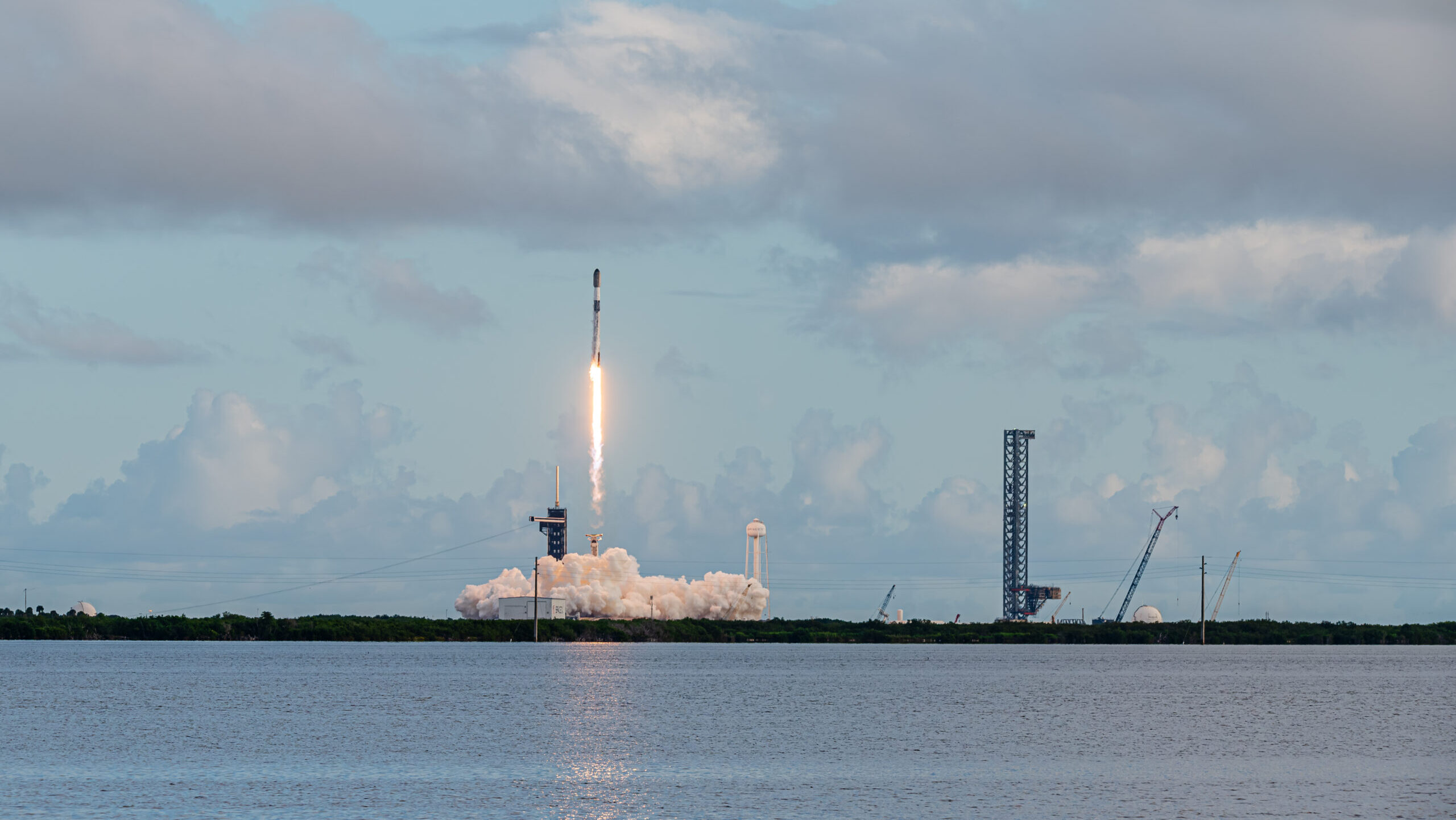
The increasing demand for satellites and launch vehicles is exerting significant pressure on the global space supply chain. In December 2022, China submitted an application to the International Telecommunication Union for a staggering total of 203,000 satellites intended for various constellations. Shortly thereafter, SpaceX proposed an expansive network comprising one million satellites to provide data services. This surge in satellite production is indicative of a broader trend, as militaries and commercial entities alike are investing heavily in their own space capabilities, moving away from reliance on international partners.
Industry experts and analysts have expressed concerns that this unprecedented demand could strain the existing supply chain, potentially jeopardizing several initiatives aimed at maintaining the United States military’s dominance in space. In particular, the ambitious Golden Dome missile defense program could be at risk due to the pressure on supply lines. Dave Cavossa, head of the Commercial Space Federation, highlighted that demand for launch vehicles and satellite components is expected to soar over the next few years. “I’m concerned that the industrial base in the United States isn’t ready to support it,” he stated.
Commercial Demand and Military Implications
The anticipated boom in mega-constellations, especially in low Earth orbit (LEO), is a significant driver of this demand. Companies such as SpaceX, with their Starlink and Starshield initiatives, and Amazon’s Project Kuiper, which aims to deploy a constellation of approximately 7,700 satellites, are leading the charge. China’s recent ITU filing includes plans for the state-backed Guowang and commercial Qianfan constellations, designed to compete directly with SpaceX’s offerings.
The defense sector is also ramping up its investments in satellite and launch services to prepare for potential space conflicts. The U.S. Defense Department is actively pursuing a more resilient space force structure, particularly through the efforts of the Space Development Agency and Space Systems Command. These agencies are planning to deploy numerous satellites for missile tracking in LEO and medium Earth orbit (MEO). Jeff Schrader, vice president of strategy at Lockheed Martin, noted a remarkable 632 percent increase in satellite deliveries compared to their long-range plan.
While major companies are attempting to prepare for this demand surge, the overlap between commercial and defense supply chains raises concerns. Scott Herman, chief technology officer at UK startup SatVu, pointed out that even vertically integrated companies depend heavily on component suppliers for essential parts like batteries and propulsion systems. The challenge lies in the competitive nature of the space industry, which complicates efforts to identify potential bottlenecks.
Identifying Challenges and Future Risks
Despite the lack of public information about specific supply chain issues, Lt. Gen. Philip Garrant, commander of the Space Systems Command, recently acknowledged widespread concerns. He cited ongoing problems with supply chain components such as optical crosslinks, fuel tanks, and software. These challenges are affecting various sectors, including the Space Rapid Capabilities Office and the Space Development Agency.
Industry leaders are actively seeking to characterize these challenges more clearly. Both the Aerospace Industries Association and the Commercial Space Federation are conducting studies to identify specific risks and recommend mitigation strategies. Jordan Tomaszewski from AIA stated that findings from discussions with space sector members will be released in the coming weeks.
Among the potential choke points in the supply chain are critical minerals and components, such as gallium arsenide and germanium. These materials are essential for high-efficiency solar cells and infrared imaging technologies, which are crucial for missile detection and tracking systems. Notably, Boeing has recently opened a production line for electro-optical infrared sensors, aiming to meet the growing demand for satellite payloads.
As the demand from commercial entities escalates, there are concerns that satellite manufacturers may prioritize contracts with commercial partners over those with the Department of Defense (DoD). This shift could hinder military efforts to expand their space architecture, especially if the DoD’s demand remains unpredictable and influenced by political factors.
Industry experts like Todd Harrison from the American Enterprise Institute argue that the real issue may not lie solely in supply chain disruptions but in the DoD’s unclear demand signals. The fluctuating nature of government contracts may deter suppliers from investing in necessary scaling measures.
In conclusion, as the space industry faces unprecedented demand, the implications for military initiatives could be significant. The strain on supply chains, coupled with the evolving priorities of satellite manufacturers, necessitates careful attention to ensure that both commercial and defense needs can be met effectively.

Urgent Tax Savings Alert: Maximize Deductions Before April 15

Trump’s Administration Faces Uncertainty Over Government Shutdowns

Cosmic Defects: The Mystery of the Universe’s Missing Anomalies

Rapid City Parks Department Opens Registration for Bocce Leagues

Samsung Galaxy Watch 9 to Feature Larger 435mAh Battery Soon

Two Dead After Student Boats Capsize Off Okinawa Coast

Healthy Choice Wellness Reports Earnings with Mixed Results

Prince Harry Positions Himself as Royal Family’s Image Reviver

All Points North Lodge Achieves FSPHP-ETA Accreditation

Send Holiday Parcels for £1.99 with New Comparison Service

University of Hawaiʻi Leads $25M AI Project to Monitor Natural Disasters

Maui County Reopens Upgraded Lānaʻi Fifth Street Courts Today!

Daily Codeword Puzzle Launches on October 21, 2025

Congresswoman Under Fire for Misleading Epstein Donation Claims

Interstellar Object 3I/ATLAS Emits Unique Metal Alloy, Says Scientist

Trump Vows to Resolve Afghanistan-Pakistan Crisis “Very Quickly”

Charles Darwin’s Address Book Reveals Hidden Aspects of His Life

Rediscovering Chrysler: 5 Overlooked Models from the 1980s
-
 Lifestyle8 months ago
Send Holiday Parcels for £1.99 with New Comparison Service
-
Science9 months ago
University of Hawaiʻi Leads $25M AI Project to Monitor Natural Disasters
-
 Top Stories8 months ago
Maui County Reopens Upgraded Lānaʻi Fifth Street Courts Today!
-
 Entertainment10 months ago
Daily Codeword Puzzle Launches on October 21, 2025
-
 Lifestyle9 months ago
Congresswoman Under Fire for Misleading Epstein Donation Claims
-
 Science10 months ago
Interstellar Object 3I/ATLAS Emits Unique Metal Alloy, Says Scientist
-
 Top Stories9 months ago
Trump Vows to Resolve Afghanistan-Pakistan Crisis “Very Quickly”
-
 Science8 months ago
Charles Darwin’s Address Book Reveals Hidden Aspects of His Life
-
 Lifestyle8 months ago
Rediscovering Chrysler: 5 Overlooked Models from the 1980s
-

 Science7 months ago
Understanding Generation Z: Strategies for Engaging the Workforce
-

 Entertainment10 months ago
Kelly McCreary Discusses Future of Maggie and Winston in Grey’s Anatomy
-

 Top Stories8 months ago
aespa Faces Backlash Over G-Dragon Interaction at 2025 MAMAs