
World
Troops Embrace Reptilian Symbols on National Reptile Awareness Day

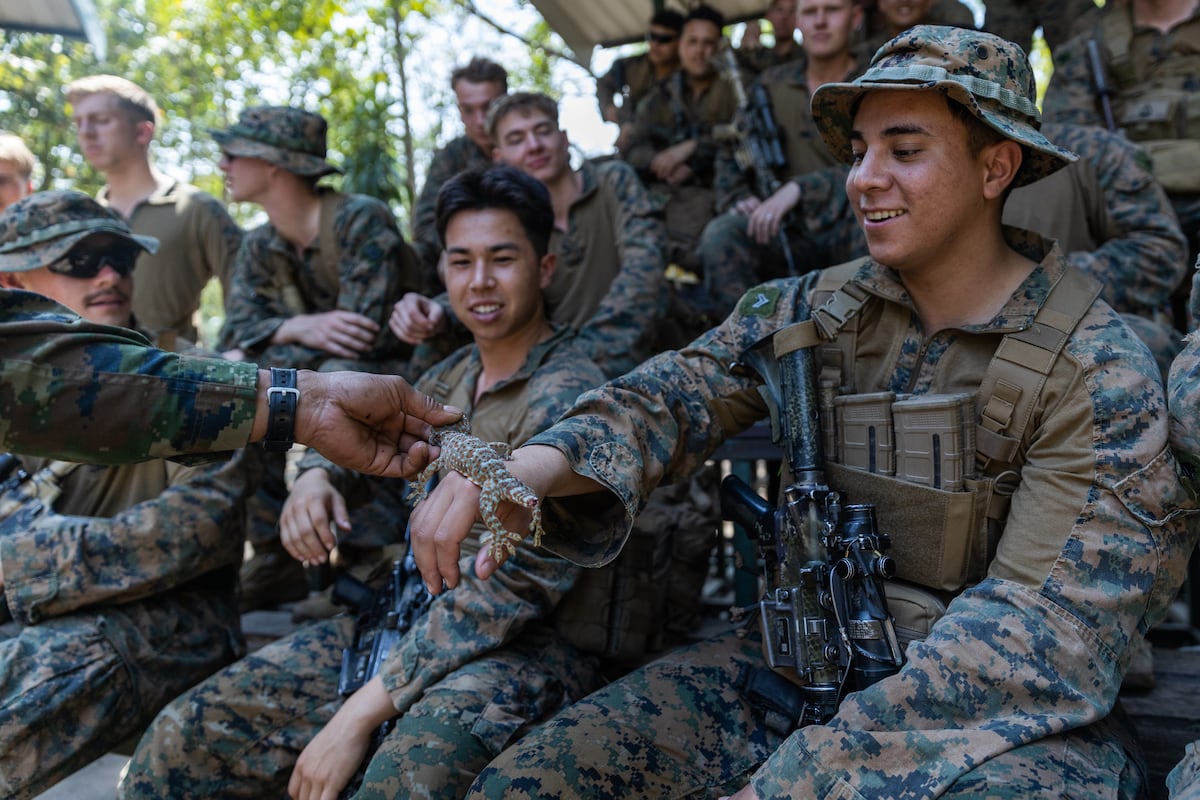
On October 17, National Reptile Awareness Day celebrates the cold-blooded creatures that have influenced human history. For the U.S. military, this appreciation extends beyond mere fascination. Reptilian mascots and call signs—ranging from cobras to alligators—are integral to unit identities, appearing on patches, aircraft, and logos across all branches. These creatures symbolize essential military traits such as patience, precision, and power.
Reptilian Symbolism in Military Culture
The connection between reptiles and military personnel is profound. Reptiles embody a primal toughness that resonates with service members. A cobra, striking without warning, exemplifies lethal precision, while an alligator remains still, waiting for the opportune moment to ambush. This instinctual control parallels the training of military personnel, where a sniper might hold his breath for an extended period before taking a shot, just as a gator can lie submerged for hours before attacking.
The significance of these symbols is evident in military history. The U.S. 158th Infantry Regiment earned the nickname “Bushmasters” during World War II after encountering the venomous snake in the jungles of Panama and the Pacific. This name was not chosen lightly; it became a symbol of resilience forged from daily survival against a formidable predator. Today, the image of the Bushmaster continues to feature prominently in the regiment’s insignia.
Reptiles thrive in environments where American forces have operated for over a century, such as deserts, swamps, and jungles. This shared toughness and adaptability have made reptiles natural emblems for military units. In Iraq and Afghanistan, Marines in amphibious assault units adopted the nickname “Gators,” reflecting both their vehicles’ capabilities and their versatility in combat situations.
Practicality and Tradition of Reptilian Names
The 75th Field Artillery Regiment further solidified this connection with its distinctive insignia, featuring a gold lizard on a red shield. This design pays homage to the regiment’s origins in Alabama, historically referred to as the “Lizard State.” The lizard symbolizes quickness and survival, traits that define the artillerymen who serve under its banner.
Reptilian call signs also serve practical purposes. Names like “Cobra One” or “Viper Six” are concise and assertive, cutting through radio static. Their sharp consonants create a sense of urgency, making them memorable. Such names become part of a unit’s legacy, spoken with pride by soldiers who may never have encountered the original bearers of those names.
The Vietnam War marked a pivotal moment in the relationship between reptiles and military aviation. The introduction of the Bell AH-1 “Cobra” helicopter in 1967 aligned perfectly with the aircraft’s sleek design and lethal capabilities. The helicopter’s speed and firepower further solidified the cobra as a symbol of American air superiority. This tradition continues today with the AH-1Z “Viper,” a modern iteration that maintains its combat efficacy.
Reptilian imagery is also embedded in the Army’s heraldic tradition. The 3rd Armored Cavalry Regiment once adopted the motto, “Brave Rifles, Scales of the Dragon,” merging reptilian symbolism with mythological themes to convey unity and strength. Additionally, the Marine Corps’ Amphibious Assault Schools in California informally refer to themselves as “the Gator School,” a title that reflects their amphibious heritage and historical roots in World War II landings.
Throughout history, reptiles have held symbolic significance in military culture worldwide. In ancient Egypt, crocodiles represented power and protection, with the crocodile god Sobek invoked for strength in battle. This instinct to harness the strength of reptiles continues to manifest in modern American military patches, coins, and mottos, emphasizing the enduring themes of patience, striking decisively, and survival.
Military personnel often describe themselves using the term “cold-blooded,” indicating a capacity to operate without emotion. This term signifies the ability to execute missions despite fear, fatigue, or doubt. It embodies the control and focused discipline reminiscent of a gator poised to strike.
When encountering a call sign like “Cobra One” or spotting a gator emblem on a uniform, one witnesses a rich tapestry of storytelling, tradition, and identity. Reptiles, having survived longer than most species on Earth, symbolize adaptation and resilience—qualities that resonate deeply with service members trained to embody the same principles.
From the jungles of the Pacific to the deserts of Iraq, and from the cockpits of attack helicopters to the beaches of Camp Pendleton, reptiles remain one of the military’s most enduring symbols. They represent readiness, resilience, and survival. Thus, when a young soldier earns a patch adorned with a gator’s jaw or a coiled snake, they join a storied legacy that spans decades of service.

Addressing Overexploitation: Regulating International Trade in Wildlife

St. Louis Blues Edge Winnipeg Jets in 1-0 Victory

AI-Generated Video Misleads on Uttar Pradesh Healthcare Crisis

Wondershare Launches EdrawMax V15, Revolutionizing Diagram Creation

Eighth Doctor Paul McGann Responds to Rumors of Doctor Who Return

Oncology Care Needs New Focus on Emotional Recovery Metrics

South Korea’s Judicial Reforms Face Urgent Backlash from Experts

US CPI Report Set to Impact Markets Amid October Data Gaps

Urgent: Linda L. Wolf Passes Away at 72, Leaving a Legacy

Send Holiday Parcels for £1.99 with New Comparison Service

University of Hawaiʻi Leads $25M AI Project to Monitor Natural Disasters

Interstellar Object 3I/ATLAS Emits Unique Metal Alloy, Says Scientist

Researchers Achieve Fastest Genome Sequencing in Under Four Hours

Iconic Sand Dollar Social Club Listed for $3 Million in Folly Beach

Afghan Refugee Detained by ICE After Asylum Hearing in New York

McEwen Inc. Secures Tartan Lake Gold Mine Through Acquisition

Peptilogics Secures $78 Million to Combat Prosthetic Joint Infections

Jump for Good: San Clemente Pier Fundraiser Allows Legal Leaps
-
 Lifestyle1 week ago
Send Holiday Parcels for £1.99 with New Comparison Service
-
Science2 months ago
University of Hawaiʻi Leads $25M AI Project to Monitor Natural Disasters
-
 Science2 months ago
Interstellar Object 3I/ATLAS Emits Unique Metal Alloy, Says Scientist
-
 Science2 months ago
Researchers Achieve Fastest Genome Sequencing in Under Four Hours
-
 Business2 months ago
Iconic Sand Dollar Social Club Listed for $3 Million in Folly Beach
-
 Politics2 months ago
Afghan Refugee Detained by ICE After Asylum Hearing in New York
-
 Business2 months ago
McEwen Inc. Secures Tartan Lake Gold Mine Through Acquisition
-
 Health2 months ago
Peptilogics Secures $78 Million to Combat Prosthetic Joint Infections
-
 Lifestyle2 months ago
Jump for Good: San Clemente Pier Fundraiser Allows Legal Leaps
-
 Science2 months ago
Mars Observed: Detailed Imaging Reveals Dust Avalanche Dynamics
-

 Health2 months ago
Researcher Uncovers Zika Virus Pathway to Placenta Using Nanotubes
-

 Entertainment2 months ago
Jennifer Lopez Addresses A-Rod Split in Candid Interview