
World
Trump’s Greenland Ambitions Spark Controversy Over U.S. Imperialism

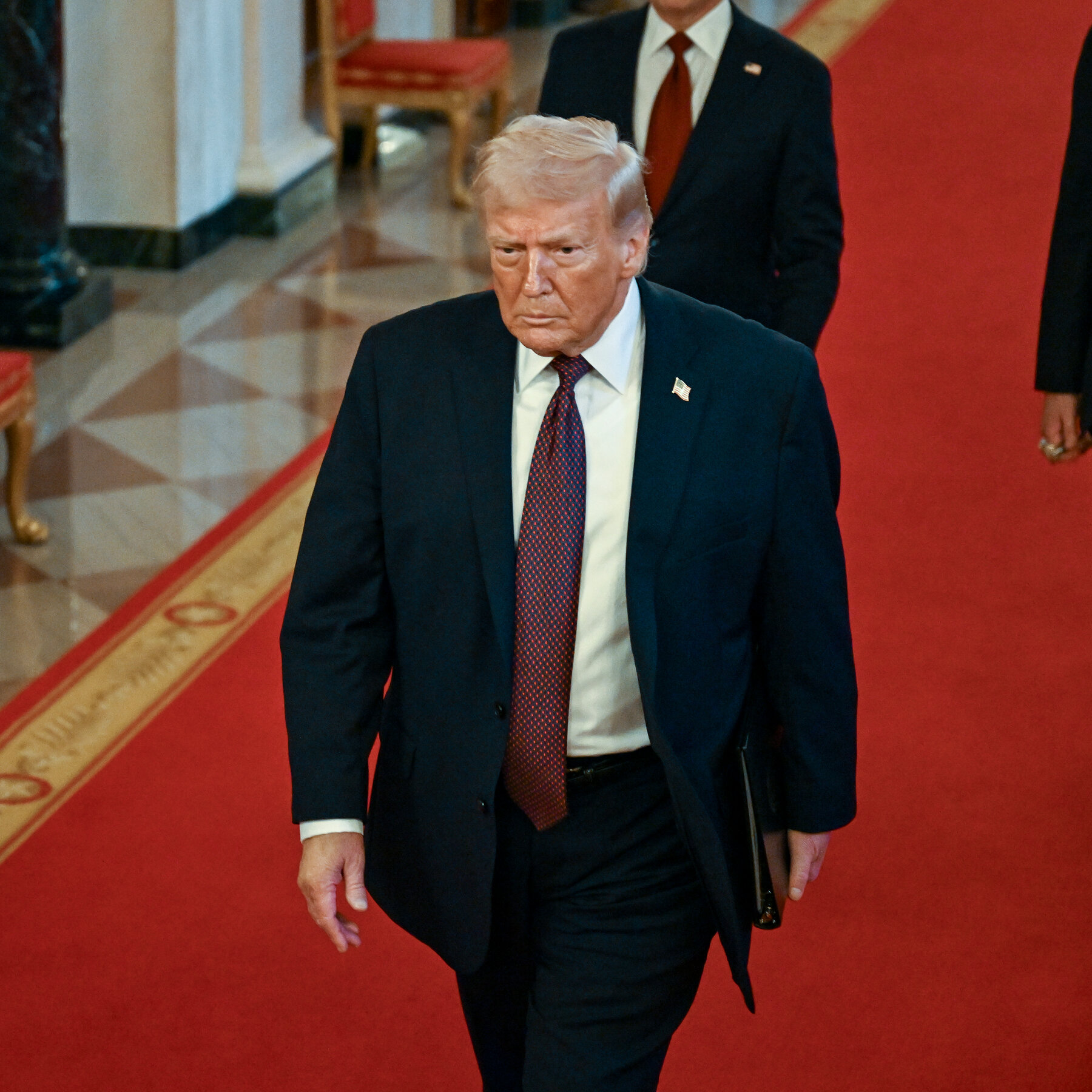
The discussion surrounding the United States’ interest in Greenland has intensified following statements from former President Donald Trump. In 2019, Trump’s proposal to purchase Greenland from Denmark ignited a debate about America’s role in global geopolitics, raising concerns about potential imperialistic ambitions.
According to various reports, the interest in Greenland is tied to the territory’s vast natural resources and strategic military location in the Arctic region. Greenland is believed to hold significant reserves of minerals, including rare earth elements essential for modern technology, making it an attractive target for foreign investment and exploration.
The U.S. National Security Council has emphasized the importance of Greenland in terms of national security, citing its proximity to Russia and China. This strategic interest aligns with broader U.S. objectives to counter foreign influence in the Arctic. Experts argue that control over Greenland could enhance America’s military capabilities and strengthen its influence in the region.
In September 2019, following Trump’s proposal, Denmark rejected the idea of selling Greenland, stating that the territory is not for sale. The Danish Prime Minister, Mette Frederiksen, described the suggestion as “absurd,” reinforcing the territory’s status as an autonomous part of the Kingdom of Denmark.
Despite the rejection, the conversation did not end there. The U.S. has continued to foster closer ties with Greenland, investing in infrastructure and supporting local governance. In 2020, the U.S. Department of State announced a plan to allocate resources to boost Greenland’s economy, which included the establishment of a new consulate in Nuuk, the capital of Greenland.
This interest is not merely economic; it reflects a larger narrative of competition among global powers. As the Arctic becomes more accessible due to climate change, nations are increasingly eyeing the region for its untapped resources and strategic routes. The potential for conflict over these resources raises questions about the future of international relations and the role of the United States.
Critics of the U.S. strategy argue that it reflects a shift towards imperialistic behavior, contrasting sharply with a century of American foreign policy focused on defending allies against aggression. Observers note that this change may signal a new phase in U.S. foreign policy, one that prioritizes territorial acquisition over diplomatic engagement.
The implications of these developments are profound. As countries like Russia and China enhance their presence in the Arctic, the U.S. must navigate a complex landscape where military posturing and economic interests intersect. The situation in Greenland serves as a microcosm of the broader challenges facing American diplomacy in a changing world.
Looking forward, the relationship between the U.S. and Greenland will likely continue to evolve. As climate change alters the geopolitical landscape, the potential for increased military presence and resource competition may reshape the dynamics in the Arctic. With the focus on Greenland, the U.S. finds itself at a crossroads, balancing national interests with the principles of international cooperation.
In sum, Trump’s comments and subsequent actions regarding Greenland highlight significant shifts in U.S. foreign policy, raising essential questions about the future of American engagement in global affairs. As this narrative unfolds, both policymakers and citizens alike will be watching closely to see how the United States navigates its role as a dominant power in an increasingly complex world.

Urgent Tax Savings Alert: Maximize Deductions Before April 15

Trump’s Administration Faces Uncertainty Over Government Shutdowns

Cosmic Defects: The Mystery of the Universe’s Missing Anomalies

Rapid City Parks Department Opens Registration for Bocce Leagues

Samsung Galaxy Watch 9 to Feature Larger 435mAh Battery Soon

Two Dead After Student Boats Capsize Off Okinawa Coast

Healthy Choice Wellness Reports Earnings with Mixed Results

Prince Harry Positions Himself as Royal Family’s Image Reviver

All Points North Lodge Achieves FSPHP-ETA Accreditation

Send Holiday Parcels for £1.99 with New Comparison Service

University of Hawaiʻi Leads $25M AI Project to Monitor Natural Disasters

Maui County Reopens Upgraded Lānaʻi Fifth Street Courts Today!

Daily Codeword Puzzle Launches on October 21, 2025

Congresswoman Under Fire for Misleading Epstein Donation Claims

Interstellar Object 3I/ATLAS Emits Unique Metal Alloy, Says Scientist

Trump Vows to Resolve Afghanistan-Pakistan Crisis “Very Quickly”

Charles Darwin’s Address Book Reveals Hidden Aspects of His Life

Rediscovering Chrysler: 5 Overlooked Models from the 1980s
-
 Lifestyle8 months ago
Send Holiday Parcels for £1.99 with New Comparison Service
-
Science9 months ago
University of Hawaiʻi Leads $25M AI Project to Monitor Natural Disasters
-
 Top Stories8 months ago
Maui County Reopens Upgraded Lānaʻi Fifth Street Courts Today!
-
 Entertainment10 months ago
Daily Codeword Puzzle Launches on October 21, 2025
-
 Lifestyle9 months ago
Congresswoman Under Fire for Misleading Epstein Donation Claims
-
 Science10 months ago
Interstellar Object 3I/ATLAS Emits Unique Metal Alloy, Says Scientist
-
 Top Stories9 months ago
Trump Vows to Resolve Afghanistan-Pakistan Crisis “Very Quickly”
-
 Science8 months ago
Charles Darwin’s Address Book Reveals Hidden Aspects of His Life
-
 Lifestyle8 months ago
Rediscovering Chrysler: 5 Overlooked Models from the 1980s
-

 Science7 months ago
Understanding Generation Z: Strategies for Engaging the Workforce
-

 Entertainment10 months ago
Kelly McCreary Discusses Future of Maggie and Winston in Grey’s Anatomy
-

 Entertainment7 months ago
Landmark Shift as Iconic Anime Series Concludes After 26 Years