
World
U.S. Airstrikes Spark Fear and Uncertainty in Northern Nigeria

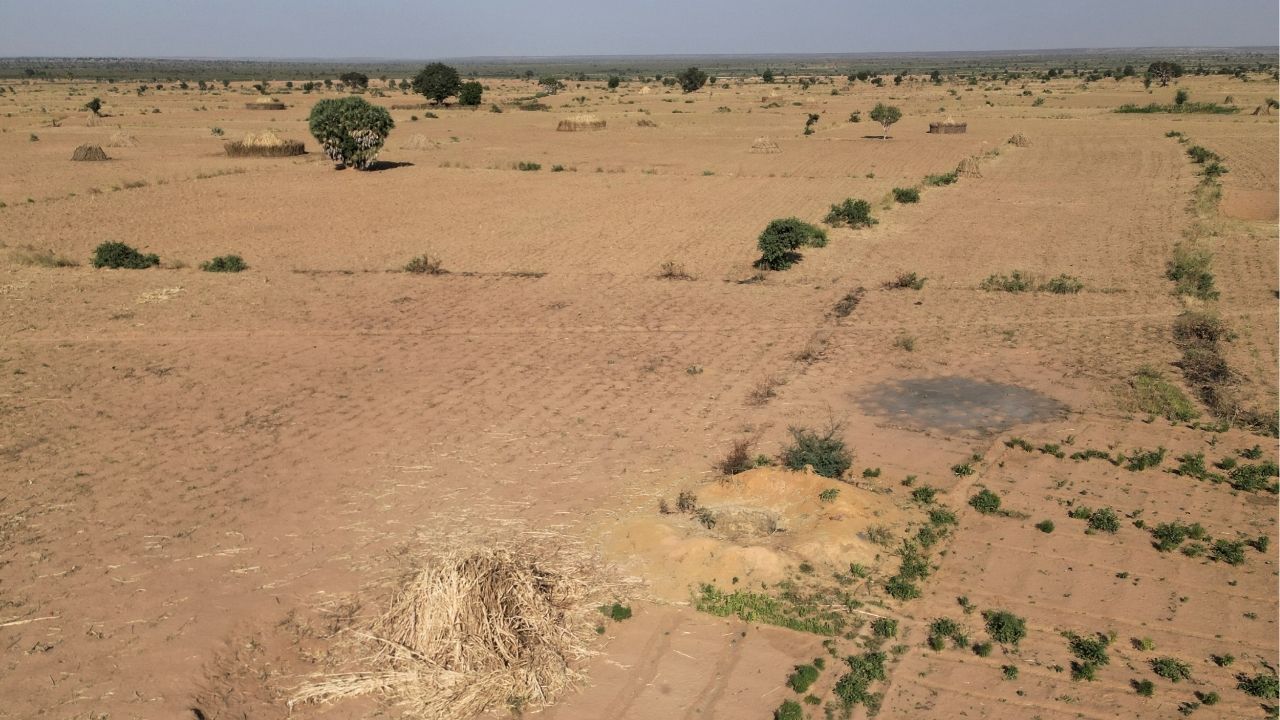
The recent U.S. missile strikes in northern Nigeria have left local communities in a state of fear and uncertainty. On Christmas night, a series of airstrikes ordered by former President Donald Trump targeted what were identified as Islamic State terrorists in the region. However, the strikes have raised concerns among residents, particularly Muslims, about the collateral damage and their implications for community safety.
In Jabo, a farming town in Sokoto State, local herders gathered to inspect the aftermath of the attack. The men traveled over 160 miles to see the shallow crater left by a Tomahawk missile that struck a cornfield, causing destruction that echoed through their community. “I’m hopeful and pray to God this doesn’t happen again,” said Mohammed Abubakar, one of the herders. His sentiments reflect a broader anxiety that the ongoing violence may target innocent civilians instead of the intended militant groups.
The airstrikes were part of a broader U.S. military strategy aimed at combating what Trump described as a “Christian genocide” perpetuated by Islamist terrorists in Nigeria. Reports indicate that the strikes were intended to hit two major enclaves of the Islamic State, yet many residents claim that the missiles caused damage primarily to farmland and abandoned structures, rather than directly targeting militants.
Despite assurances from Nigerian officials that the missile debris fell accidentally, the perception among locals is different. They recount seeing a fireball streak across the sky, and some have found missile fragments on their land. One large cylinder from a Tomahawk missile even landed intact in a field, igniting a stack of cornstalks used for cooking and cattle feed, leaving a charred mark on the ground.
Community Impact and Growing Fear
In the wake of the strikes, families in rural areas have been assessing the damage and grappling with the implications of what they experienced. Many locals are left questioning the effectiveness of the U.S. military’s intelligence. Some speculate that the strikes failed to eliminate the militants, as there has been no evidence of terrorist casualties reported in the aftermath. Instead, the violence continues to plague communities across the region.
Recent attacks by armed groups highlight the persistent threat in Sokoto State. Police reported that gunmen killed dozens and abducted several individuals in neighboring villages in Niger State. The fear is palpable, and for many in Jabo, the strikes have exacerbated existing tensions. “Some of us think this is part of his agenda to protect Christians,” stated Abubakar Mohammed Jabo, reflecting a narrative that has taken hold within the community.
Local officials and the U.S. military maintain that the strikes were a necessary measure against Islamic State affiliates. The U.S. Navy destroyer that launched the missiles has since left the Gulf of Guinea, but both U.S. and Nigerian officials have indicated that intelligence-sharing efforts will continue, potentially leading to further military actions.
The Role of Local Militias
The complex dynamics in northern Nigeria are also influenced by local militia groups, such as the Lakurawa. This group has been accused of terrorizing communities, imposing a strict interpretation of Islam on both Muslims and Christians alike. Farmers and herders have reported that the Lakurawa initially acted to curb violence but later became a source of fear themselves. Abdullahi Bako, a farmer from Tangaza, described how the Lakurawa not only enforced religious rules but also demanded payments to mediate disputes between farmers and herders. “They kept the money for themselves,” he explained, highlighting the group’s exploitative practices.
As residents continue to navigate the aftermath of the missile strikes, the overarching concern remains: the potential for further violence and instability. With the return of the Lakurawa looming over their heads, many fear that the situation may worsen. “If they come back,” Bako warned, “they’re going to be deadlier.”
As communities respond to the immediate impact of U.S. military actions, the narrative of fear and mistrust continues to evolve. The residents of Jabo are left to grapple with the uncertainty of their safety and the implications of international interventions in their lives.

Urgent Tax Savings Alert: Maximize Deductions Before April 15

Trump’s Administration Faces Uncertainty Over Government Shutdowns

Cosmic Defects: The Mystery of the Universe’s Missing Anomalies

Rapid City Parks Department Opens Registration for Bocce Leagues

Samsung Galaxy Watch 9 to Feature Larger 435mAh Battery Soon

Two Dead After Student Boats Capsize Off Okinawa Coast

Healthy Choice Wellness Reports Earnings with Mixed Results

Prince Harry Positions Himself as Royal Family’s Image Reviver

All Points North Lodge Achieves FSPHP-ETA Accreditation

Send Holiday Parcels for £1.99 with New Comparison Service

University of Hawaiʻi Leads $25M AI Project to Monitor Natural Disasters

Maui County Reopens Upgraded Lānaʻi Fifth Street Courts Today!

Daily Codeword Puzzle Launches on October 21, 2025

Congresswoman Under Fire for Misleading Epstein Donation Claims

Interstellar Object 3I/ATLAS Emits Unique Metal Alloy, Says Scientist

Trump Vows to Resolve Afghanistan-Pakistan Crisis “Very Quickly”

Charles Darwin’s Address Book Reveals Hidden Aspects of His Life

Rediscovering Chrysler: 5 Overlooked Models from the 1980s
-
 Lifestyle8 months ago
Send Holiday Parcels for £1.99 with New Comparison Service
-
Science9 months ago
University of Hawaiʻi Leads $25M AI Project to Monitor Natural Disasters
-
 Top Stories8 months ago
Maui County Reopens Upgraded Lānaʻi Fifth Street Courts Today!
-
 Entertainment10 months ago
Daily Codeword Puzzle Launches on October 21, 2025
-
 Lifestyle9 months ago
Congresswoman Under Fire for Misleading Epstein Donation Claims
-
 Science10 months ago
Interstellar Object 3I/ATLAS Emits Unique Metal Alloy, Says Scientist
-
 Top Stories9 months ago
Trump Vows to Resolve Afghanistan-Pakistan Crisis “Very Quickly”
-
 Science8 months ago
Charles Darwin’s Address Book Reveals Hidden Aspects of His Life
-
 Lifestyle8 months ago
Rediscovering Chrysler: 5 Overlooked Models from the 1980s
-

 Science7 months ago
Understanding Generation Z: Strategies for Engaging the Workforce
-

 Entertainment10 months ago
Kelly McCreary Discusses Future of Maggie and Winston in Grey’s Anatomy
-

 Entertainment7 months ago
Landmark Shift as Iconic Anime Series Concludes After 26 Years