
World
U.S. Expands Trade Relations with Latin America, Reduces China Dependency

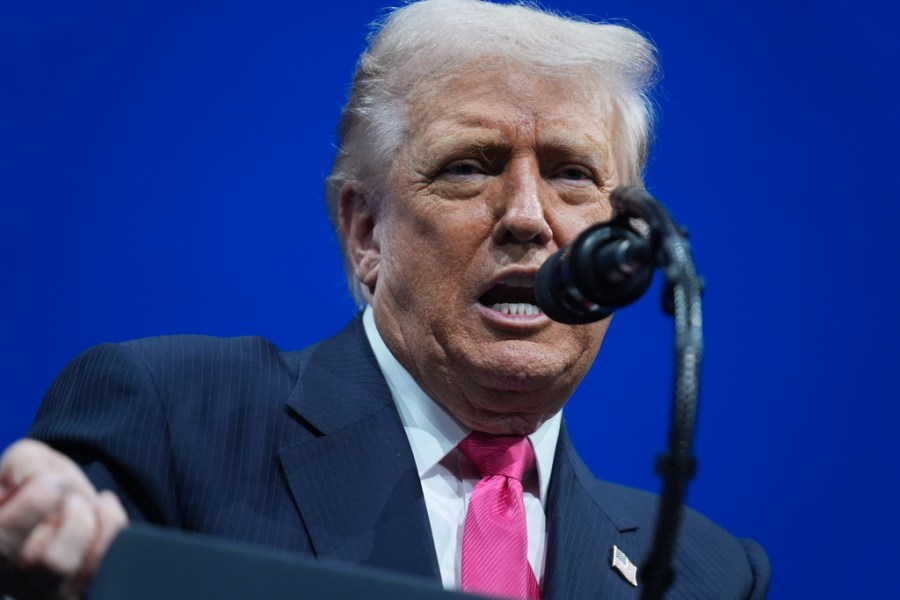
The United States is strengthening its trade and investment relationships with several Latin American nations, aiming to establish a robust strategic alliance that diminishes its reliance on China. This pivot marks a significant shift in American foreign policy and economic strategy, as the U.S. seeks to enhance its influence in the region while fostering economic growth.
The U.S. Department of Commerce recently reported that American investments in Latin America reached approximately $100 billion in 2023, reflecting a marked increase compared to previous years. This growing financial engagement is particularly evident in key countries such as Brazil, Mexico, and Argentina, where trade agreements are being renegotiated and enhanced.
Strategic Alliances and Economic Growth
This renewed focus on Latin America is not merely about economic gain; it is also a strategic move to counterbalance China’s expanding influence in the region. In recent years, China has made significant inroads into Latin America through investments in infrastructure and energy. The U.S. aims to offer alternative partnerships that prioritize democratic values and mutual economic benefit, thereby reshaping the geopolitical landscape.
According to analysts, the U.S. strategy includes diversifying supply chains and promoting local industries in Latin America. By investing in sectors such as renewable energy, technology, and agriculture, the U.S. hopes to create jobs and stimulate local economies. This approach not only strengthens bilateral ties but also positions the U.S. as a key partner in the region’s development.
Key Initiatives and Future Outlook
Several initiatives are already underway to bolster these relationships. In September 2023, U.S. officials participated in a summit with representatives from Latin American countries, discussing trade policies and investment opportunities. The event highlighted the U.S. commitment to fostering sustainable economic growth and supporting democratic governance.
The potential for growth is substantial. Latin America is rich in resources and has a burgeoning market, with a population exceeding 650 million people. This demographic presents a significant opportunity for U.S. businesses looking to expand their reach.
As U.S. companies establish a more prominent presence in Latin America, the benefits could extend beyond economics. Enhanced cooperation in areas like technology transfer and environmental sustainability could lead to shared advancements that benefit both regions.
In conclusion, the U.S. pivot to Latin America signifies a strategic shift that holds the promise of reshaped alliances and economic resilience. By deepening trade and investment ties, the U.S. is not only reducing its dependence on China but is also investing in the future of both economies. As this relationship evolves, it will be crucial to monitor the impact on global trade dynamics and regional stability.

Urgent Tax Savings Alert: Maximize Deductions Before April 15

Trump’s Administration Faces Uncertainty Over Government Shutdowns

Cosmic Defects: The Mystery of the Universe’s Missing Anomalies

Rapid City Parks Department Opens Registration for Bocce Leagues

Samsung Galaxy Watch 9 to Feature Larger 435mAh Battery Soon

Two Dead After Student Boats Capsize Off Okinawa Coast

Healthy Choice Wellness Reports Earnings with Mixed Results

Prince Harry Positions Himself as Royal Family’s Image Reviver

All Points North Lodge Achieves FSPHP-ETA Accreditation

Send Holiday Parcels for £1.99 with New Comparison Service

University of Hawaiʻi Leads $25M AI Project to Monitor Natural Disasters

Maui County Reopens Upgraded Lānaʻi Fifth Street Courts Today!

Daily Codeword Puzzle Launches on October 21, 2025

Congresswoman Under Fire for Misleading Epstein Donation Claims

Interstellar Object 3I/ATLAS Emits Unique Metal Alloy, Says Scientist

Trump Vows to Resolve Afghanistan-Pakistan Crisis “Very Quickly”

Charles Darwin’s Address Book Reveals Hidden Aspects of His Life

Rediscovering Chrysler: 5 Overlooked Models from the 1980s
-
 Lifestyle8 months ago
Send Holiday Parcels for £1.99 with New Comparison Service
-
Science9 months ago
University of Hawaiʻi Leads $25M AI Project to Monitor Natural Disasters
-
 Top Stories8 months ago
Maui County Reopens Upgraded Lānaʻi Fifth Street Courts Today!
-
 Entertainment10 months ago
Daily Codeword Puzzle Launches on October 21, 2025
-
 Lifestyle9 months ago
Congresswoman Under Fire for Misleading Epstein Donation Claims
-
 Science10 months ago
Interstellar Object 3I/ATLAS Emits Unique Metal Alloy, Says Scientist
-
 Top Stories9 months ago
Trump Vows to Resolve Afghanistan-Pakistan Crisis “Very Quickly”
-
 Science8 months ago
Charles Darwin’s Address Book Reveals Hidden Aspects of His Life
-
 Lifestyle8 months ago
Rediscovering Chrysler: 5 Overlooked Models from the 1980s
-

 Science7 months ago
Understanding Generation Z: Strategies for Engaging the Workforce
-

 Entertainment10 months ago
Kelly McCreary Discusses Future of Maggie and Winston in Grey’s Anatomy
-

 Top Stories8 months ago
aespa Faces Backlash Over G-Dragon Interaction at 2025 MAMAs