
World
U.S. Lawmakers Urge VA to Use AI in Veteran Suicide Prevention

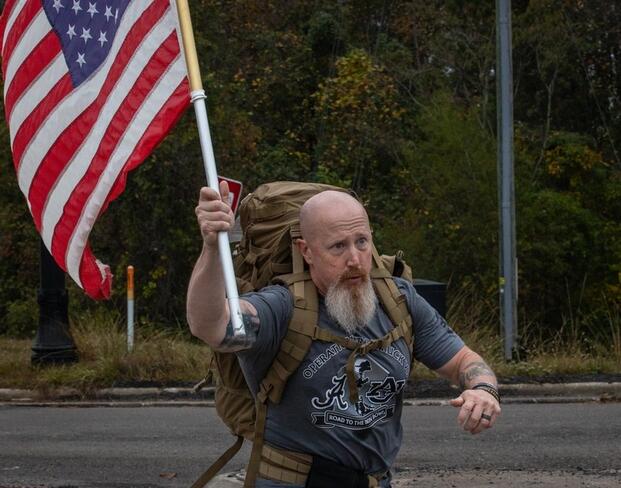
The U.S. government has mandated the use of artificial intelligence (AI) to combat the alarming rates of suicide among veterans. Recent fiscal year funding bills, which support the Department of Veterans Affairs (VA) for the 2026 budget, specifically call for innovative tools, including AI, to identify veterans at high risk of suicidal thoughts. This initiative gained momentum with the recent passage of the full-year appropriations bill, which President Donald Trump signed into law on November 12, 2023. The legislation allocates over $115 billion for veteran healthcare, with approximately $698 million designated for suicide prevention programs.
The push for AI integration stems from a recognition of the urgent need to enhance existing suicide prevention strategies within the VA. Both the House and Senate Appropriations Committees have expressed support for employing modern technology to improve early detection of suicidal ideation. According to the House Appropriations Committee’s report, “There is a significant need to improve early suicide indicators and detection using artificial intelligence and machine learning technologies that improve operational efficiency and effectiveness throughout veteran service delivery.”
AI’s Role in Identifying At-Risk Veterans
The report emphasizes the potential of real-time statistics to improve the identification of at-risk veterans. It encourages the VA to evaluate omnichannel technologies that allow for comprehensive engagement with veterans, utilizing all available service delivery channels. This approach aims to provide timely insights that could lead to more effective interventions.
One of the key programs highlighted is the Recovery Engagement and Coordination for Health-Veteran Enhancement Treatment (REACH VET). Launched in 2017, this machine learning initiative analyzes veterans’ medical records to flag individuals in the top 0.1 percent of suicide risk. Recent upgrades to the program have expanded its capabilities to include additional risk factors, such as military sexual assault and spousal abuse, while removing ethnicity and race from its data points.
The VA is also collaborating with various nonprofit organizations to implement AI technologies that can further reduce veteran suicides. While AI cannot replace human interaction, it has the potential to enhance the effectiveness of mental health interventions. VA Press Secretary Pete Kasperowicz noted that AI-driven tools enable mental health providers to respond more swiftly to veterans in crisis.
Integrating AI Without Displacing Human Care
Concerns have arisen regarding the potential for AI to replace human workers within the VA, particularly in light of workforce reductions earlier this year. Although there is skepticism about the use of AI chatbots for mental health support, VA officials have assured that AI will only serve as a complement to direct care provided by licensed professionals.
Kasperowicz stated, “The VA plans to maximize all resources, including the use of AI for suicide prevention, to enhance predictive models, increase collaboration with researchers, and develop new tools to support care providers in delivering personalized care to veterans.”
As the VA moves forward with these initiatives, the agency aims to leverage AI to improve the prediction and prevention of veteran suicides. The integration of advanced technologies into mental health care could lead to significant advancements in how veterans receive support and treatment, ultimately saving lives and improving outcomes for those in need.

Urgent Tax Savings Alert: Maximize Deductions Before April 15

Trump’s Administration Faces Uncertainty Over Government Shutdowns

Cosmic Defects: The Mystery of the Universe’s Missing Anomalies

Rapid City Parks Department Opens Registration for Bocce Leagues

Samsung Galaxy Watch 9 to Feature Larger 435mAh Battery Soon

Two Dead After Student Boats Capsize Off Okinawa Coast

Healthy Choice Wellness Reports Earnings with Mixed Results

Prince Harry Positions Himself as Royal Family’s Image Reviver

All Points North Lodge Achieves FSPHP-ETA Accreditation

Send Holiday Parcels for £1.99 with New Comparison Service

University of Hawaiʻi Leads $25M AI Project to Monitor Natural Disasters

Maui County Reopens Upgraded Lānaʻi Fifth Street Courts Today!

Daily Codeword Puzzle Launches on October 21, 2025

Congresswoman Under Fire for Misleading Epstein Donation Claims

Interstellar Object 3I/ATLAS Emits Unique Metal Alloy, Says Scientist

Trump Vows to Resolve Afghanistan-Pakistan Crisis “Very Quickly”

Charles Darwin’s Address Book Reveals Hidden Aspects of His Life

Rediscovering Chrysler: 5 Overlooked Models from the 1980s
-
 Lifestyle8 months ago
Send Holiday Parcels for £1.99 with New Comparison Service
-
Science9 months ago
University of Hawaiʻi Leads $25M AI Project to Monitor Natural Disasters
-
 Top Stories8 months ago
Maui County Reopens Upgraded Lānaʻi Fifth Street Courts Today!
-
 Entertainment10 months ago
Daily Codeword Puzzle Launches on October 21, 2025
-
 Lifestyle9 months ago
Congresswoman Under Fire for Misleading Epstein Donation Claims
-
 Science10 months ago
Interstellar Object 3I/ATLAS Emits Unique Metal Alloy, Says Scientist
-
 Top Stories9 months ago
Trump Vows to Resolve Afghanistan-Pakistan Crisis “Very Quickly”
-
 Science8 months ago
Charles Darwin’s Address Book Reveals Hidden Aspects of His Life
-
 Lifestyle8 months ago
Rediscovering Chrysler: 5 Overlooked Models from the 1980s
-

 Science7 months ago
Understanding Generation Z: Strategies for Engaging the Workforce
-

 Entertainment10 months ago
Kelly McCreary Discusses Future of Maggie and Winston in Grey’s Anatomy
-

 Top Stories8 months ago
aespa Faces Backlash Over G-Dragon Interaction at 2025 MAMAs