
World
US Air Force Faces Challenges with Boeing T-7A Red Hawk Program

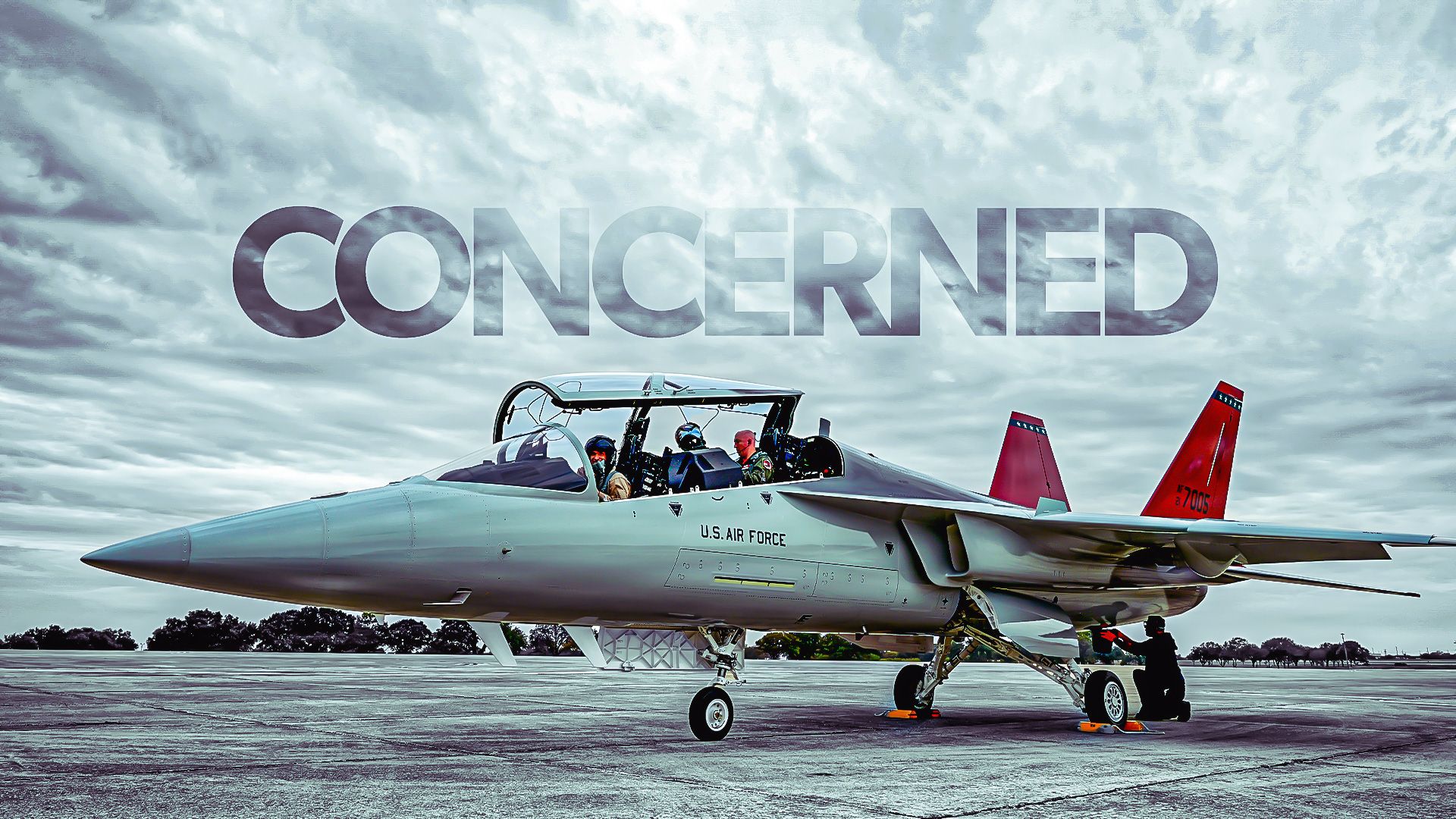
The US Air Force is confronting significant challenges with the Boeing T-7A Red Hawk, a trainer aircraft designed to replace the aging Northrop T-38 Talon fleet. Initially celebrated for its advanced digital engineering and cost efficiencies, the T-7A program has encountered various complications that undermine its role in modernizing pilot training. As the program progresses, concerns extend beyond financial implications to encompass structural issues vital to the overall effectiveness of Air Force combat readiness.
Critical Role of the T-7A in Pilot Training
For over six decades, the Northrop T-38 Talon has been the backbone of Air Force pilot training, first entering service in 1959. While the Talon was revolutionary for its time, it lacks the advanced capabilities of modern combat aircraft, including fly-by-wire systems and sophisticated avionics. The T-7A Red Hawk was selected in 2018 as the solution for the Air Force’s Advanced Pilot Training (APT) program, developed in partnership with Saab. This aircraft is intended to bridge the gap between legacy trainers and advanced fifth-generation fighters such as the Lockheed Martin F-35 and F-22.
The significance of the T-7A extends beyond its design. It serves as a foundational element for pilot production, influencing readiness and operational capabilities across the Air Force. Any delays or issues with the T-7A could have long-lasting repercussions, particularly as the Air Force grapples with existing pilot shortages. The stakes are high, as the T-7A will directly impact how future pilots learn critical skills necessary for operating advanced combat aircraft.
Engineering Challenges and Budget Constraints
The T-7A was developed using advanced digital engineering techniques, which aimed to streamline production and reduce risks associated with traditional aircraft development. However, real-world challenges have emerged during the testing phases, leading to necessary modifications. Issues such as structural reinforcements, escape system revisions, and software integration challenges have resulted in delays, pushing the initial operational capability target to 2027.
Financial pressures are also intensifying as the program approaches Milestone C, a pivotal checkpoint for moving into full-rate production. The T-7A is operating under a fixed-price development contract valued at approximately $9.2 billion. While this contract was designed to minimize unexpected costs for the Air Force, Boeing has absorbed over $2 billion in losses due to various engineering and production challenges. As the Air Force balances its budget across multiple modernization programs, including the Northrop Grumman B-21 Raider and ongoing F-35 procurement, the T-7A’s financial viability becomes increasingly critical.
The Air Force’s scrutiny of the T-7A program underscores its importance in maintaining pilot production capacity. Any delays in the T-7A’s development or delivery could significantly hinder the Air Force’s ability to train and deploy pilots in a timely manner.
Regulatory and Environmental Considerations
In addition to engineering and financial challenges, the T-7A program must navigate regulatory compliance under the National Environmental Policy Act (NEPA). Environmental Impact Statements (EIS) are required before the introduction of new aircraft at training bases, including Joint Base San Antonio, Columbus Air Force Base, and others. These reviews assess the potential effects of noise, construction, and airspace adjustments.
While some bases, such as Columbus AFB, have already completed their EIS and received necessary approvals, others remain in the drafting or public comment phase. The regulatory timeline adds another layer of complexity to the program, as infrastructure readiness and funding allocations must align with aircraft delivery schedules.
The T-7A program’s success relies on a stable industrial base, as production involves a network of suppliers and developers. Disruptions in this network can lead to delays in aircraft deliveries, further complicating the Air Force’s pilot training pipeline. The aging T-38 fleet, which requires increasingly costly maintenance, cannot serve as a long-term solution.
As the Air Force strives to modernize its pilot training capabilities, the need for a reliable and effective trainer like the T-7A is paramount. If the program encounters further delays or setbacks, the consequences will reverberate across the entire Air Force, affecting readiness and operational effectiveness for years to come. The T-7A is not just a new aircraft; it represents a critical evolution in how the Air Force prepares its pilots for the complexities of modern aerial warfare.

Urgent Tax Savings Alert: Maximize Deductions Before April 15

Trump’s Administration Faces Uncertainty Over Government Shutdowns

Cosmic Defects: The Mystery of the Universe’s Missing Anomalies

Rapid City Parks Department Opens Registration for Bocce Leagues

Samsung Galaxy Watch 9 to Feature Larger 435mAh Battery Soon

Two Dead After Student Boats Capsize Off Okinawa Coast

Healthy Choice Wellness Reports Earnings with Mixed Results

Prince Harry Positions Himself as Royal Family’s Image Reviver

All Points North Lodge Achieves FSPHP-ETA Accreditation

Send Holiday Parcels for £1.99 with New Comparison Service

University of Hawaiʻi Leads $25M AI Project to Monitor Natural Disasters

Maui County Reopens Upgraded Lānaʻi Fifth Street Courts Today!

Daily Codeword Puzzle Launches on October 21, 2025

Congresswoman Under Fire for Misleading Epstein Donation Claims

Interstellar Object 3I/ATLAS Emits Unique Metal Alloy, Says Scientist

Trump Vows to Resolve Afghanistan-Pakistan Crisis “Very Quickly”

Charles Darwin’s Address Book Reveals Hidden Aspects of His Life

Rediscovering Chrysler: 5 Overlooked Models from the 1980s
-
 Lifestyle8 months ago
Send Holiday Parcels for £1.99 with New Comparison Service
-
Science9 months ago
University of Hawaiʻi Leads $25M AI Project to Monitor Natural Disasters
-
 Top Stories8 months ago
Maui County Reopens Upgraded Lānaʻi Fifth Street Courts Today!
-
 Entertainment10 months ago
Daily Codeword Puzzle Launches on October 21, 2025
-
 Lifestyle9 months ago
Congresswoman Under Fire for Misleading Epstein Donation Claims
-
 Science10 months ago
Interstellar Object 3I/ATLAS Emits Unique Metal Alloy, Says Scientist
-
 Top Stories9 months ago
Trump Vows to Resolve Afghanistan-Pakistan Crisis “Very Quickly”
-
 Science8 months ago
Charles Darwin’s Address Book Reveals Hidden Aspects of His Life
-
 Lifestyle8 months ago
Rediscovering Chrysler: 5 Overlooked Models from the 1980s
-

 Science7 months ago
Understanding Generation Z: Strategies for Engaging the Workforce
-

 Entertainment10 months ago
Kelly McCreary Discusses Future of Maggie and Winston in Grey’s Anatomy
-

 Top Stories8 months ago
aespa Faces Backlash Over G-Dragon Interaction at 2025 MAMAs