
World
US and China Raise Port Fees, Escalating Trade Tensions

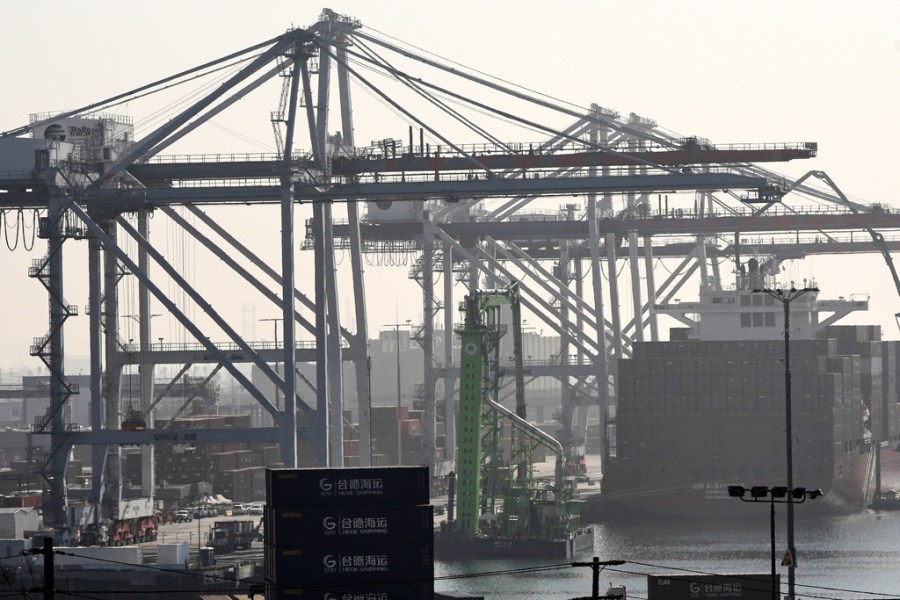
The United States and China have recently escalated their ongoing trade dispute by imposing additional port service fees and tariffs on each other. This move threatens to increase shipping costs significantly, disrupt global trade, and potentially lead to job losses in various sectors.
According to the World Trade Organization, the new tariffs, which took effect in October 2023, are part of a long-standing series of trade measures that both nations have enacted in retaliation for perceived unfair practices. The US has announced a new tariff of 10% on selected Chinese imports, while China has responded with a similar tariff on American goods, further complicating an already tense trade relationship.
Impact on Global Trade and Economy
The implications of these tariffs are far-reaching. Shipping costs are expected to rise, leading to higher prices for consumers and businesses alike. Analysts estimate that the increase in port fees could add as much as $1.5 billion to shipping costs annually, impacting everything from electronics to agricultural products.
Experts warn that this escalating trade conflict could result in reduced trade volumes between the two largest economies in the world. The Port Authority in Los Angeles has already reported a decrease in container traffic, attributing it partly to these new tariffs. If these trends continue, there could be significant repercussions for global supply chains.
Furthermore, industries heavily reliant on imports from China, such as technology and retail, may experience production delays and increased operational costs. This situation not only affects businesses but also threatens job security for workers employed in affected sectors. The potential for job losses could further exacerbate economic instability in both countries.
Political Responses and Future Outlook
In response to these developments, officials from both nations have been vocal about their positions. The US Trade Representative stated that the tariffs are necessary to protect American interests and promote fair trade practices. Conversely, Chinese officials have described the measures as detrimental to global economic stability.
As the situation unfolds, both nations face pressure to negotiate and find a resolution that mitigates the impact on their economies. The upcoming meetings between trade representatives from the United States and China will be crucial in determining the future direction of this trade dispute.
In conclusion, the increase in port service fees and tariffs represents a significant escalation in the ongoing trade tensions between the US and China. As both countries navigate this complex landscape, the consequences for the global economy could be profound, underscoring the interconnectedness of international trade and the importance of cooperative economic relations.

Urgent Tax Savings Alert: Maximize Deductions Before April 15

Trump’s Administration Faces Uncertainty Over Government Shutdowns

Cosmic Defects: The Mystery of the Universe’s Missing Anomalies

Rapid City Parks Department Opens Registration for Bocce Leagues

Samsung Galaxy Watch 9 to Feature Larger 435mAh Battery Soon

Two Dead After Student Boats Capsize Off Okinawa Coast

Healthy Choice Wellness Reports Earnings with Mixed Results

Prince Harry Positions Himself as Royal Family’s Image Reviver

All Points North Lodge Achieves FSPHP-ETA Accreditation

Send Holiday Parcels for £1.99 with New Comparison Service

University of Hawaiʻi Leads $25M AI Project to Monitor Natural Disasters

Maui County Reopens Upgraded Lānaʻi Fifth Street Courts Today!

Daily Codeword Puzzle Launches on October 21, 2025

Congresswoman Under Fire for Misleading Epstein Donation Claims

Interstellar Object 3I/ATLAS Emits Unique Metal Alloy, Says Scientist

Trump Vows to Resolve Afghanistan-Pakistan Crisis “Very Quickly”

Charles Darwin’s Address Book Reveals Hidden Aspects of His Life

Rediscovering Chrysler: 5 Overlooked Models from the 1980s
-
 Lifestyle8 months ago
Send Holiday Parcels for £1.99 with New Comparison Service
-
Science9 months ago
University of Hawaiʻi Leads $25M AI Project to Monitor Natural Disasters
-
 Top Stories8 months ago
Maui County Reopens Upgraded Lānaʻi Fifth Street Courts Today!
-
 Entertainment10 months ago
Daily Codeword Puzzle Launches on October 21, 2025
-
 Lifestyle9 months ago
Congresswoman Under Fire for Misleading Epstein Donation Claims
-
 Science10 months ago
Interstellar Object 3I/ATLAS Emits Unique Metal Alloy, Says Scientist
-
 Top Stories9 months ago
Trump Vows to Resolve Afghanistan-Pakistan Crisis “Very Quickly”
-
 Science8 months ago
Charles Darwin’s Address Book Reveals Hidden Aspects of His Life
-
 Lifestyle8 months ago
Rediscovering Chrysler: 5 Overlooked Models from the 1980s
-

 Science7 months ago
Understanding Generation Z: Strategies for Engaging the Workforce
-

 Entertainment10 months ago
Kelly McCreary Discusses Future of Maggie and Winston in Grey’s Anatomy
-

 Top Stories8 months ago
aespa Faces Backlash Over G-Dragon Interaction at 2025 MAMAs