
World
US and Iran Set for New Nuclear Discussions in Geneva

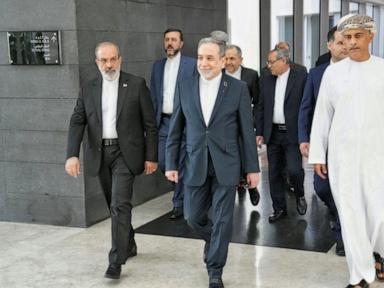
Iran and the United States are scheduled to engage in a new round of discussions regarding Tehran’s nuclear program, according to the Swiss Foreign Ministry. This second round of talks will take place in Geneva, with Oman facilitating the dialogue. The specific dates for these discussions have not been disclosed.
The first round of indirect talks, held on February 6, 2023, included Iranian Foreign Minister Abbas Araghchi and U.S. Middle East envoy Steve Witkoff. This meeting marked a significant moment, with the top U.S. military commander in the Middle East also present. Following the initial discussions, U.S. President Donald Trump issued a stern warning to Tehran, stating that failure to reach an agreement could result in severe consequences.
Background and Context
Previous negotiations between the two nations faced challenges, particularly highlighted by a breakdown in talks last year. This collapse occurred in June 2022, coinciding with escalating military tensions, including a twelve-day conflict initiated by Israel against Iran. During this period, U.S. forces also targeted Iranian nuclear facilities.
Trump has consistently emphasized a hardline stance, threatening military action to ensure Iran curtails its nuclear ambitions. In response, Iranian officials have asserted their readiness to retaliate if provoked. The situation is further complicated by Iran’s recent crackdown on protests, which has drawn international scrutiny.
In a show of military readiness, Trump announced on February 10, 2023, that the USS Gerald R. Ford, the world’s largest aircraft carrier, is being deployed from the Caribbean to the Middle East. This move is part of a broader buildup of U.S. military assets in the region. Trump remarked that a shift in power within Iran would be “the best thing that could happen.”
Negotiation Focus and Challenges
During the talks, the U.S. administration has maintained its position that any agreement must prohibit Iran from enriching uranium. In contrast, Iran has rejected this stipulation, asserting that its nuclear program is intended for peaceful purposes. Nevertheless, Iranian officials have increasingly hinted at the potential pursuit of nuclear weapons capability, raising alarm among international observers.
Before the June conflict, Iran was enriching uranium to levels of up to 60% purity, a threshold that is just a step away from weapons-grade material. Iranian President Masoud Pezeshkian has publicly stated that Iran is “ready for any kind of verification,” yet the International Atomic Energy Agency (IAEA) has faced challenges in accessing and verifying Iran’s nuclear stockpile for several months.
While Iran seeks to focus the discussions solely on its nuclear program, Israeli Prime Minister Benjamin Netanyahu has urged the U.S. to broaden the scope of the talks. He advocates for a comprehensive deal that would address Iran’s ballistic missile program and its financial support for proxy groups such as Hamas and Hezbollah.
The upcoming negotiations in Geneva will be closely monitored by the international community, as the outcomes could have significant implications for regional stability and global security.

Urgent Tax Savings Alert: Maximize Deductions Before April 15

Trump’s Administration Faces Uncertainty Over Government Shutdowns

Cosmic Defects: The Mystery of the Universe’s Missing Anomalies

Rapid City Parks Department Opens Registration for Bocce Leagues

Samsung Galaxy Watch 9 to Feature Larger 435mAh Battery Soon

Two Dead After Student Boats Capsize Off Okinawa Coast

Healthy Choice Wellness Reports Earnings with Mixed Results

Prince Harry Positions Himself as Royal Family’s Image Reviver

All Points North Lodge Achieves FSPHP-ETA Accreditation

Send Holiday Parcels for £1.99 with New Comparison Service

University of Hawaiʻi Leads $25M AI Project to Monitor Natural Disasters

Maui County Reopens Upgraded Lānaʻi Fifth Street Courts Today!

Daily Codeword Puzzle Launches on October 21, 2025

Congresswoman Under Fire for Misleading Epstein Donation Claims

Interstellar Object 3I/ATLAS Emits Unique Metal Alloy, Says Scientist

Trump Vows to Resolve Afghanistan-Pakistan Crisis “Very Quickly”

Charles Darwin’s Address Book Reveals Hidden Aspects of His Life

Rediscovering Chrysler: 5 Overlooked Models from the 1980s
-
 Lifestyle8 months ago
Send Holiday Parcels for £1.99 with New Comparison Service
-
Science9 months ago
University of Hawaiʻi Leads $25M AI Project to Monitor Natural Disasters
-
 Top Stories8 months ago
Maui County Reopens Upgraded Lānaʻi Fifth Street Courts Today!
-
 Entertainment10 months ago
Daily Codeword Puzzle Launches on October 21, 2025
-
 Lifestyle9 months ago
Congresswoman Under Fire for Misleading Epstein Donation Claims
-
 Science10 months ago
Interstellar Object 3I/ATLAS Emits Unique Metal Alloy, Says Scientist
-
 Top Stories9 months ago
Trump Vows to Resolve Afghanistan-Pakistan Crisis “Very Quickly”
-
 Science8 months ago
Charles Darwin’s Address Book Reveals Hidden Aspects of His Life
-
 Lifestyle8 months ago
Rediscovering Chrysler: 5 Overlooked Models from the 1980s
-

 Science7 months ago
Understanding Generation Z: Strategies for Engaging the Workforce
-

 Entertainment10 months ago
Kelly McCreary Discusses Future of Maggie and Winston in Grey’s Anatomy
-

 Top Stories8 months ago
aespa Faces Backlash Over G-Dragon Interaction at 2025 MAMAs