
World
European Cities Face New Year’s Eve Violence, Over 1,000 Arrested

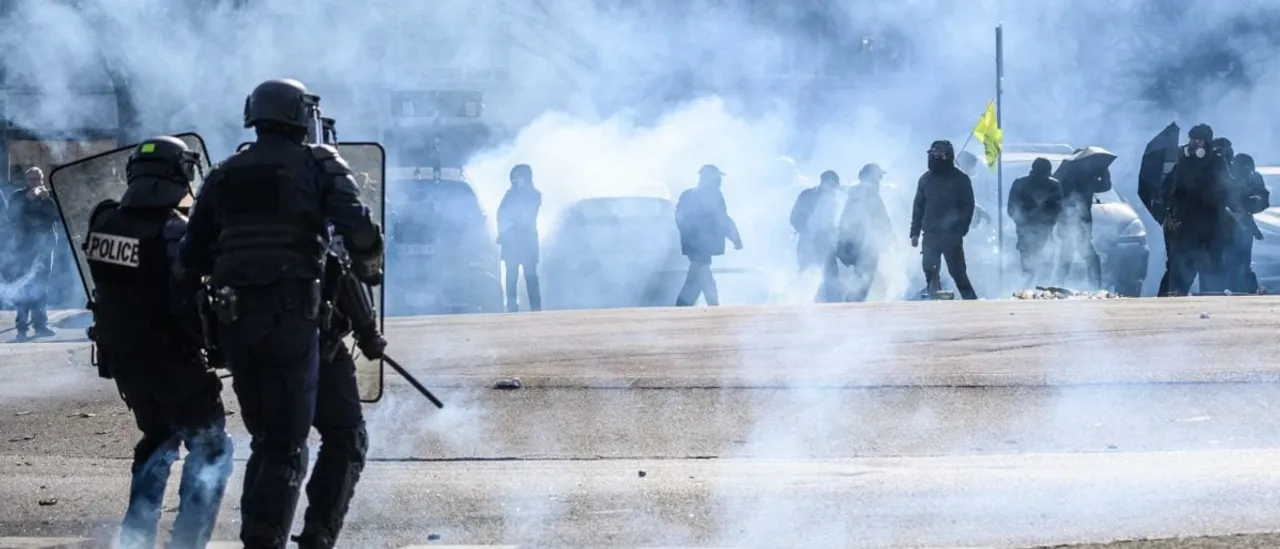
Violence erupted across several European cities on New Year’s Eve, leading to over 1,000 arrests as emergency responders faced unprecedented attacks. In Berlin alone, police detained more than 420 individuals amid widespread chaos involving fireworks and assaults on first responders. Authorities had deployed 3,200 officers for the night, responding to 2,340 incidents in addition to the major “Silvester” celebrations. The Berlin fire brigade received 1,830 calls, highlighting the strain on public safety resources.
Attacks on Emergency Services
The unrest in Berlin mirrored similar scenes in other European capitals. In Antwerp, police described the night as “extremely turbulent and dangerous,” with emergency vehicles attacked with stones, eggs, and fireworks. Belgian authorities arrested roughly 100 individuals, primarily under the age of 20. In the Netherlands, police made 250 arrests nationwide, with reports of attacks involving Molotov cocktails and paving stones in Breda. Deputy Chief Wilbert Paulissen indicated that some fires were intentionally set to ambush emergency responders.
Berlin’s Interior Senator Iris Spranger claimed that most residents celebrated peacefully, a statement sharply contested by the German Police Union. The union criticized the characterization, stating, “Whoever says, ‘the night was largely peaceful,’ is concealing the many targeted attacks on our emergency services.” Officers reported that perpetrators appeared to be predominantly of Arab and Turkish descent, with some firefighters required to operate under police protection.
Escalating Violence and Public Safety Concerns
Last year’s New Year’s Eve violence followed a similar pattern, with data indicating that a significant portion of those arrested were foreign nationals. A leaked report showed that 264 of the 670 suspects were identified as having nontraditional names, raising concerns about the implications of migration on public order. Observers noted that this trend is increasingly prevalent in major Western European cities.
In France, rioters set fire to 1,173 vehicles, exceeding the previous year’s total of 984. The rise in violence on New Year’s Eve has been characterized as an event where migrant gangs use fireworks to launch attacks on emergency personnel and civilians. Political figures, such as Geert Wilders, have criticized the situation, sarcastically questioning the identity of the perpetrators.
The chaos of the evening prompted intense debate about migration policies and public safety. Balázs Orbán, political director to Hungarian Prime Minister Viktor Orbán, labeled the Berlin violence as a “migration-based public order breakdown,” attributing it to years of mass migration and inadequate law enforcement. He criticized European Union policies for pushing relocation quotas and maintaining lenient border controls.
As cities across Europe grapple with the aftermath of New Year’s Eve violence, the challenges surrounding public safety and migration continue to spark significant discussion among policymakers and citizens alike.

Urgent Tax Savings Alert: Maximize Deductions Before April 15

Trump’s Administration Faces Uncertainty Over Government Shutdowns

Cosmic Defects: The Mystery of the Universe’s Missing Anomalies

Rapid City Parks Department Opens Registration for Bocce Leagues

Samsung Galaxy Watch 9 to Feature Larger 435mAh Battery Soon

Two Dead After Student Boats Capsize Off Okinawa Coast

Healthy Choice Wellness Reports Earnings with Mixed Results

Prince Harry Positions Himself as Royal Family’s Image Reviver

All Points North Lodge Achieves FSPHP-ETA Accreditation

Send Holiday Parcels for £1.99 with New Comparison Service

University of Hawaiʻi Leads $25M AI Project to Monitor Natural Disasters

Maui County Reopens Upgraded Lānaʻi Fifth Street Courts Today!

Daily Codeword Puzzle Launches on October 21, 2025

Congresswoman Under Fire for Misleading Epstein Donation Claims

Interstellar Object 3I/ATLAS Emits Unique Metal Alloy, Says Scientist

Trump Vows to Resolve Afghanistan-Pakistan Crisis “Very Quickly”

Charles Darwin’s Address Book Reveals Hidden Aspects of His Life

Rediscovering Chrysler: 5 Overlooked Models from the 1980s
-
 Lifestyle8 months ago
Send Holiday Parcels for £1.99 with New Comparison Service
-
Science9 months ago
University of Hawaiʻi Leads $25M AI Project to Monitor Natural Disasters
-
 Top Stories8 months ago
Maui County Reopens Upgraded Lānaʻi Fifth Street Courts Today!
-
 Entertainment10 months ago
Daily Codeword Puzzle Launches on October 21, 2025
-
 Lifestyle9 months ago
Congresswoman Under Fire for Misleading Epstein Donation Claims
-
 Science10 months ago
Interstellar Object 3I/ATLAS Emits Unique Metal Alloy, Says Scientist
-
 Top Stories9 months ago
Trump Vows to Resolve Afghanistan-Pakistan Crisis “Very Quickly”
-
 Science8 months ago
Charles Darwin’s Address Book Reveals Hidden Aspects of His Life
-
 Lifestyle8 months ago
Rediscovering Chrysler: 5 Overlooked Models from the 1980s
-

 Science7 months ago
Understanding Generation Z: Strategies for Engaging the Workforce
-

 Entertainment10 months ago
Kelly McCreary Discusses Future of Maggie and Winston in Grey’s Anatomy
-

 Top Stories8 months ago
aespa Faces Backlash Over G-Dragon Interaction at 2025 MAMAs