
Science
NASA Unveils STELLA: Open-Source Tools for Remote Sensing Innovation

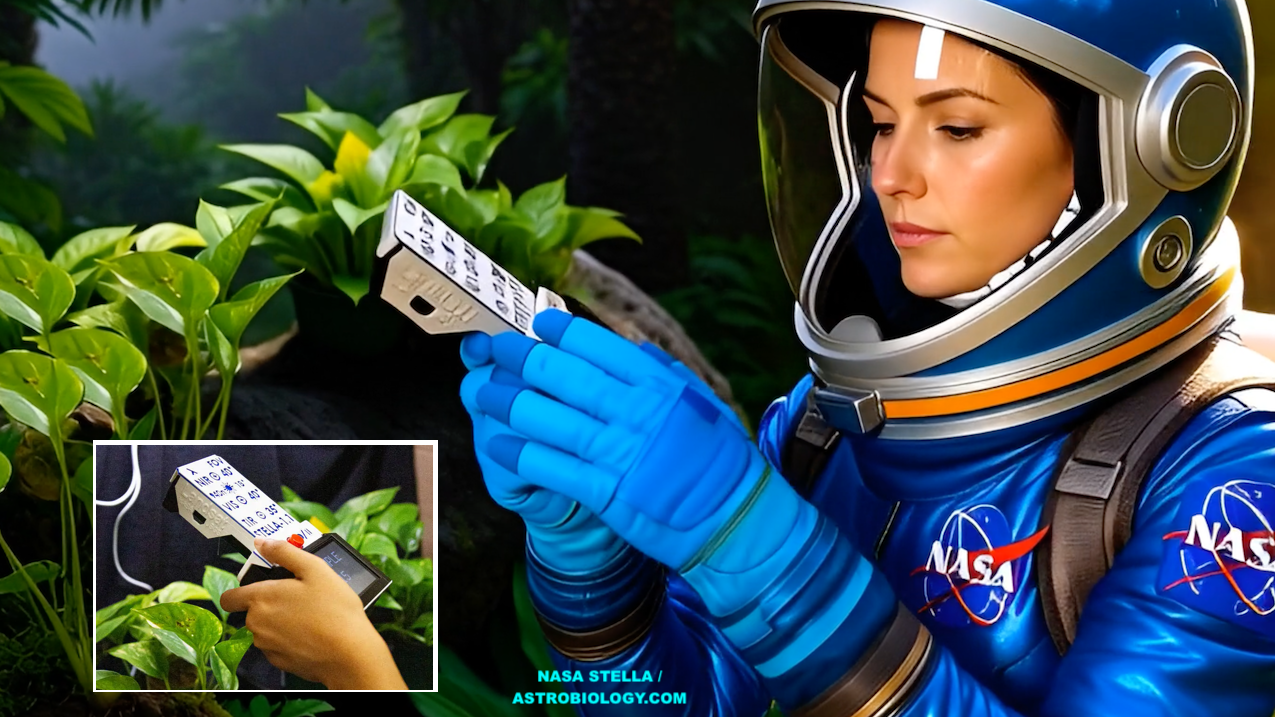
NASA has introduced a groundbreaking initiative called STELLA (Science and Technology Education for Land/Life Assessment), aimed at democratizing remote sensing science through low-cost, open-source instruments. This project enables individuals and communities to create and utilize sensor technology, paving the way for enhanced scientific exploration and education. The details of this initiative are outlined in a newly published paper available online, titled “Democratizing Remote Sensing Science With Low-Cost Open-Source Instruments for Research and Education.”
The STELLA initiative allows users to build handheld devices capable of scanning and analyzing environmental features, such as plant health. These instruments can be constructed from commercially available components, making them accessible to a broader audience beyond professional scientists. The simplest model, the STELLA-Q, can be assembled for approximately $200 and provides a range of functionalities for educational and research purposes.
Empowering Citizen Science
The primary goal of STELLA is to engage students and aspiring scientists in the field of remote sensing. According to NASA, the project fosters authentic learning experiences by enabling hands-on exploration of Earth observation technologies. Students can gain insights into the scientific process and develop analytical skills through real-time data collection and analysis.
NASA’s Goddard Space Flight Center oversees the STELLA project, which is funded by the NASA Science Mission Directorate. The initiative particularly targets the younger generation, often referred to as the Artemis Generation, who are poised to become the future explorers of other worlds.
The STELLA instruments measure light spectra over 18 channels in the visible and near-infrared range. This capability allows for detailed observations of both natural and constructed surfaces, as well as evaluations of vegetation reflectance characteristics. By providing tools for in situ examinations, NASA aims to facilitate preliminary analyses on-site, which is crucial for future astrobiology expeditions to other planets.
Building Scientific Capacity
The STELLA instruments are designed to be user-friendly. The assembly process involves straightforward instructions that can be followed by anyone with basic soldering skills. The accompanying software, written in a free variant of the Python programming language, allows for easy data recording and analysis.
By making remote sensing education more accessible, STELLA has the potential to support new areas of scientific research that were previously impractical due to the high costs associated with traditional instruments. In this way, NASA is not only enhancing educational opportunities but also empowering citizen scientists to contribute to scientific knowledge.
The STELLA project exemplifies how advancements in technology can be leveraged to create innovative solutions for scientific exploration. As the initiative continues to evolve, it aims to equip the next generation of researchers with the tools necessary to explore and understand the complexities of life on other planets.
For more detailed insights into the STELLA program, the full paper can be accessed at NASA’s science website. The initiative not only represents a significant leap in educational technology but also underscores NASA’s commitment to fostering a global community of scientists and innovators.

Urgent Tax Savings Alert: Maximize Deductions Before April 15

Trump’s Administration Faces Uncertainty Over Government Shutdowns

Cosmic Defects: The Mystery of the Universe’s Missing Anomalies

Rapid City Parks Department Opens Registration for Bocce Leagues

Samsung Galaxy Watch 9 to Feature Larger 435mAh Battery Soon

Two Dead After Student Boats Capsize Off Okinawa Coast

Healthy Choice Wellness Reports Earnings with Mixed Results

Prince Harry Positions Himself as Royal Family’s Image Reviver

All Points North Lodge Achieves FSPHP-ETA Accreditation

Send Holiday Parcels for £1.99 with New Comparison Service

University of Hawaiʻi Leads $25M AI Project to Monitor Natural Disasters

Maui County Reopens Upgraded Lānaʻi Fifth Street Courts Today!

Daily Codeword Puzzle Launches on October 21, 2025

Congresswoman Under Fire for Misleading Epstein Donation Claims

Interstellar Object 3I/ATLAS Emits Unique Metal Alloy, Says Scientist

Trump Vows to Resolve Afghanistan-Pakistan Crisis “Very Quickly”

Charles Darwin’s Address Book Reveals Hidden Aspects of His Life

Rediscovering Chrysler: 5 Overlooked Models from the 1980s
-
 Lifestyle8 months ago
Send Holiday Parcels for £1.99 with New Comparison Service
-
Science9 months ago
University of Hawaiʻi Leads $25M AI Project to Monitor Natural Disasters
-
 Top Stories8 months ago
Maui County Reopens Upgraded Lānaʻi Fifth Street Courts Today!
-
 Entertainment10 months ago
Daily Codeword Puzzle Launches on October 21, 2025
-
 Lifestyle9 months ago
Congresswoman Under Fire for Misleading Epstein Donation Claims
-
 Science10 months ago
Interstellar Object 3I/ATLAS Emits Unique Metal Alloy, Says Scientist
-
 Top Stories9 months ago
Trump Vows to Resolve Afghanistan-Pakistan Crisis “Very Quickly”
-
 Science8 months ago
Charles Darwin’s Address Book Reveals Hidden Aspects of His Life
-
 Lifestyle8 months ago
Rediscovering Chrysler: 5 Overlooked Models from the 1980s
-

 Science7 months ago
Understanding Generation Z: Strategies for Engaging the Workforce
-

 Entertainment10 months ago
Kelly McCreary Discusses Future of Maggie and Winston in Grey’s Anatomy
-

 Top Stories8 months ago
aespa Faces Backlash Over G-Dragon Interaction at 2025 MAMAs