
World
OpenAI Unveils Plans for 2026: A Shift to Proactive AI Assistants

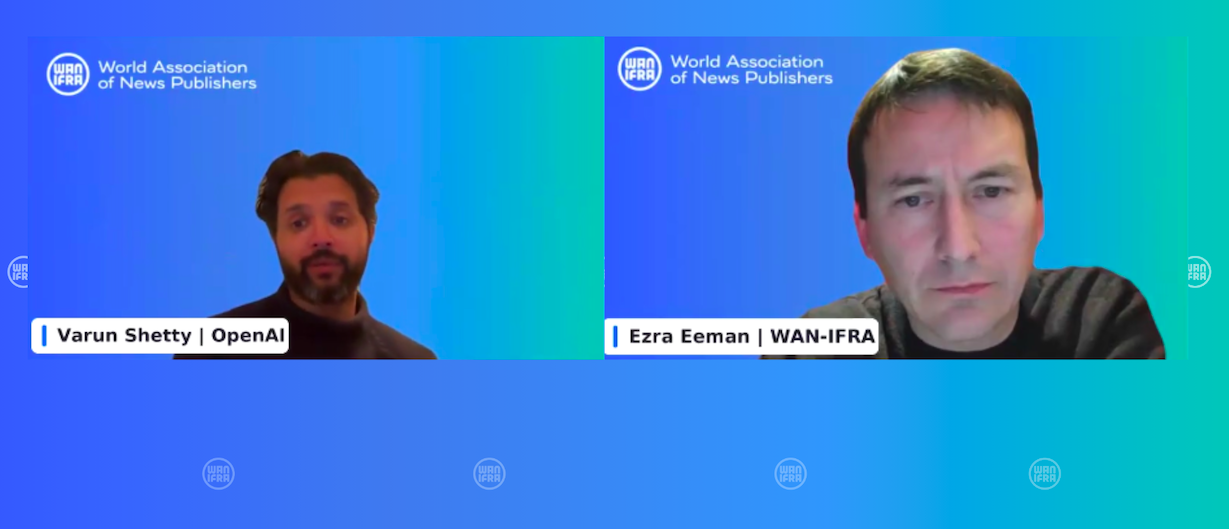
OpenAI has outlined its ambitious roadmap for 2026, shifting from a traditional “answer engine” to a more proactive assistant designed to enhance user experience and engagement. During a discussion led by Ezra Eeman as part of the WAN-IFRA AI in Media Initiative, Varun Shetty, Vice President of Media Partnerships at OpenAI, articulated the company’s focus on personalisation and proactive features that aim to redefine how users interact with ChatGPT.
The primary goal for 2026 is to create an environment where the AI assistant understands user preferences and goals without needing to be prompted. Shetty emphasized the inadequacy of merely responding to queries, stating, “If you had a human assistant, and you could only get information from them by asking them questions, I think you would be unsatisfied with that.” He envisions a future where ChatGPT can anticipate user needs and proactively deliver relevant information.
Innovative Features: Pulse and the Evolution of Search
OpenAI has already begun integrating these ideas into its products, with features like Pulse, a daily digest that curates information related to user interests. Describing Pulse, Shetty noted it is “essentially a daily digest that is served to you within ChatGPT,” pushing information based on recent interactions. However, he acknowledged that the feature is currently limited to pro users in the US due to high computational demands, which OpenAI is addressing by enhancing its infrastructure.
The evolution of ChatGPT Search is another key focus. Traditionally, ChatGPT struggled to provide reliable answers about recent events. OpenAI has been refining its search capabilities to ensure answers are grounded in information from trusted publishers. Shetty highlighted three core principles for publishers: proper citation, extensive link-out experiences, and a more customized, visually engaging search experience. He recognized the challenge that users may be less likely to click through to original sources when presented with direct answers rather than traditional links.
OpenAI seeks to provide a distinct news experience within ChatGPT, differentiating it from other verticals. Shetty reassured publishers that they maintain control over their content’s visibility in ChatGPT Search. “If you do not want to be surfaced in ChatGPT… you can very simply do that by editing your robots.txt file,” he stated, emphasizing the importance of allowing publishers to opt-out.
Monetisation Strategies and Business Engagement
Monetisation remains a critical aspect of OpenAI’s strategy. Shetty outlined a diverse revenue model that includes enterprise products, API access for developers, consumer subscriptions, and upcoming advertising initiatives. On January 16, 2024, OpenAI announced plans to test advertising for its free product and a new low-cost subscription tier, ChatGPT Go, priced at $8 per month. This tier will feature expanded capabilities, including messaging and image generation.
While discussing the business implications for publishers, Shetty explained that OpenAI aims to align its initiatives with existing publisher economics. The focus will be on driving traffic, fostering deeper engagement, and potentially facilitating subscriptions. He indicated that OpenAI is open to exploring how to upsell subscriptions to users based on their reading habits, reflecting a shift towards integrated business models.
Despite these opportunities, Shetty clarified that OpenAI is not pursuing certain industry proposals, such as content marketplaces or pay-per-crawl models. Instead, he highlighted the necessity for substantial value creation to encourage publishers to opt-in to collaborations.
As OpenAI continues to innovate, Shetty underscored the significance of transparency in its operations. Participants in the webinar expressed a desire for clearer metrics regarding impressions and click-through rates, to which Shetty responded positively, hoping to develop better dashboard experiences that illuminate the ecosystem’s functioning.
In conclusion, OpenAI’s proactive approach for 2026 marks a significant pivot in how AI can assist users and engage with publishers. By prioritising personalisation, transparency, and innovative monetisation strategies, OpenAI aims to shape a future where AI becomes an indispensable partner in information discovery and consumption.

Urgent Tax Savings Alert: Maximize Deductions Before April 15

Trump’s Administration Faces Uncertainty Over Government Shutdowns

Cosmic Defects: The Mystery of the Universe’s Missing Anomalies

Rapid City Parks Department Opens Registration for Bocce Leagues

Samsung Galaxy Watch 9 to Feature Larger 435mAh Battery Soon

Two Dead After Student Boats Capsize Off Okinawa Coast

Healthy Choice Wellness Reports Earnings with Mixed Results

Prince Harry Positions Himself as Royal Family’s Image Reviver

All Points North Lodge Achieves FSPHP-ETA Accreditation

Send Holiday Parcels for £1.99 with New Comparison Service

University of Hawaiʻi Leads $25M AI Project to Monitor Natural Disasters

Maui County Reopens Upgraded Lānaʻi Fifth Street Courts Today!

Daily Codeword Puzzle Launches on October 21, 2025

Congresswoman Under Fire for Misleading Epstein Donation Claims

Interstellar Object 3I/ATLAS Emits Unique Metal Alloy, Says Scientist

Trump Vows to Resolve Afghanistan-Pakistan Crisis “Very Quickly”

Charles Darwin’s Address Book Reveals Hidden Aspects of His Life

Rediscovering Chrysler: 5 Overlooked Models from the 1980s
-
 Lifestyle8 months ago
Send Holiday Parcels for £1.99 with New Comparison Service
-
Science9 months ago
University of Hawaiʻi Leads $25M AI Project to Monitor Natural Disasters
-
 Top Stories8 months ago
Maui County Reopens Upgraded Lānaʻi Fifth Street Courts Today!
-
 Entertainment10 months ago
Daily Codeword Puzzle Launches on October 21, 2025
-
 Lifestyle9 months ago
Congresswoman Under Fire for Misleading Epstein Donation Claims
-
 Science10 months ago
Interstellar Object 3I/ATLAS Emits Unique Metal Alloy, Says Scientist
-
 Top Stories9 months ago
Trump Vows to Resolve Afghanistan-Pakistan Crisis “Very Quickly”
-
 Science8 months ago
Charles Darwin’s Address Book Reveals Hidden Aspects of His Life
-
 Lifestyle8 months ago
Rediscovering Chrysler: 5 Overlooked Models from the 1980s
-
 Science7 months ago
Understanding Generation Z: Strategies for Engaging the Workforce
-

 Entertainment10 months ago
Kelly McCreary Discusses Future of Maggie and Winston in Grey’s Anatomy
-

 Top Stories8 months ago
aespa Faces Backlash Over G-Dragon Interaction at 2025 MAMAs