
World
Argentinian Coming-of-Age Film ‘The River Train’ Premieres in Berlin


The film industry is buzzing with excitement as The River Train (El Tren Fluvial) makes its world premiere on February 16, 2024, at the Berlin International Film Festival. This debut feature, directed by Lorenzo Ferro and Lucas A. Vignale, captures a compelling coming-of-age story set against the backdrop of Argentina’s rich cultural heritage.
A Journey Through Dance and Dreams
Audiences are invited on a transformative journey from the Argentinian countryside to the vibrant city of Buenos Aires. The film centers on nine-year-old Milo, portrayed by non-professional actor Milo Barría, who grapples with the expectations of becoming a skilled Malambo dancer while also striving to be the ‘perfect’ son. The traditional Malambo dance, known for its rhythmic footwork and vigorous movements, serves as both a cultural touchstone and a source of pressure for Milo.
The synopsis reveals that Milo dreams of a different life, one free from the burdens of household chores and nightly practice. He fantasizes about exploring the city, a place he has only seen in films. Yet to achieve his aspirations, he must embark on a new journey—one that leads him into solitude and the unknown adventures of urban life.
Creative Collaboration and Unique Insights
The collaborative effort between Ferro and Vignale is noteworthy. Their partnership began shortly before the COVID-19 pandemic while working on a music video. Reflecting on their bond, Ferro explains, “We became friends on a motorbike, and now we have the same tattoo.” Their shared experiences fostered a seamless transition from music to film, beginning with a short film titled La Pasión before tackling a feature project.
Ferro brings his strength in storytelling and text, while Vignale focuses on the technical aspects of filmmaking. “Lorenzo is the master of text, and I really like all the other stuff that is technical,” Vignale states. This complementary synergy is evident throughout The River Train.
During production, the filmmakers seized a unique opportunity when they learned that Barría would be participating in a Malambo competition. This unexpected turn led them to shoot a pivotal scene in a distant city, capturing a single, authentic performance as the competition unfolded. “We had one take, because Milo and his partners went onto the stage one time,” Ferro recalls. “So the one take you see in the film is the only take we had.”
The film’s authenticity is enhanced by its cast, which includes Barría’s real-life family alongside other talented actors and non-professionals. One notable character is a man Milo encounters in Buenos Aires, who shares a unique connection to the film’s inspirations. “He had only acted in one film in his whole life, when he was nine years old,” Ferro highlights, linking this character to the work of renowned Argentine filmmaker Leonardo Favio.
The title of the film also pays homage to Argentine literature, referencing a poem by Francisco Madariaga called The Almost River Train. The filmmakers discovered a recording of Madariaga reciting the poem on YouTube, ultimately deciding to include it in their film.
Looking ahead, Ferro and Vignale are excited about their future projects. “We are now shooting a short film that is a poem,” Vignale shares. Ferro adds, “With an iPhone,” indicating their commitment to innovation and creativity. “But we are also going to have our own projects,” Vignale concludes. “We’re going to keep doing things alone, and then we will reunite again.”
With its debut at the Berlin International Film Festival, The River Train promises to captivate audiences with its evocative storytelling and rich cultural references. The film not only showcases the talents of its creators but also stands as a testament to the vibrant cinematic legacy of Argentina.

Urgent Tax Savings Alert: Maximize Deductions Before April 15

Trump’s Administration Faces Uncertainty Over Government Shutdowns

Cosmic Defects: The Mystery of the Universe’s Missing Anomalies

Rapid City Parks Department Opens Registration for Bocce Leagues

Samsung Galaxy Watch 9 to Feature Larger 435mAh Battery Soon

Two Dead After Student Boats Capsize Off Okinawa Coast

Healthy Choice Wellness Reports Earnings with Mixed Results

Prince Harry Positions Himself as Royal Family’s Image Reviver

All Points North Lodge Achieves FSPHP-ETA Accreditation

Send Holiday Parcels for £1.99 with New Comparison Service

University of Hawaiʻi Leads $25M AI Project to Monitor Natural Disasters

Maui County Reopens Upgraded Lānaʻi Fifth Street Courts Today!

Daily Codeword Puzzle Launches on October 21, 2025

Congresswoman Under Fire for Misleading Epstein Donation Claims

Interstellar Object 3I/ATLAS Emits Unique Metal Alloy, Says Scientist

Trump Vows to Resolve Afghanistan-Pakistan Crisis “Very Quickly”

Charles Darwin’s Address Book Reveals Hidden Aspects of His Life

Rediscovering Chrysler: 5 Overlooked Models from the 1980s
-
 Lifestyle8 months ago
Send Holiday Parcels for £1.99 with New Comparison Service
-
Science9 months ago
University of Hawaiʻi Leads $25M AI Project to Monitor Natural Disasters
-
 Top Stories8 months ago
Maui County Reopens Upgraded Lānaʻi Fifth Street Courts Today!
-
 Entertainment10 months ago
Daily Codeword Puzzle Launches on October 21, 2025
-
 Lifestyle9 months ago
Congresswoman Under Fire for Misleading Epstein Donation Claims
-
 Science10 months ago
Interstellar Object 3I/ATLAS Emits Unique Metal Alloy, Says Scientist
-
 Top Stories9 months ago
Trump Vows to Resolve Afghanistan-Pakistan Crisis “Very Quickly”
-
 Science8 months ago
Charles Darwin’s Address Book Reveals Hidden Aspects of His Life
-
 Lifestyle8 months ago
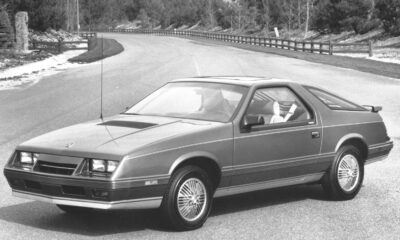
Rediscovering Chrysler: 5 Overlooked Models from the 1980s
-

 Science7 months ago
Understanding Generation Z: Strategies for Engaging the Workforce
-

 Entertainment10 months ago
Kelly McCreary Discusses Future of Maggie and Winston in Grey’s Anatomy
-

 Top Stories8 months ago
aespa Faces Backlash Over G-Dragon Interaction at 2025 MAMAs