
World
Australia Bars Citizen Linked to IS from Returning Home

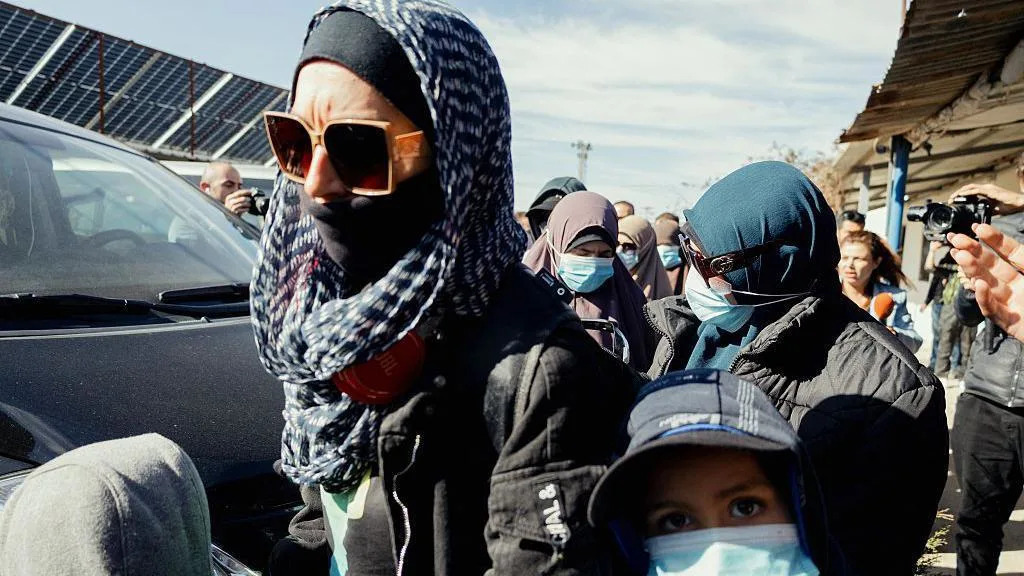
Australia has imposed a ban on a citizen linked to the Islamic State (IS) group, preventing their return for a period of up to two years. This decision affects one individual out of a group of 34 Australian women and children who recently attempted to return home after being released from a Syrian camp. According to the Home Affairs Minister, Tony Burke, the individual was turned away due to “technical reasons” after Syrian authorities denied their entry.
The Australian government has declined to repatriate the entire group, comprising primarily the wives, widows, and children of IS fighters. Among the group are 23 children, highlighting the humanitarian implications of the situation. Prime Minister Anthony Albanese emphasized during a press conference that these families will not receive any government assistance for their return. He stated, “You make your bed, you lie in it,” pointing to their voluntary decision to associate with a “brutal, reactionary ideology” that threatens Australia’s values and way of life.
Despite the government’s firm stance, legal experts have raised concerns regarding Australia’s obligation to allow citizens the right of return. Responding to reports suggesting that the group possesses valid Australian passports, Albanese reiterated that his government would not “breach Australian law.”
Security Concerns and Political Responses
The individuals in the al-Roj camp in northern Syria are part of a larger group of Australians who have been held in various camps and prisons since 2019, following the defeat of IS. Opposition politicians have expressed apprehensions regarding the potential risks associated with the repatriation of these individuals. Jonno Duniam, a senator from the Liberal Party, questioned the rationale behind singling out one member of the group as a risk while deeming the others acceptable. He has offered to assist in amending laws to restrict the return of more individuals associated with IS.
The al-Roj camp currently houses over 2,000 individuals from approximately 40 different nationalities, the majority of whom are women and children. Among the notable figures possibly residing in the camp is Shamima Begum, who was stripped of her British citizenship in 2019 on national security grounds.
In light of the deteriorating conditions within the camp, Hakmiyeh Ibrahim, the camp’s director, appealed to nations with citizens held in limbo, urging them to repatriate these individuals. She highlighted the dangers faced by children growing up in such an environment, surrounded by “dangerous ideas and ideologies.” Ibrahim warned that “the more time passes, the more complicated the situation becomes.”
Several camps housing IS affiliates have drawn international attention due to reports of severe malnutrition and lack of basic resources for the residents. Other countries, including France, the Netherlands, and the United Kingdom, have also been reluctant to repatriate their citizens held in Syria, reflecting a broader trend of governments grappling with the complexities of returning individuals linked to extremist groups.
As the situation develops, the Australian government faces mounting pressure from legal experts and opposition parties to reconsider its approach to the repatriation of those stranded in Syria.

Urgent Tax Savings Alert: Maximize Deductions Before April 15

Trump’s Administration Faces Uncertainty Over Government Shutdowns

Cosmic Defects: The Mystery of the Universe’s Missing Anomalies

Rapid City Parks Department Opens Registration for Bocce Leagues

Samsung Galaxy Watch 9 to Feature Larger 435mAh Battery Soon

Two Dead After Student Boats Capsize Off Okinawa Coast

Healthy Choice Wellness Reports Earnings with Mixed Results

Prince Harry Positions Himself as Royal Family’s Image Reviver

All Points North Lodge Achieves FSPHP-ETA Accreditation

Send Holiday Parcels for £1.99 with New Comparison Service

University of Hawaiʻi Leads $25M AI Project to Monitor Natural Disasters

Maui County Reopens Upgraded Lānaʻi Fifth Street Courts Today!

Daily Codeword Puzzle Launches on October 21, 2025

Congresswoman Under Fire for Misleading Epstein Donation Claims

Interstellar Object 3I/ATLAS Emits Unique Metal Alloy, Says Scientist

Trump Vows to Resolve Afghanistan-Pakistan Crisis “Very Quickly”

Charles Darwin’s Address Book Reveals Hidden Aspects of His Life

Rediscovering Chrysler: 5 Overlooked Models from the 1980s
-
 Lifestyle8 months ago
Send Holiday Parcels for £1.99 with New Comparison Service
-
Science9 months ago
University of Hawaiʻi Leads $25M AI Project to Monitor Natural Disasters
-
 Top Stories8 months ago
Maui County Reopens Upgraded Lānaʻi Fifth Street Courts Today!
-
 Entertainment10 months ago
Daily Codeword Puzzle Launches on October 21, 2025
-
 Lifestyle9 months ago
Congresswoman Under Fire for Misleading Epstein Donation Claims
-
 Science10 months ago
Interstellar Object 3I/ATLAS Emits Unique Metal Alloy, Says Scientist
-
 Top Stories9 months ago
Trump Vows to Resolve Afghanistan-Pakistan Crisis “Very Quickly”
-
 Science8 months ago
Charles Darwin’s Address Book Reveals Hidden Aspects of His Life
-
 Lifestyle8 months ago
Rediscovering Chrysler: 5 Overlooked Models from the 1980s
-

 Science7 months ago
Understanding Generation Z: Strategies for Engaging the Workforce
-

 Entertainment10 months ago
Kelly McCreary Discusses Future of Maggie and Winston in Grey’s Anatomy
-

 Entertainment7 months ago
Landmark Shift as Iconic Anime Series Concludes After 26 Years