
Top Stories
Innovative Device Aims to Transform Melanoma Detection at UC Irvine

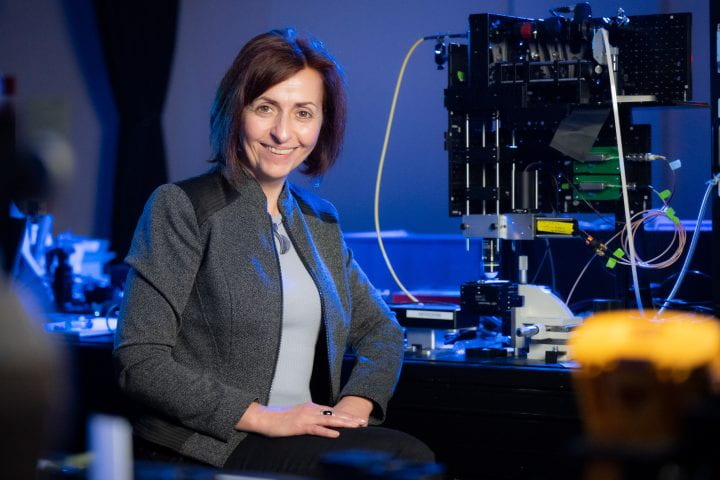
Research led by Dr. Mihaela Balu at UC Irvine is pioneering a new approach to melanoma detection through the development of a device that utilizes a low-power infrared laser. This innovative technology is designed to scan beneath the skin’s surface at a cellular level, aiming to detect early signs of melanoma without the need for invasive biopsies. Additionally, the device will help monitor the effectiveness of skin treatments.
Dr. Balu, now an associate professor of dermatology and biomedical engineering, credits her success to the support received from federal grants, including funding from the National Institutes of Health and the Department of Defense. “They have soldiers in the field exposed to sun,” she explains, highlighting the importance of her research in practical applications.
As the device enters clinical trials, Dr. Balu emphasizes that federal support is essential for attracting top talent in a competitive field. “Those grants give us the ability to attract the best talent,” she notes, stressing the importance of maintaining a stable foundation in research.
Dr. Balu leads a diverse team consisting of physicists, a biologist, a chemist, and a biomedical engineer. This multidisciplinary approach allows for comprehensive research and development, particularly in clinical settings where technology meets patient care. “It allows us to track the performance of the devices we build, evaluate their limitations, and get them back to the lab for design improvements,” she adds.
The device, known as the fast, large-area, multiphoton exoscope, is designed to facilitate quick and accurate scans. During a typical session, a small metal ring is placed on a patient’s skin to ensure stability while the laser excites molecules, generating detailed images of underlying cells and fibers. The current scan duration is approximately 10 to 15 minutes, with aspirations to reduce this time to 5 minutes.
Dr. Balu and her team take a hands-on approach, operating the device themselves to better understand its functionality and areas for improvement. The ultimate aim is to diagnose skin conditions without the need for cutting, enhancing patient experience by reducing the number of doctor visits and allowing for more tailored treatment plans.
This year, Dr. Balu’s team will relocate the device to new facilities at the recently completed UCI Health – Irvine campus. “When I first started bringing complex technology like this into the clinic, we were squeezed into a storage room,” she reflects. “And now we’ll have two research rooms in the new building. That’s success for me.”
The federally funded research being conducted at UC Irvine is vital to the institution’s ongoing advancement. The university has maintained a position among the top ten public universities in the United States for over a decade. Dr. Balu expresses her gratitude for the opportunities available to her, stating, “I feel fortunate to have the opportunity to build my work and my career here. I love the multidisciplinary culture and collaborative environment.”
With the potential to significantly enhance melanoma detection and treatment, Dr. Balu’s work exemplifies the intersection of innovation and healthcare, promising to deliver impactful benefits to patients in the near future.

Urgent Tax Savings Alert: Maximize Deductions Before April 15

Trump’s Administration Faces Uncertainty Over Government Shutdowns

Cosmic Defects: The Mystery of the Universe’s Missing Anomalies

Rapid City Parks Department Opens Registration for Bocce Leagues

Samsung Galaxy Watch 9 to Feature Larger 435mAh Battery Soon

Two Dead After Student Boats Capsize Off Okinawa Coast

Healthy Choice Wellness Reports Earnings with Mixed Results

Prince Harry Positions Himself as Royal Family’s Image Reviver

All Points North Lodge Achieves FSPHP-ETA Accreditation

Send Holiday Parcels for £1.99 with New Comparison Service

University of Hawaiʻi Leads $25M AI Project to Monitor Natural Disasters

Maui County Reopens Upgraded Lānaʻi Fifth Street Courts Today!

Daily Codeword Puzzle Launches on October 21, 2025

Congresswoman Under Fire for Misleading Epstein Donation Claims

Interstellar Object 3I/ATLAS Emits Unique Metal Alloy, Says Scientist

Trump Vows to Resolve Afghanistan-Pakistan Crisis “Very Quickly”

Charles Darwin’s Address Book Reveals Hidden Aspects of His Life

Rediscovering Chrysler: 5 Overlooked Models from the 1980s
-
 Lifestyle8 months ago
Send Holiday Parcels for £1.99 with New Comparison Service
-
Science9 months ago
University of Hawaiʻi Leads $25M AI Project to Monitor Natural Disasters
-
 Top Stories8 months ago
Maui County Reopens Upgraded Lānaʻi Fifth Street Courts Today!
-
 Entertainment10 months ago
Daily Codeword Puzzle Launches on October 21, 2025
-
 Lifestyle9 months ago
Congresswoman Under Fire for Misleading Epstein Donation Claims
-
 Science10 months ago
Interstellar Object 3I/ATLAS Emits Unique Metal Alloy, Says Scientist
-
 Top Stories9 months ago
Trump Vows to Resolve Afghanistan-Pakistan Crisis “Very Quickly”
-
 Science8 months ago
Charles Darwin’s Address Book Reveals Hidden Aspects of His Life
-
 Lifestyle8 months ago
Rediscovering Chrysler: 5 Overlooked Models from the 1980s
-

 Science7 months ago
Understanding Generation Z: Strategies for Engaging the Workforce
-

 Entertainment10 months ago
Kelly McCreary Discusses Future of Maggie and Winston in Grey’s Anatomy
-

 Top Stories8 months ago
aespa Faces Backlash Over G-Dragon Interaction at 2025 MAMAs