
Science
UC San Diego Professors’ Epstein Ties Raise Ethical Concerns

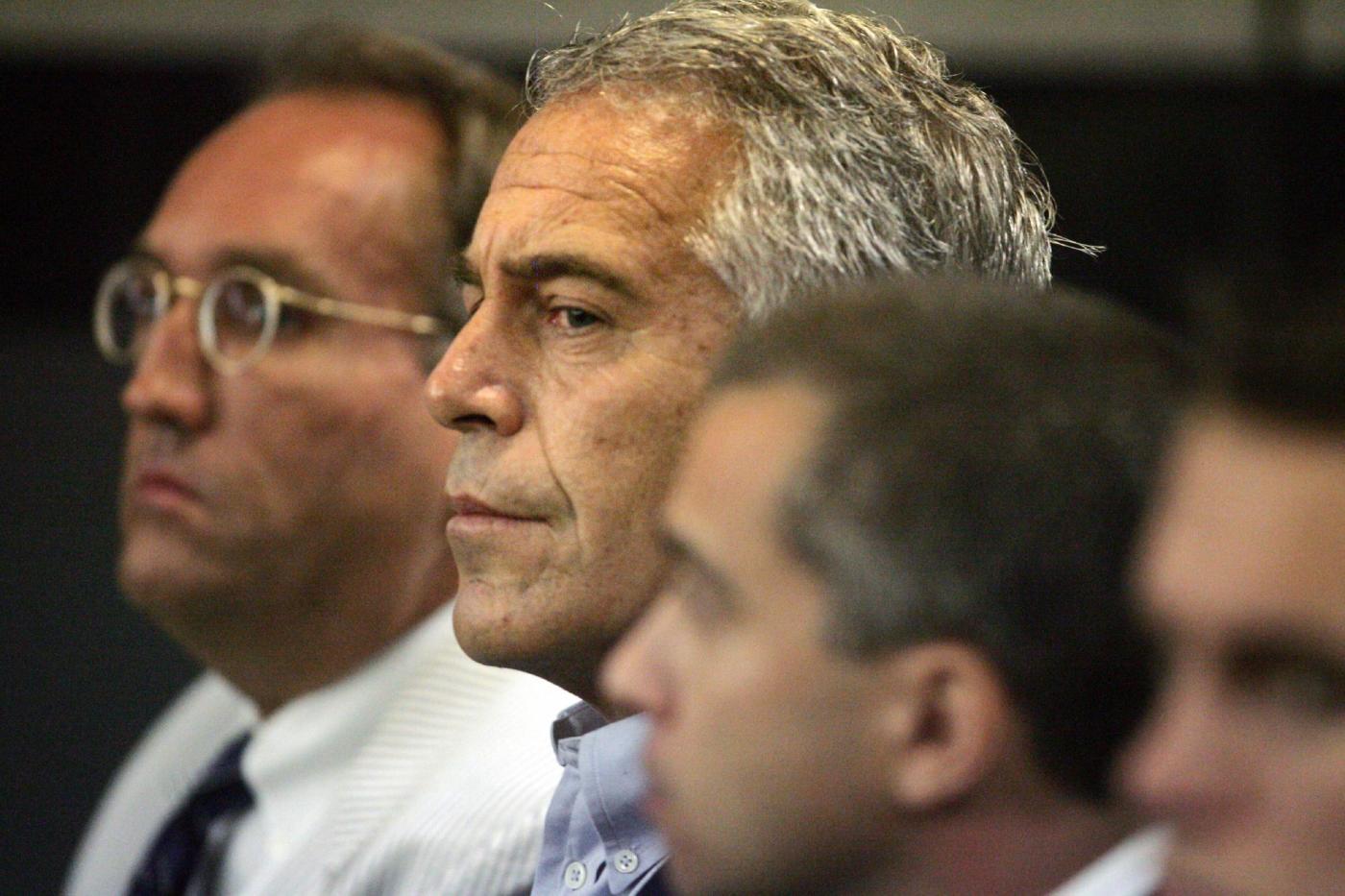
A recent investigation has unveiled troubling connections between faculty at the University of California, San Diego (UCSD) and the late financier **Jeffrey Epstein**, a convicted sex offender. Emails released by the U.S. Department of Justice reveal that Epstein provided **$50,000** to fund research into telepathy, a controversial area of study led by renowned neuroscientists **V.S. Ramachandran** and **Paul Mills**, along with prominent author **Deepak Chopra**.
In **2010**, Epstein was approached for funding by UCSD’s Center for Brain and Cognition. He had already been convicted of sex crimes at that time. Seven years later, in **2017**, as Ramachandran and his colleagues embarked on a study of autistic children believed to possess savant abilities, Epstein resurfaced as a potential benefactor. They explored the provocative notion that some of these children might exhibit telepathic capabilities.
In a September 2017 email to Chopra, Ramachandran expressed no reservations about Epstein funding their research. “I don’t have a problem with my lab being funded by Epstein,” he stated. These communications, along with numerous others, were part of a larger cache of documents unveiled earlier this year.
Chopra described his connection with Epstein as “limited and unrelated to abusive activity.” He acknowledged that some past emails reflected poor judgment, adding, “I regret that and understand how they read today.” A spokesperson for Chopra confirmed that the **$50,000** check was ultimately returned, but did not provide documentation for the refund.
Mills, who had no previous awareness of Epstein’s involvement, expressed shock upon learning of the financier’s connection to their research. He labeled the situation as “utterly disturbing.” UCSD spokesperson **Laura Margoni** stated that the university is aware of Epstein’s ties to faculty and is currently reviewing the matter. She emphasized that the institution does not support fundraising from convicted sex offenders.
Despite this statement, Margoni confirmed that UCSD has no records indicating that Epstein or his **Gratitude Foundation** made any donations. Chopra’s unpaid faculty contract is set to end in June, and he has no active responsibilities prior to that date.
The revelations surrounding Epstein’s relationships with academics have prompted significant backlash within the educational community. Faculty across prestigious institutions—including **Harvard**, **Yale**, and **Duke**—have been scrutinized for their financial and personal ties to Epstein, many of which persisted long after his 2008 conviction for soliciting prostitution from a minor.
Notably, Epstein’s funding of scientific research was not limited to UCSD. He attempted to court numerous high-profile scientists, including **J. Craig Venter**, a geneticist known for his role in mapping the human genome. Venter characterized his interactions with Epstein as unsettling, stating, “My sleaze radar went off really fast.”
Epstein’s death in 2019 did not end scrutiny of his connections to the scientific community. Investigations have continued to reveal his longstanding interest in various scientific fields, including artificial intelligence and eugenics.
In the case of UCSD, the focus on telepathy emerged from a collaboration between Chopra and Mills. They initiated a pilot study involving a twelve-year-old boy and his mother in **New Jersey**, where the child demonstrated an ability to type numbers his mother silently read. Mills noted that the outcome was “remarkable” and against the accepted models of mind and consciousness, while also acknowledging that the concept of telepathy is foreign to Western science.
Chopra and Ramachandran organized research involving additional autistic children, with emails showing that they had identified at least two others for participation. However, questions now arise regarding the ethical implications of accepting funding from Epstein, given his history.
Critics of the research have emerged, including **Ari Ne’eman**, a professor at **Harvard**, who stated, “There is a disturbing amount of pseudoscience in the world of autism.” He firmly asserted that autistic individuals do not possess telepathic abilities, emphasizing the need for skepticism regarding such claims.
Mills defended his research, claiming it provides insight into talents some individuals possess that are not well understood by contemporary science. He indicated that he was unaware of Epstein’s history until a few years ago and found the connection to Epstein “utterly disturbing.”
As the investigation unfolds, the ramifications of Epstein’s involvement in UCSD research are becoming increasingly complex. The ethical standards surrounding funding from private individuals, especially those with controversial backgrounds, are under scrutiny, highlighting the need for rigorous oversight in academic research.

Urgent Tax Savings Alert: Maximize Deductions Before April 15

Trump’s Administration Faces Uncertainty Over Government Shutdowns

Cosmic Defects: The Mystery of the Universe’s Missing Anomalies

Rapid City Parks Department Opens Registration for Bocce Leagues

Samsung Galaxy Watch 9 to Feature Larger 435mAh Battery Soon

Two Dead After Student Boats Capsize Off Okinawa Coast

Healthy Choice Wellness Reports Earnings with Mixed Results

Prince Harry Positions Himself as Royal Family’s Image Reviver

All Points North Lodge Achieves FSPHP-ETA Accreditation

Send Holiday Parcels for £1.99 with New Comparison Service

University of Hawaiʻi Leads $25M AI Project to Monitor Natural Disasters

Maui County Reopens Upgraded Lānaʻi Fifth Street Courts Today!

Daily Codeword Puzzle Launches on October 21, 2025

Congresswoman Under Fire for Misleading Epstein Donation Claims

Interstellar Object 3I/ATLAS Emits Unique Metal Alloy, Says Scientist

Trump Vows to Resolve Afghanistan-Pakistan Crisis “Very Quickly”

Charles Darwin’s Address Book Reveals Hidden Aspects of His Life

Rediscovering Chrysler: 5 Overlooked Models from the 1980s
-
 Lifestyle8 months ago
Send Holiday Parcels for £1.99 with New Comparison Service
-
Science9 months ago
University of Hawaiʻi Leads $25M AI Project to Monitor Natural Disasters
-
 Top Stories8 months ago
Maui County Reopens Upgraded Lānaʻi Fifth Street Courts Today!
-
 Entertainment10 months ago
Daily Codeword Puzzle Launches on October 21, 2025
-
 Lifestyle9 months ago
Congresswoman Under Fire for Misleading Epstein Donation Claims
-
 Science10 months ago
Interstellar Object 3I/ATLAS Emits Unique Metal Alloy, Says Scientist
-
 Top Stories9 months ago
Trump Vows to Resolve Afghanistan-Pakistan Crisis “Very Quickly”
-
 Science8 months ago
Charles Darwin’s Address Book Reveals Hidden Aspects of His Life
-
 Lifestyle8 months ago
Rediscovering Chrysler: 5 Overlooked Models from the 1980s
-
 Science7 months ago
Understanding Generation Z: Strategies for Engaging the Workforce
-

 Entertainment10 months ago
Kelly McCreary Discusses Future of Maggie and Winston in Grey’s Anatomy
-

 Top Stories8 months ago
aespa Faces Backlash Over G-Dragon Interaction at 2025 MAMAs