
Science
US Laboratory Advances Quantum Material Production with New Systems

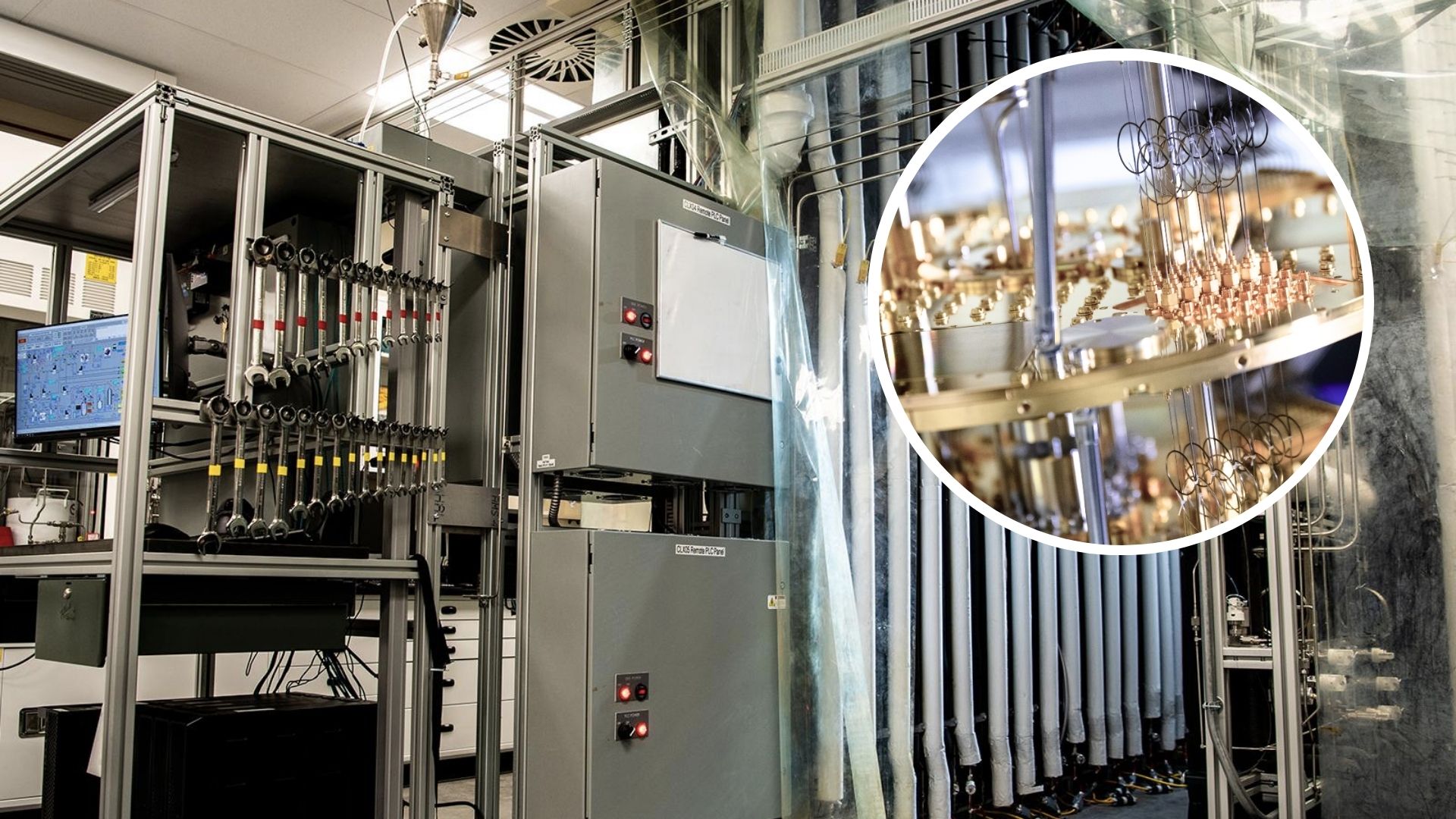
A laboratory based in Washington has made significant strides in enhancing the production of quantum materials. The **Pacific Northwest National Laboratory (PNNL)** has successfully developed high-purity gas conversion and purification systems for two critical gases: **silane** and **germane**. These gases are vital for advancing research in **quantum information science** and other sophisticated technology sectors in the United States.
These gases play a crucial role in the semiconductor industry, particularly in the deposition of thin films of silicon and germanium, which are essential components for advanced computing chips. This development not only represents a scientific achievement but also serves as a strategic move to reinforce America’s technological foundation.
Strengthening the Supply Chain for Advanced Technologies
“Our investment to strengthen the supply chain for these specialized materials is a strategic imperative for the **Genesis Mission**,” said **Christopher Landers**, Director of the Office of Isotope R&D and Production. He emphasized that the work at PNNL is focused on meeting the challenges of supplying the high-purity materials necessary for breakthroughs in quantum information science and other areas vital to national interests. “We are giving our scientists and industries the foundational tools needed to drive innovation in quantum computing and artificial intelligence,” he added.
PNNL is actively pursuing research to enhance the isotopic enrichment of silane and germane through **enhanced thermal diffusion isotope separation (TDIS)** technologies. The laboratory previously developed similar systems for enriching other gases, such as argon and chlorine, but further research is needed to safely operate TDIS systems for silane and germane, according to a recent press release.
Innovative Approaches to Isotopic Enrichment
The expertise at PNNL includes implementing stringent safety measures for TDIS systems, which involve the creation of automated control systems. These systems monitor numerous process variables and alert operators if conditions deviate from established target levels. “Isotopic dilution of enriched silicon is a challenging problem,” said **Mike Powell**, the project’s principal investigator. “We carefully designed our systems and handling procedures to maintain the starting feedstock isotopic purity through to the final silane and germane products.”
PNNL’s ongoing research and development efforts are geared towards designing, constructing, and operating specialized systems that create a pathway from commercially available enriched starting compounds to device-compatible precursor gases. This initiative aims to bolster the supply chain and enhance efficiency. The **Isotope Research Program (IRP)** is supporting PNNL’s research into TDIS, which simplifies the production process and minimizes the risk of impurities, ensuring a more stable supply for researchers and manufacturers.
These advancements in enriched silicon and germanium will not only benefit quantum technologies but will also support a broader range of advanced applications, including next-generation semiconductor devices and other precision materials. The initiative underscores the IRP’s commitment to developing a resilient infrastructure for specialized materials while pursuing additional research and partnerships with industry to elevate the quality and specifications of these essential materials.
PNNL’s developments represent a crucial step forward in the quest for high-purity gases that will drive innovation and maintain a competitive edge in technology fields critical to the future of advanced computing and quantum science.

Urgent Tax Savings Alert: Maximize Deductions Before April 15

Trump’s Administration Faces Uncertainty Over Government Shutdowns

Cosmic Defects: The Mystery of the Universe’s Missing Anomalies

Rapid City Parks Department Opens Registration for Bocce Leagues

Samsung Galaxy Watch 9 to Feature Larger 435mAh Battery Soon

Two Dead After Student Boats Capsize Off Okinawa Coast

Healthy Choice Wellness Reports Earnings with Mixed Results

Prince Harry Positions Himself as Royal Family’s Image Reviver

All Points North Lodge Achieves FSPHP-ETA Accreditation

Send Holiday Parcels for £1.99 with New Comparison Service

University of Hawaiʻi Leads $25M AI Project to Monitor Natural Disasters

Maui County Reopens Upgraded Lānaʻi Fifth Street Courts Today!

Daily Codeword Puzzle Launches on October 21, 2025

Congresswoman Under Fire for Misleading Epstein Donation Claims

Interstellar Object 3I/ATLAS Emits Unique Metal Alloy, Says Scientist

Trump Vows to Resolve Afghanistan-Pakistan Crisis “Very Quickly”

Charles Darwin’s Address Book Reveals Hidden Aspects of His Life

Rediscovering Chrysler: 5 Overlooked Models from the 1980s
-
 Lifestyle8 months ago
Send Holiday Parcels for £1.99 with New Comparison Service
-
Science9 months ago
University of Hawaiʻi Leads $25M AI Project to Monitor Natural Disasters
-
 Top Stories8 months ago
Maui County Reopens Upgraded Lānaʻi Fifth Street Courts Today!
-
 Entertainment10 months ago
Daily Codeword Puzzle Launches on October 21, 2025
-
 Lifestyle9 months ago
Congresswoman Under Fire for Misleading Epstein Donation Claims
-
 Science10 months ago
Interstellar Object 3I/ATLAS Emits Unique Metal Alloy, Says Scientist
-
 Top Stories9 months ago
Trump Vows to Resolve Afghanistan-Pakistan Crisis “Very Quickly”
-
 Science8 months ago
Charles Darwin’s Address Book Reveals Hidden Aspects of His Life
-
 Lifestyle8 months ago
Rediscovering Chrysler: 5 Overlooked Models from the 1980s
-

 Science7 months ago
Understanding Generation Z: Strategies for Engaging the Workforce
-

 Entertainment10 months ago
Kelly McCreary Discusses Future of Maggie and Winston in Grey’s Anatomy
-

 Top Stories8 months ago
aespa Faces Backlash Over G-Dragon Interaction at 2025 MAMAs